TANGIBLY EXCITED FOR STEAM MACHINES

No comments

Tuesday, January 7, 2014


By Jamaal Ryan


From one console gamer to another, there is a new line of “next gen systems” on the block.

Stapling the term “next gen systems” to the line of 14 Steam Machines announced yesterday is politically incorrect. Steam Machines aren’t marketed as sitting in a generational delineation, nor are they technically considered consoles either; they are PCs built with Steam OS and living room gaming in mind.

However “living room gaming” has been commanded by home consoles for nearly three decades, and as a console exclusive gamer, in my eyes, Steam Machines are a new line of home consoles.

The prospect of Steam Machines is incredibly appealing to gamers of my preference. Essentially, these units are the first major development in PC gaming’s simplification of all the iterative streamlining the platform has done in the past several years. There’s no building required, no parts that need imperative management right away; these powerful pieces of hardware come in a complete box.

They’re also appropriately priced ranging from what we know as little as $499 to $6,000. Who in their right mind would spend months of my salary on a gaming piece of hardware, I clearly don’t know those people. But if you’re offering me a system that’s the same price as an Xbox One, I’m in.

An added bonus is that allegedly even the cheapest of Steam Machines are reported to be more powerful than Microsoft and Sony’s bombastic offerings. Alienware’s incredibly compact hardware is set to be competitively priced with both the PS4 and the Xbox One while offering more power than both systems. It’s a slightly higher end option for an affordable price for this new era’s most resource intensive games.

However the massive appeal to me is Steam’s potential of an unparalleled library of games. Given that Steam OS will translate Steam’s current experience, owners of this hardware will have access to some of the most interesting titles before any other platform. Sony has made impressive efforts in getting indie support over to their console and handheld platforms; but whereas I appreciated getting a chance to play Hotline Miami on my Vita, I don’t know when, if ever, I’ll get a chance to play The Stanley Parable on any other platform.  

These experiences are already cheap, but Steam’s industry leading Steam sales allow these games to be even cheaper at a criminal price. For me, a Steam Box will more or less function as a high end Ouya. And I don’t mean that in a negative way by any stretch. Games like Titanfall or the next Battlefield (after BF 4’s disastrous launch, my current attitude is to not return to the franchise, but I’ll go along with this example) won’t do well to pull me from any of my current consoles because of the established communities I have with them. And while others such as The Witcher 3 and the new Thief might win me over if there’s a notable improvement in performance, my Steam Machine library will be stuffed with indie games and experimental projects.

For some time, I was envious to PC gaming, allowing the barrier to entry to wall me off of approaching the platform. Last gen’s systems, while not nearly matching the power of PC, was able to eventually have some of the high demanding PC games carry over. For some time, I thought I was in good shape, convincing that the PC platform was meaningless to me. But as the indie scene grew to a size that simply couldn’t be ignored, particularly after Steam Greenlight kicked off, that envy grew again.


After what we’ve seen at this year’s CES, it looks as if I’ll color myself green no more.

THE EASIEST WAY TO HELP CANCER RESEARCH THIS WEEK

No comments

Monday, January 6, 2014


By Jamaal Ryan

How easy is it?

Simply click this link for gamesdonequick.com

Akin to video game driven charities such as Extra Life and Childs Play, Awesome Games Done Quick is working with Prevent Cancer Foundation to raise money for cancer research by streaming videos of video game speed runs. For monetary donations, you can contribute via PayPal to help Awesome Games Done Quick to beat last year’s earnings of $400,000 and reach their current goal of $500,000.

An easier and infinitely less expensive way to contribute is, as I said, done by simply clicking the link above. Redirecting you straight to their Twitch stream, Twitch will donate $50 for every 1,000 views up to 100K views for a total of $5,000. So special thanks goes to Twitch for working so closely with Awesome Games Done Quick and Prevent Cancer Foundation.

The event runs from Jan 5th through Jan 11th where viewers and donators can check out speed runs of their favorite games. You can check out their week schedule here, and remember, just a click makes you a contributor to cancer research.

Source & Image Source: Awesome Games Done Quick(Community)

VIA: Polygon


THE BEST GAMES (AND BIGGEST LET DOWNS) OF 2013

No comments

Friday, January 3, 2014


Note from Jamaal Ryan: I embarrassingly made the mistake of calling Andrew Ryan "Adam Ryan". I apologize for the obvious mistake, and will practice better editing next time. 

2013 was as good a year for video games as it could get. While this holiday was light on stellar titles thanks to a console launch (and I also like to blame the absence of Watch Dogs), the bulk of last year had some of the best titles this generation.

I myself didn’t get to some of last year’s cream of the crop such as Gone Home, Rogue Legacy, and The Legend of Zelda: A Link Between Worlds, however I’ve had the opportunity to play and review some of last year’s highest acclaimed titles. Here are my top 10 favorite games of 2013.

10. Tomb Raider


 Lara Croft’s latest adaptation in and of itself earns one of 2013’s most empowering female leads, but Tomb Raider was a pleasant surprise on multiple fronts.

Part Uncharted, part Arkham Asylum, Tomb Raider was an excellent showcase of last gen’s most influential titles. It balanced stealth and action almost as well as Rocksteady’s poster bat, and handled gunplay far better than Uncharted has ever managed. Metroidvania games succeed when players bring themselves back to previous locations numerous times even outside of the game’s demand. Tomb Raider’s layered item system incentivized me to uncover every secret, and most rewardingly, every tomb.

Lara Croft’s oddly paced story and abysmal multiplayer managed to leave a few blemishes, but blemishes that pale in comparison to the core Tomb Raider experience.


Read the review.

9. Ni No Kuni: Wrath of the White Witch


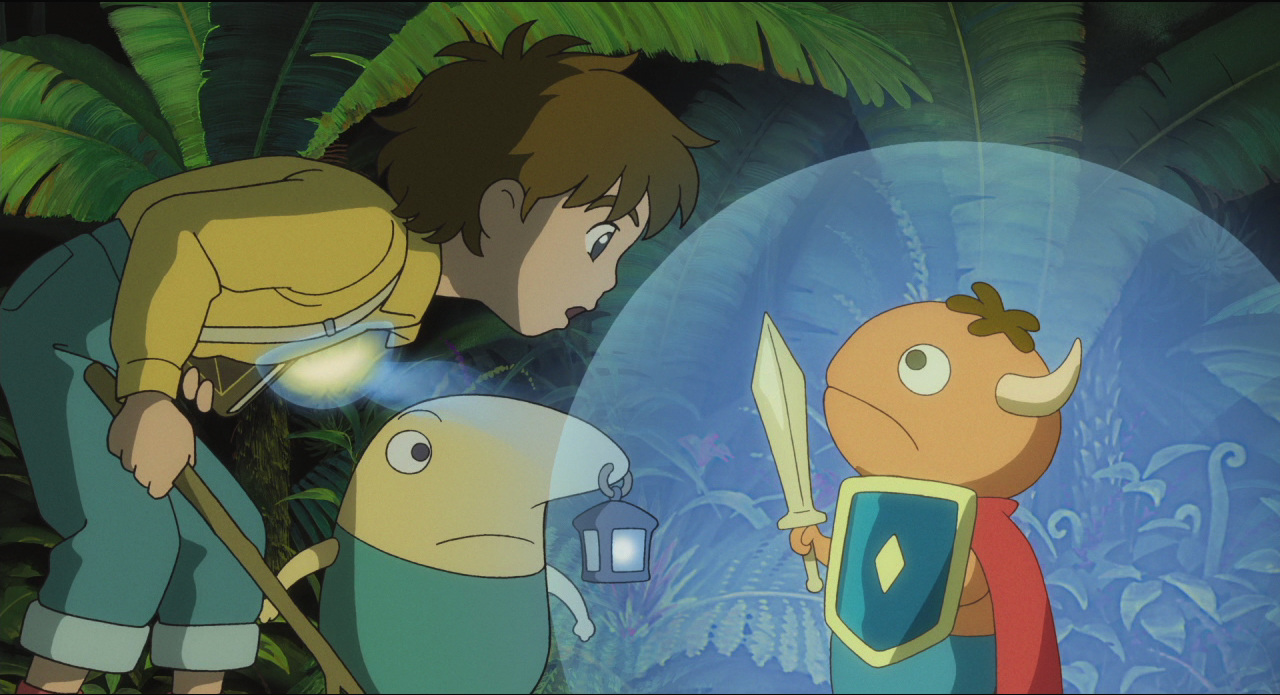
If there was any JRPG that deserved you attention last year, it was Ni No Kuni. Level 5 and Studio Ghibli’s collaboration was a true palette cleanser, a breath of fresh air from the modus opperandi of the genre. Ghibli’s distinctive art style is enchanting, bringing the warmth of their feature films to this fantastic RPG.

The JRPG sub genre has relied on the turn based battle systems too heavily long past technical necessities. Ni No Kuni’s real time combat is that thin strip of ginger that added to this game’s palette cleansing qualities. It’s incredibly deep and surprisingly demanding to manage your party’s buffs as well as their offensive and defensive positions in real time.

Outside of battle, much of your time is spent on chasing down new Familiars and fetching equipment and items needed to metamorph your party members. The errand side quests are inevitably mundane, but pay off well enough.

But with its fresh aesthetic and excitingly novel battle system, Ni No Kuni is one of the best titles of the year, an honor that JRPGs haven’t universally earned in quite some time.

Read the review.

8. Grand Theft Auto V


By sheer metrics, Grand Theft Auto V bleeds the capabilities of last gen systems in ways we may not have even imagined. The powerful lighting system, the massive size of the city, and the detail rendered in the very cracks of it, GTA V is a stunning location from sky box to sea floor.

But the actual game that exists within this city showcases Rockstar’s best efforts. With the gunplay of Max Payne 3, the driving of Midnight Club spiced with the spontaneity of Red Dead, GTA V was certainly the best playing installment in the franchise.

But the odd trifecta that is Michael, Franklin and Trevor that exists in GTA V’s story was the key ingredient that concocted gold standard mission design in the open world genre. It wasn’t as liberating as we would have thought it to be however. I couldn’t always play as Michael if I wanted to, or switch to Franklin whenever I pleased, but missions that involved more than one character was a sure guarantee to be highly entertaining.

And then there’s the rest of the city. GTA V brought back the gleeful sandbox that was missing in some respect from GTA IV. To this day, there are new videos posted of people’s antics as they f**k around with any and everything from Los Santos to the boonies up north.

Grand Theft Auto V is a fantastic ride when you need it, and bottomless playground of your own discretion.   

Read the review.

7. Metal Gear Rising Revengeance


Even as the lowest scoring game on this top 10 list, Metal Gear Rising still managed to leave an even more lasting impression on me than some of this year’s most popular games.

This might have been my lack of understanding, or Platinum’s habit of cryptic communication, but Rising’s combat didn’t quite click for me until more than half way through the game’s campaign.

It was then when I figured out how to “break” the combat system, and when Rising changed into a completely different game. Empowering players to be able to manipulate their enemies at their will by brutal kinetics while still maintaining a high level of difficulty is what separates good action games from great ones.

Gunning at full sprint as I chop away at fodder and refuel my Nano Charge with liberal use of Rising’s Blade Mode made me feel like a god in a way that I haven’t felt from an action game in years. Once I got a full handle on Rising’s non-transparent combat system, the campaign that took me seven hours to complete the first round reduced to four the second time.

And it was a liberating four hours, ones that ended with chunks of cyborg meat and fallen bosses that had once given me grief within my first play through. Though it isn’t earned the highest score I’ve issued an action game this year, Metal Gear Rising: Revengeance is my favorite action title of 2013.

Read the review

6. Assassins Creed IV: Black Flag


The fact that an Assassins Creed game has made it on my top 10 list, as someone who hasn’t enjoyed an Assassins game since AC 2, speaks volumes as to how damn good AC IV turned out to be.

Assassins Creed IV bests every installment before it by not quite being an Assassins Creed game. One part Assassins game, three parts pirate power fantasy, Black Flag is the pirate game we’ve always dreamed about.

Part of the franchise’s charm is the enjoyment of exploring rather than gathering and collecting. Without relying heavily on the series’ core formula, AC IV rolls out an entire ocean to explore away from the roof tops of the densely packed cities.

Unlike any other open world title this year, AC IV managed to keep me away from continuing to my main objective. It did so not by having a sh*tty campaign like Saints Row IV, but encouraged me to open up my own opportunities to venture out on my own, something that GTA V couldn’t even bring me to do.

Assassin Creed IV: Black Flag is a pleasant surprise after the truly mess of a game AC III was, and has managed to be one of my top favorite holiday games of 2013.

The Disappointments of 2013

As we take a look at some of 2013’s best, there were a number of games that have garnered high hopes only to disappoint last year.

5. Dead Space 3


Dead Space 3, like most of the games on this list, isn’t a bad game. In fact, it’s a great game with a significantly refined combat system thanks to the complex weapon crafting economy.

However if the game itself was reskinned as an action title without the horror aesthetics, we would have a fantastic title. Unfortunately, Dead Space 3 DOES try to be a survival horror game, one that fails almost as miserably to do so as Resident Evil 6.

Dead Space 3 accomplishes horror only by its atmosphere. However much of the scares fall into an exercise of predictability, which is something that no piece of horror fiction ever wants to be accused of. To make matters worse, a powerful arsenal and a cocky protagonist only further prevent this game from being scary.

Dead Space 3 is a great game, but a bad survival horror one at that.

Read the review

4. Saints Row IV


I’ve already briefly mentioned how much I didn’t like the campaign in Saints Row IV. In a game that’s driven by your ability to fly over tall buildings and run faster than even the fastest sports car, Saints IV’s story removed that empowerment from me far more often than I would have liked.

And while tossing cars and running up buildings was the epitome of its entertainment value, it made much of what allows Saints Row: The Third to be one of the best sandbox titles ever made obsolete. Don’t ask me to get in a car, because I can blow right past them. Don’t ask me to fly a jet, because I can fly on my own. Saints Row IV didn’t manage to scale up everything to match your enhanced super powers.

Take the time to flip through your list of purchasable upgrades, and you’ll see what I’m talking about.

Read the review

3. God of War: Ascension


No one asked for GOW: Ascension.

Kratos’ story was concluded in GOW 3, and not much time has passed since the Spartan warrior’s swan song. But nonetheless, after an impressive E3 showing, none could complain about getting another God of War game since the series has yet to release an underwhelming title.

But Ascension wasn’t only a disappointing game, it wasn’t a very good one to begin with.

The God of War franchise has managed to do a decent job at narrating Kratos’ rage filled quest for vengeance. But Ascension’s delivery was weak on all fronts with meaningless characters and a severe lack in “epic”.

Adding more to this unwarranted release, Ascension’s combat has worsened; attacks are looser with a notable delay and some annoyingly non-interruptable moves. But this GOW’s biggest offense sits in its inexcusable use of provocation. The formerly titled “Bros before Hos” trophy continued the franchise’s disrespectful messaging towards women after the appalling “I didn’t do it, but I wish I did” trophy from GOW 3. And its childish use of suicide imagery in the game’s multiplayer was completely uncalled for.

Ascension manages to pull through with a surprisingly enjoyable multiplayer, however it’s better to forget that God of War: Ascension even existed.  

Read the review

2. Call of Duty: Ghosts


I speak to the Call of Duty fan base about this one as many will quickly resort to, “Well Call of Duty’s sucked for years!”

Every Call of Duty game’s campaign has managed to be mindlessly entertaining with a few moderately successful attempts at compelling story telling. However the director of Syriana’s contribution to Ghost’s story has done nothing to save it from being unequivocally bad. From the weakest narrative to completely un inspired pacing makes Ghost’s campaign the first I recommend against playing.

There’s not much to say about the multiplayer either. The map design is bloated and unnecessarily convoluted making Team Deathmatch surprisingly uneventful in some cases. Some of these maps can be saved by different match types, such as the hardcore mode Cranked, but Ghost’s maps fail to adapt well to different styles of play.

Multiplayer also seems to try too hard to fabricate longevity. With a light feature set outside of the awesome Extinction Mode, having to unlock an overloaded list of perks, weapons and attachments, Call of Duty’s multiplayer feels more like a chore.

As Giant Bomb’s Jeff Gerstmann said, “This is exactly what Titanfall needed”. In March, I’ll gladly hang up my dog tags for a jet pack and a Titan.

Read the review

1.Beyond: Two Souls


Beyond 2 Souls is the lowest scoring game I’ve ever reviewed, which is an utter surprise after Quantic Dream’s previous offering which still sits among my top three PS3 games of all time.

Beyond was a shockingly bad effort in both story telling and game design. The writing was poor, mildly evocative at best giving us no real chance to build an emotional connection with it; and its completely disorganized and out of order sequence did nothing to enhance its delivery.

And while some slight distractions such as the gorgeous visuals, Ellen Page’s performance, and an excruciatingly small handful of interesting narrative attempts, Beyond never rises up above being a terrible video game. The lack of player agency is severe and borderline offensive, robbing you of any meaningful choices until the game’s conclusion.

Beyond: Two Souls is a full step backwards in every way imaginable from the studio that brought us the truly excellent Heavy Rain.

Read the review

Now, for the remaining 5 of the best games of 2013

5. Bioshock Infinite


Infinite’s significance is nearly entirely recognized by its ending. That one-two gut punch of Rapture followed by the Comstock reveal is what Bioshock Infinite will be remembered by.

The writing was bold and unafraid to gets its hands dirty with depictions of religion and racism. Disappointingly however, those subject matters weren’t pervasive throughout the game’s entirety and only served to emphasize how twisted of a society Comstock has created after we’ve seen [Andrew] Ryan and Sophia Lamb’s failings.

Infinite’s sense of narrative agency is powerful, giving the player plenty of responsibility to piece together the city of Columbia. And though the gameplay itself seemed divorced from the fiction, it offered a successfully energetic approach to combat as opposed to the original’s methodical pacing. The sprawling battle arenas threaded with sky lines presented impressive mobility. And the Vigors helped close the gap or reach enemies from afar.

Bioshock Infinite stands as a wildly successful title, acing nearly everything it strived to accomplish.

Read the review

4. Brothers: A Tale of Two Sons


Spoiler alert

Bioshock Infinite’s biggest criticism was that the gameplay bared little resemblance to its narrative of the city of Columbia. Brothers manages the exact opposite, where the gameplay itself is a direct representation of the story.

Controlling both brothers independently with each analog stick was admittedly awkward, but worked for the gameplay and worked even better for the story. Puzzles and encounters offered a satisfying challenge, not only because of the split controls, but because they were creative and engaging in their own right.

Brother’s wordless dialogue only heightened the surprisingly dark tone and emotional interactions. It brought us to pay attention to body language and non verbal communication unlike any other game has.

But Brother’s highest achievement comes after the older brother’s death. It’s emotionally heartbreaking not only because of the passing of a companion and the uncomfortable burial of his body, but the entire control scheme reacts to his death, mimicking the emptiness the younger brother felt.

Brothers: A Tale of Two Sons is easily one of the most emotionally effective games of 2013.

Read the review

3. Hotline Miami


The cult hit from 2012 returned in 2013 and invaded Playstation Vitas for your homicidal pleasure.

At its roots, Hotline Miami is an arcade game with a very simple “clear the room” objective. However its electrifying head bobbing soundtrack, tight as f**k controls, instant respawns, and incredible depiction of violence made this murderous hyper trip down-right hypnotic.

Hotline Miami’s level design is centered on rapid problem solving. Its tools of mutilation allowed me to feel empowered, yet its one-hit-kill punishment made me feel very vulnerable. You can either die a dozen times, or eviscerate a dozen foes in 12 seconds.

To this day, Hotline Miami is still my favorite title on Vita.

Read the review

2. Super Mario 3D World


Even if Wii U’s library was filled with strong third party support offerings, there’s no denying that few could have measured up to the impeccable craftsmanship in Super Mario 3D World.

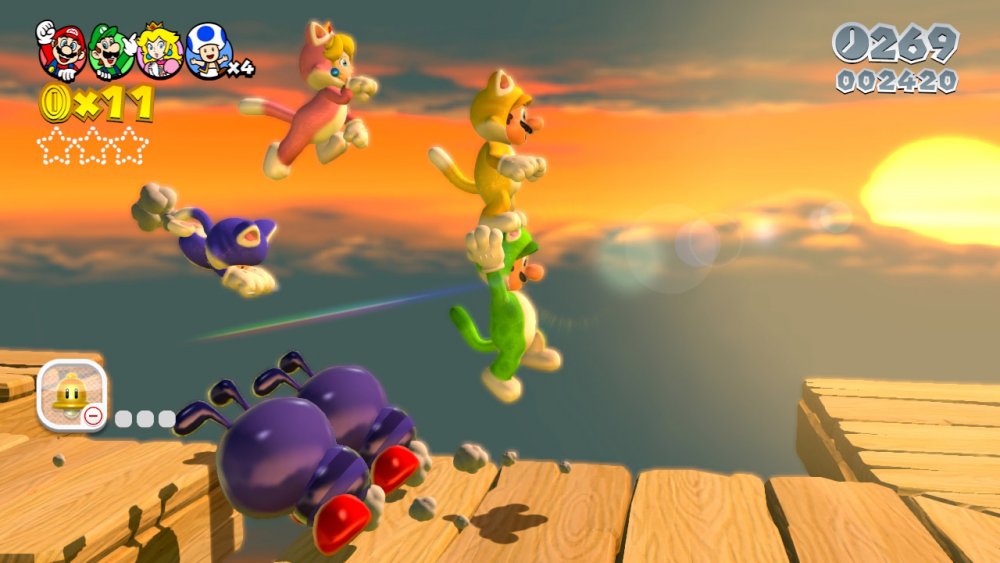
3D World’s masterful level design is gleeful, joyous, and unpredictable. Picking up a Cherry power-up for the first time made my girlfriend scream in excitement. The same reaction was elicited from me when a flag pole sprouted wings and began flying away.

Super Mario 3D World’s replay value is immense, and had me go back multiple times with multiple characters to scrape up every single collectable. 3D World’s highly difficult stages, once conquered, brought me back for intense speed runs, Mario’s oldest form of replayability.

Multiplayer brought some of the most fun I’ve had with friends in a Battlefield and Dota 2 era. The series of vengeful griefings and happy accidents can only exist in a couch co-op experience, and I’m glad Nintendo stuck to it. My favorite line from playing multiplayer was, “David, you’re a butt” as the couple in my living room chased each other to throw one another off a cliff.

It’s been several years since we’ve been graced by a stellar console Mario title, and Super Mario 3D World is the best proper Mario game since Galaxy 2.

Read the review

1.The Last of Us


They say that we love the ones who hurt us the most; I suppose that’s the kind of relationship I have with The Last of Us.  

The Last of Us was grimy, dingy, and very uncomfortable to experience; and it was for those very reasons why I kept coming back. Easily, The Last of Us boasts the best visuals and performances on Playstation 3. Naughty Dog didn’t need to visually replicate the talent behind Joel, Ellie (Troy Baker and Ashely Johnson) and the other strong characters in order to convince me they were real people.

The “on the edge of my seat” cliché is most appropriately used to describe my complete emotional reaction to The Last of Us. Creeping around Runners and Clickers, examining new characters with caution and mistrust, and not knowing just what the hell was going to happen towards the end; The Last of Us had me hooked every second.

The complimentary stealth action gameplay was a perfect pairing for The Last of Us. It represented the desperation of the post apocalypse and adapted effortlessly between silent avoidance and direct confrontations.

Next to its shocking ending, The Last of Us’ multiplayer was this game’s biggest surprise. I can’t think of a multiplayer game that has managed to closely replicate its single player counterpart as The Last of Us did. It didn’t only do this with its methodical mechanics, but it did so with its harrowing sense of desperation.

As one who’s responsible for a growing survival camp, your actions in multiplayer directly affected the fate of your survivors. And the inclusion of names and their personal updates made you feel as if your tasks were that much more important. I say that The Last of Us hurt me, and I meant that quite literally. One multiplayer match triggered so much anxiety, that it gave me chest pain. No video game in my 20 year history has ever had that effect on me.

The Last of Us isn’t only my pick for the top game of 2013, it defines AAA accomplishment for the last console generation, and has become my favorite game of all time.

Read the review 

SUPER MARIO 3D WORLD REVIEW: WHAT WE NEVER KNEW WE WANTED

No comments

Thursday, January 2, 2014


By Jamaal Ryan

Super Mario 3D World has earned an apology.

From the undeserved “Galaxy 3” expectations to the deflated response at E3 2013, 3D World wasn’t given the chance it deserved. With a franchise that has given us iterative installments in the past 7 years, many of them console and handheld pairings in the form of “New Super Mario…”, little could we have expected that Super Mario 3D World is the best Mario title since Super Mario Galaxy 2.


Justifying that Super Mario 3D World isn’t just a consolized Super Mario 3D Land is a tough argument because there’s no significantly distinctive theme such as gravitiational platforming or a water backpack mechanic like what was seen in Mario’s previous 3D console installments. And if you’ve spent a short amount of hours with the game alone, it’s difficult not to see that 3D World isn’t just another Mario game.

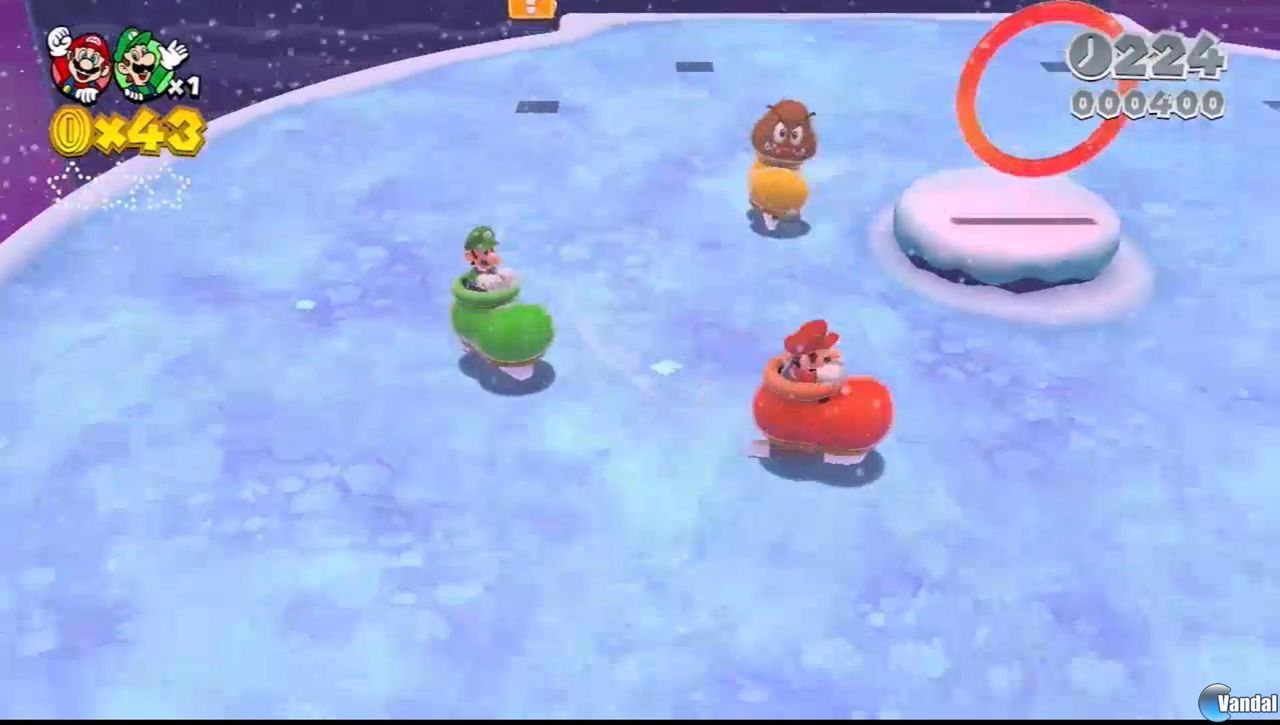
However sticking to its classic world based formula has allowed Nintendo to relinquish any commitments and do whatever the f**k they please. Top down shmup styled level? Put it in. Donkey Kong Country-esque silhouetted side scroller? Why not. Drivable ice skates and throwable snow balls? I dunno, because it’s fun. Super Mario 3D World gleefully plays with inclusively “kitchen-sink” ideas that fit brilliantly together no matter how crazy or out of place they seem.


The level design, as expected, is often exceptionally crafted with 3D World’s various power-ups in mind if not a display of Nintendo’s mastery on the platformer genre alone. The Cat Suit – 3D World’s premier power-up – is a significant addition to the Mario formula outside of just being cute. It literally opens up a new dimension of level exploration as you can scale walls to higher ground. But the Cat Suit doesn't just change the way that you explore environments, it also offers an additional recovery technique. Though slightly less as easy to pull off as the wall jump, you can dive to the nearest vertical surface before falling into the abyss and climb your way up. Being a cat can be a bit sticky however as you’ll have to make an effort to dismount off of walls, but the substantial level of maneuverability it offers makes it arguably the best power-up in Super Mario 3D World.

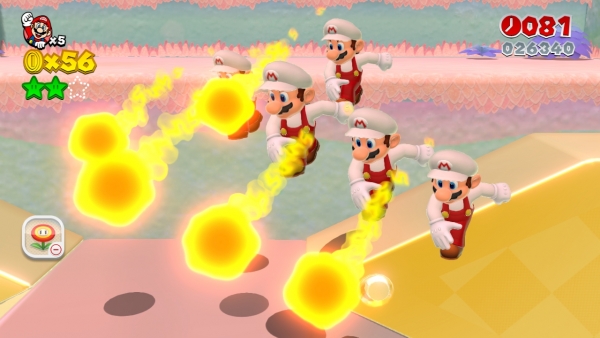
That is, of course, unless you are a fan of the Cherry power-up which multiplies your character up to six strong and can turn your crew into a force to be reckoned with if equipped with the Fire or Boomerang Flower. The Cherry-power-up is as achingly infrequent as other situationally designed abilities and suits you can pick up, such as the Cannon Box, the Propeller Box, and the Goomba Suit. This deliberately flippant approach liquefies the game’s pacing and presents many levels that are very specific and isolated, yet relevant and highly entertaining. It’s refreshing level progression in a modern era where most game mechanics and encounters deviate and iterate from their baseline.

Serious fire power

3D World may be many little things, but if nothing else, it manages this: far and away, Super Mario 3D World is the most replayable proper Mario game in the series’ history. As a Nintendo platformer, a significant portion of the experience rests in gathering collectables to later unlock bonus stages. Finding and earning every Star, Sticker, and Golden Flag will keep you coming back to previous stages, tapping into even the most resistive completionists. But where 3D World earns its place as the most replayable title in the series is the differences between its multiple characters.

Play through as Mario with his baseline skill sets, then play through a second time as the floatable Peach to sweep up any missed collectables; speed runners will enjoy taking advantage of Toad's quicker little legs, and Luigi is a viable alternative for those who prefer higher jumps. Each character offers their own skillsets making multiple playthroughs different if not essential. In some cases, Super Mario 3D World feels revolutionary, particularly with one specific character that’s unlike any other character in Mario’s history.

Part of Super Mario 3D World’s charm is its discoverability. 3D World is purposefully mute, withdrawing from communicating explicit information to the player on how to play. It’s rewarding to find out certain items can devour everything in its path like a Baby Yoshi, or how certain power-ups have a hidden special ability. This becomes an all new phenomenon in multiplayer when four different minds can unearth many of 3D World’s number of secrets.

Super Mario 3D World’s multiplayer is vastly different from its 2D counterparts as it sways organically between togetherness and competitiveness. The crown – that’s awarded to the player with the highest score at the end of each level – is a tangibly meaningless item, but naturally taps into our self-esteem of wanting to be special. Silly fights break out in-game as the crown wearer is targeted while the next person is seeking royalty with no power. However often players will run into a complex obstacle set that forces everyone to shake hands and work together. Such experiences can only exist in couch co-op as the social entertainment of adversarial playfulness and discoverable “oopsies” can easily get lost in an online environment. Cooperatively and competitively, Super Mario 3D World is effortlessly designed for both styles of play. The hilarity of the constant retaliation after happy accidents and devious griefing keeps the action infinitely spontaneous.

Rat race, err... Cat race!

As welcoming 3D World’s 8 worlds may be to a party of two to four, the game’s later unlockable stages get increasingly difficult and are often relentlessly unforgiving even for one player. It's here where 3D World hits its classic stride, offering some of the best and most demanding level design the franchise has ever seen. They iterate in old ideas making them both challenging and new again. Pressured speed runs, subverted stage returns, and well hidden collectables make up these unlockable stages. Some of them even benefit from sophisticated item management to keep up with the level design. Unfortunately, the franchise’s traditionally strict camera exacerbate the game’s strange depth perception in Mario’s more difficult stages, despite the fact that some levels allow camera rotation within limited degrees. Nevertheless, Super Mario 3D World's traditional 8 world set up deliver great stages for both single player and multiplayer, but the game absolutely shines in its later half.

Like Galaxy before it, Super Mario 3D World puts its best foot forward in terms of overall presentation. The game has a constant glow to it, lifting every detail with slick, smooth rendering and gorgeous color assortment. Each stage breaths with catchy jazz tunes or an epic orchestral score that create an unmistakable immersion that only a Mario title can provide.

The Bottom Line

Super Mario 3D World represents the best results of Nintendo’s unwavering approach to game design. While fans begged for Mario Galaxy 3, Nintendo knew they wanted to do something different, and it worked. Super Mario 3D World works as not only a masterful and unparalleled handle on the platformer genre, but it offers multiplayer and replayability like non other in the franchise.

The jury’s out, Super Mario 3D World is Wii U’s definitive title.

+ Exceptional visual and orchestral presentation

+ Spontaneously creative level design

+ The most replayable proper Mario title in the franchise

+ Transformative multiplayer

SCORE: A+

JUST WHAT THE HELL HAPPENED IN 2013?

No comments

Wednesday, January 1, 2014

By Jamaal Ryan

Happy New Year folks.

2013 is finally behind us, and it’s in the books as one of the most eventful years in the industry by default because of our entrance into the next generation of consoles. But 2013 was also bloated with other buzz worthy news throughout the year outside of the PS4’s exceptional messaging since its February reveal, and Microsoft’s sloppy handle of the Xbox One: THQ went belly up after all of its properties were auctioned off to other publishers, and LucasArts suffered a similar fate with Disney taking over their IPs and some, like Star Wars 1313, dissolving in the process.

Being that I’ve been blogging about games since May of last year, let’s take a look at some of the most significant as well as interesting events of the latter half of 2013.

Xbox One


Rumors aside, the cloud – not their golden servers cloud – that has been Microsoft’s messaging has cursed the company and the image of their new system from May till its release in November.
Though many watched the system’s reveal, the unveiling of the Xbox One had worse luck holding gamers’ attention than a kid trying to hold a handful of water. The Redmond event was as entertainment focused as they stated before hand, which was briefly made up by their exceptional E3 press conference.

But I look at Microsoft’s handle much like a car crash. Their money truck had flipped over, and the leaking fuel was ignited, slowly making its way to the gas tank. The DRM, game licensing-used game restrictive policies along with the douchy “If you’re backwards compatible, then you’re backwards” and “If you want to play off-line, then you have the 360” statements  plagued their image until Sony’s knockout punch at E3.

This was unprecedentedly followed up by their series of complete about faces from axing their online mandate, to including a headset in the box, to removing the Kinect requirement.
The pre messaging of the Xbox One will go down as some of the worst PR in the Microsoft’s history.


E3 2013


As much as people loved to hate on Microsoft in 2013, there’s no denying that they had a kickass E3 press conference, arguably the best showing of the three major console publishers (Nintendo’s Direct included).

MGS5, Forza 5, Quantum Break, Killer Instinct, Dead Rising 3, The Witcher 3, Battlefield 4, and the tease of a new Halo already had the makings of the company’s best E3 conference in their history; however that was solidified with the debut of the from-ashes Respawn first, Titanfall.

From a game’s show perspective, Sony’s conference didn’t quite have the strong line up that Microsoft had. The Order: 1886, Infamous: Second Son, Final Fantasy XV, and Destiny all showed promising multiplatform and exclusive support for the system, however their heartwarming indie circle and ultimately their, “F**k what Microsoft’s doing, we’re not changing a thing” response to Xbox One’s DRM messaging took E3 by storm and was arguably the most significant news to come out of E3 2013.

The funny thing about Nintendo’s game announcements is that they’re low on surprises, they don’t unveil all that gracefully, but ultimately turn out to be exceptional titles. Pokemon, Zelda, Mario, Mario Kart and Smash Bros have all been and are expected to be literal system sellers in spite of their more or less underwhelming showings in E3 season. Other “un-Nintendo” titles sit on the horizon like the mysterious “X” assumed to be Xenoblade related and Bayonette 2.

Nintendo’s E3 Direct has taught us even more to instill a little more faith and imagination in the company, as anti-gaming industry as that sounds.

Wii U: Continuing Nintendo’s home console trend as consumers’ first party platform.


There were a number of announcements throughout the year from different third party titles removing features from Nintendo’s next gen system from Sniper Elite 2 to Batman: Arkham Origins. It’s difficult to imagine Wii U as the sole go-to system for gamers with so much third party support shifting away from the platform, even with titles that are being supported on it. On the same token however, there are reasons to own it nonetheless. Super Mario 3D World is the best proper Mario title in 7 years, and the HD Zelda Windwaker remake gives consumers a chance to experience one of the very best 3D Zeldas of all time which to some, including myself, still bests even two of the franchises previous home console installments.

The Wii U might not be yours or my go-to platform of choice; however it’s an essential system to have if you don’t want to miss out on some of the industry’s best.

Developer Abuse


From Phil Fish, to Bioware, to Treyarch’s David Vonderhaar, consumer to developer abuse has escalated over the past few years, and with the increase of access the consumer community has to game makers and consumer to developer platforms like Kickstarter and Indiegogo, the internet has surprisingly yet inevitably facilitated this form of abuse.

Developers have been very vocal about the abuse they’ve undergone, from badgering comments on a Kickstarter page to death threats issued to their children and themselves. This is a raising concern in the industry as of late. Many talks have discussed suggestions to combat this abuse; lets hope to see some proper reaction in 2014.

The respect women deserve in gaming


2013 has thankfully been a year where women’s voice has grown tremendously throughout the past year. Though some claims have been questionable, such as the accusations of sexism in The Last of Us, many points made by Anita Sarkeesian and other women who discuss or work in the industry have been profound.

Take Whitney Hills for example, a deeper who discussed on Kotaku the idiosyncratic behavior men has had towards her and other women developers. The reach for the hug instead of a hand shake; the delayed recognition as an asset instead of a “girl” once past 40, and the still-stale question “You play video games?”

Sarkeesian’s Tropes vs. Women in video games has covered topics from the over used and subverted attempts at the damsel complex which portray women as helpless victims to what she refers to as the “Ms. Male Character” which are often female counter parts to male leads; a gamification of the biblical “Adam and Eve” tale if you will.

Both Whitney Hills and Anita Sarkeesian have offered profound insight into what women developers go through in the industry and how women are represented in games.

Social Problems: The Video Game


With the industry’s rapidly growing indie scene, we’ve come to be exposed to wholly unique topics being discussed in a medium that has largely been recognized as an empowerment escape.
Choice: Texas is set to put players in the role of different women who are looking to carry out an abortion for reasons of their own. From different backgrounds and motivations, all face the restrictive abortion laws of Texas. Of course this couldn’t have gone unnoticed by pro-life activists such as Right to Life’s Emily Horne who accuses the game of reducing abortion to a “dry simplistic view”.

Financial burdens and transportation limitations are just the few that are exacerbated by the laws imposed, and Choice: Texas looks to give us a unique insight into that.

Papers, Please is the much talked about border control simulator that puts players in the uncomfortable shoes of a border check point officer who must maintain his job performance so that he stays out of jail and his family stays well fed, healthy, and alive. The game is oddly compelling, punctuated with unnerving events that occur as a result of your choices. Papers, Please is the most talked about social problems game of 2013.

As a pregnant former district attorney who ends up in prison for a crime, only to be accused of the murder of her cell mate, 9 Months In has been nominated for best original story by the AGS Awards. It’s a murder mystery within a premise unlike what’s explored in any medium.

We don’t get to watch the Watch Dogs


While games like Dead Rising 3 and Battlefield 4 occupied many wish lists for the new gen systems, Watch Dogs was the next gen launch title virtually everyone was looking forward to come November. However the shocking delay of E3 2012’s game of show bummed many folks out looking for the new Ubisoft open world IP to be their entry into this new console generation.
At this point, looking at a release for the earliest mid 2014, there’s little hope that Watch Dogs will carry the same buzz and excitement it would have had 6 months prior.

Who watches YouTube?


YouTube’s Content ID crackdown on content creators has been one of the most tumultuous attacks in the video site’s history. Endangering the ad revenue that YouTubers earned for their content which happen to contain footage and/or audio of any game, creators question their faith in YouTube as a platform.

These recent developments have been ignored by no one in the industry. Top games YouTuber Total Biscuit has been very vocal about Content ID, game publishers such as Ubisoft have taken a stance on the side of content creators, and WhoLetsPlay has been formed to develop basic legalities to issue standardized licensing terms for content creators and copyright owners in the future.

2013…

…has been an immensely eventful year. There have been some unfortunate losses and some troublesome developments. However it’s been a year that represents a new beginning in many ways, from new consoles to new topics being discussed in games and the games industry.

Be sure to tune in later this week for my top 10 picks for my favorite games of 2013.

PLAYSTATION VITA "SAVED" MY RELATIONSHIP

No comments

Monday, December 30, 2013


By Jamaal Ryan


I use the term saved very liberally, however Playstation Vita has become a surprising asset in helping me engage my girlfriend during our near 8 year relationship.

The Playstation 4/Vita Remote Play feature cannot be understated. The Vita’s value is flourishing rapidly on its own with a price drop, hotly anticipated announced games, and the no-brainer for PSN subscribers, Playstation Plus. But with the Remote Play feature for the Playstation 4, it is an excellent companion for Sony’s new console.

Currently living in a two story, three bedroom condo, my girlfriend and I spend much of our time separate from one another in the house. While she’s downstairs watching the History Channel, I’m cooped up in my office space plugging away at video games. Any spouse of a gamer understands the long hours of dedicated play time of their significant other, however that doesn’t mean that devoted time still doesn’t raise an issue every now and again.

But now thanks to Remote Play, I can take my game from the PS4 anywhere with me in the house and sail the seas and plunder numerous ships in Assassins Creed IV while lying next to my girlfriend downstairs. The PS4 & Vita Remote Play feature is painless and works surprisingly well. By imputing the code displayed by your PS4 on your Vita, within seconds after the one time code-pairing, you can play virtually any game in your PS4 library on your Vita within the range of your Wi-Fi signal.

There are some slight limitations which prevents Remote Play from being an exact replica of the big screen experience. The feature does a great job at taking the trigger/bumper’s most used functionalities and mapping them to the Vita’s shoulder buttons, i.e.: running in AC IV is done with holding down R as opposed to R2 on the controller. However in a game like AC IV, sailing is a pain in the ass. R1, mapped to the right side of the rear touch pad, is useful in identifying ships from afar. I constantly caught myself awkwardly placing my fingers on the pad while using only my left hand to hold the Vita.

I’m sure similar issues arise for shooters through Remote Play with attack buttons and sprinting mapped to L&R3, and grenades used with the rear pad. And that’s not considering the lag issues for twitch heavy shooters as well. Remote Play works wonders with smaller titles like Resogun where the controller layout is less complex, and the action on screen suits well for such a small screen.


Don’t be like me and abandon your significant other while playing video games for long stretches of time. But if you are, Playstation’s Remote Play is a wonderful catalyst and allowing you to spend more time with one another while gaming. 

Top