WHAT DID YOU THINK OF THE VGX 2013?

No comments

Monday, December 9, 2013

This year’s renamed VGX has revealed some exciting new looks at our most anticipated games of 2014 as well as a few significant announcements. Let’s take a look at some of the biggest debuts of VGX 2013.
Tomb Raider

I enjoyed the hell out of Tomb Raider, and hopefully many players did earlier this year. Tomb Raider coming to next gen was no secret, but was confirmed at this year’s VGX. Some clear next gen differences become apparent: Tress-FX is finally coming to consoles, and Lara’s facial animations look more emotive. However the environment and NPCs from this premier trailer look rather indistinguishable at a glance from last gen’s Tomb Radier. If you’re the type to revisit up-resed versions of past generation games, so be it. But if you haven’t experience Lara Croft’s rebooted adventure, then there might not be a better time to catch it then in this new generation.
Donkey Kong Cranky Returns

The follow up to one of my favorite Wii platformers, Donkey Kong Country Returns, is shaping up to be one of the most roster filled Donkey Kong platformers since Donkey Kong 64 in Donkey Kong Country: Tropical Freeze. Along with Diddy and Dixie Kong, Cranky Kong joins the party with a very Duck Tales-like pogo cane jumping ability. In fact, his special appears to be ripped out of the aforementioned NES classic by being able to gain extra height and bounce on hazardous spikes.
Tropical Freeze’s VGX demo also debuted Kong-Pow moves. If this follow up is anything like its predecessor, Tropical Freeze will be difficult. And Kong-Pow moves will be vital GO-OJ-Free cards when things get too hectic, allowing you to vanquish all the enemies on screen at once. They disappear in an anticlimactic poof, but Kong-Pow looks to add a helpful dynamic to the DK Country formula.
Quantum Wait
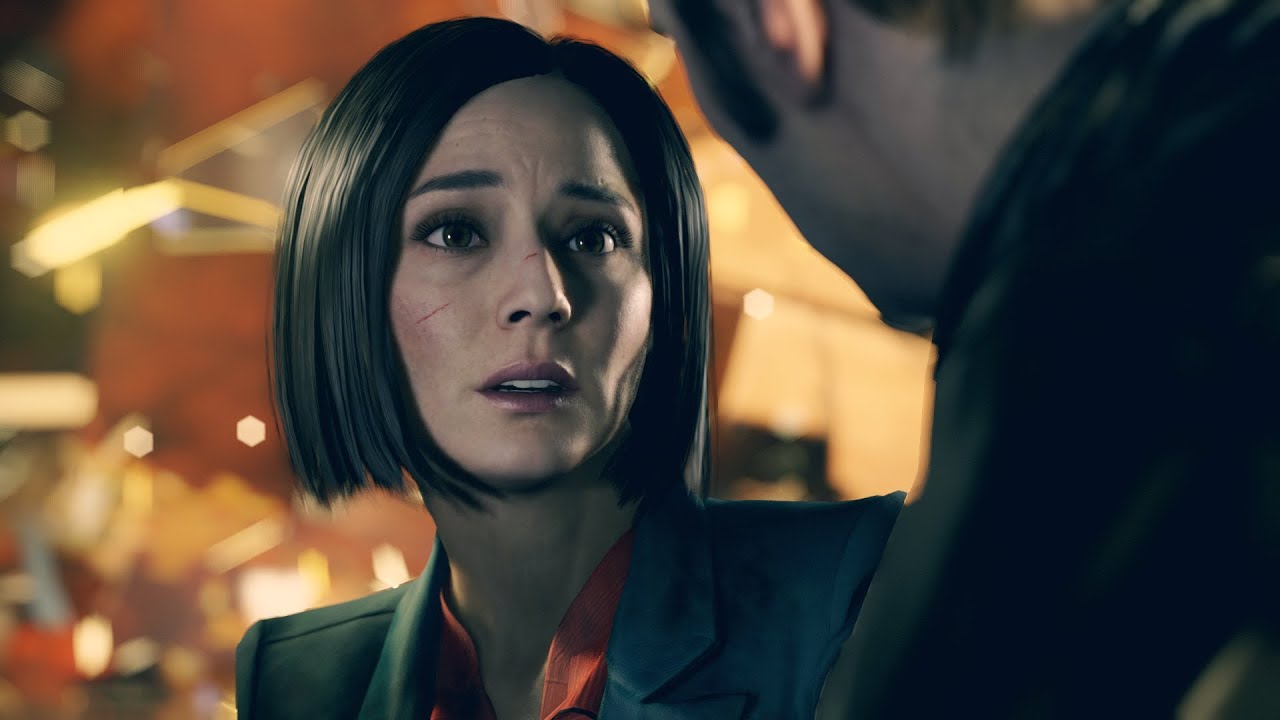
Quantum Break’s gameplay premier was, by all accounts, a tease; a mere glimpse into the actual gunplay of Remedy’s next action game. It’s fitting that Remedy would work time mechanics so intricately into their next game as we look at their pedigree from Max Payne’s bullet time and Alan Wake’s action slowdowns.
We get but a quick look at our main character’s time manipulating abilities such as being able to run at super speed through the environment. One of the concepts that excite me the most is being able to play through levels that fall apart around you in slow motion. This could open up opportunities for continuously changing level design for cover and vantage points. Just imagine running through a collapsing bridge shooting enemies as bits and pieces if it slowly falls to the waters below?
Perfecting Titanfall

Battlefield 4 and Grand Theft Auto Online will be remembered in 2013 as two of the most disastrous online experiences this year. From DICE’s assumed pressured release and EA’s faulty servers to Rockstar’s lack of beta testing prior to the release of GTA Online, gamers’ patience is wearing thin for stumbling launches of online multiplayer games.
When Respawn’s Vince Zampella was asked if there would be a beta for next year’s most anticipated shooter Titanfall, he simply stated, “We’re thinking about it.”
This worries me.
There’s no doubt that the folks over at Respawn know how to develop an online multiplayer shooter as the studio is comprised of many of the most talented members from Infinity Ward. However, there has never been a game quite like Titanfall, fusing agile mechs and jetpack boosting pilots battling on the same map all supported on Microsoft’s cloud powered servers. It’s an ambitious feat that has raised it to be, for many including myself, the most anticipated game of 2014.
Ambitious titles that are heavily or solely relying on online functionality can rarely afford not to be beta tested. Yes, Sim City and Battlefield 4 ended up being catastrophes even with beta testing, however stress testing a games server performance, weapons and map balancing is better than nothing at all.
With just roughly 3 months to go, Titanfall has shown no signs for beta testing. My fingers are tightly crossed for Respawn’s ability to deliver.
Telltale takes the VGX by storm

Telltale has created such a monolithic reputation with The Walking Dead Season 1, and the recent beginning of The Wolf Among Us. The studio has earned itself as being referred to as pioneers in video game dramatic story telling, so how is that going to translate a story through Borderlands, a game where you shoot many guns at enemies who scream “I’m the one who knocks?”
It’s difficult to separate Telltale from drama, but it’s easy to imagine many forgetting that this studio has done comedy before. Remember Sam and Max and Strong Bad? Sam and Max brought us the witty banter between the two anthropomorphic animals, its zany sense of humor, and overall intelligent writing making the series one of the most classic comedy adventure games. Strong Bad’s Cool Game for Attractive People was a little more outrageous in its comedy, delivering a game that Homestar Ruiner fans deserved. Delving deep into Telltale’s history, comedy was a huge part of a number of the studio’s projects.
But if comedy doesn’t do it for you, undoubtedly Telltale’s confirmed Game of Thrones will win you over.
Game of Thrones has captivated readers, and later, audiences with its brutal politics and unapologetic morality of many high profile characters. No one could have said it better than Geoff Keighley, Telltale is the exact developer that’s primed to make Game of Thrones interactive.
As seen with The Walking Dead and the first episode of The Wolf Among Us, Telltale has proven to bring quality drama, unseen twists, and mortal consequence to gamers. Game of Thrones embodies the very essence of all three, so the marriage between the developer and the lore will only surprise us if it DIDN’T work.
But the big question is, can Telltale deliver something more gut wrenching than the Red Wedding?
Game of the Year Honorable Mentions

There’s no doubt that the VGX’s GOTY nominees deserved recognition as being among the best titles in 2013. However with the growing presence of the indie scene, separating “Best Indie Game” and “Best Game” is becoming less and less relevant. Even outside of indie development, there were some fantastic games that received much less attention than they deserved. Here are some honorable mentions for GOTY:
Brothers: A Tale of Two Sons was a shockingly dark themed game where its mechanics pull the emotional rug right from under us nearing the game’s conclusion. Talking about the game along wont do it justice, and it’s a game that’s absolutely worth playing.
Gone Home was well deserving of winning “Indie Game of the Year”, however for many, its evocative narrative won people’s hearts and is considered THE game of the year to many. Gone Home evoked emotion right from the start, from the haunting chill of an empty house to the developing romance story of a young woman. Gone Home touched so many gamers, recreating what it was like to fall in love as an adolescent.
Ni No Kuni: Wrath of the White Witch is an enchanting JRPG with one of the most engaging battle systems in the genre. Studio Ghibli’s aesthetic captivates us who may have grown tired of the samey traditional anime art style; and the story, while still subject to JRPG tropes, is a heartwarming tale of a young boy trying to revive his dead mother. The battle system fuses monster collecting with Tales-like real time gameplay, creating intense fights laden with reflexes and strategy.
The Stanley Parable can be a haunting realization of what little control you have as a player of video games. This sense of weird comical unease partly comes from this former Half-Life 2 mod’s clinical Portal sheen as the witty and hilarious narrator mocks your every move. And the narrator is always ready, delivering a surprising amount of dialogue to ostensibly no matter what choice you make, how many times you make it, and however long you decide to make one. Choose to go through the same door he told you NOT to go through, you’ll then face a boarded up door way MAKING you walk through the other door he dictated. Its brief campaign is superseded by its multitude of endings which carry the essence of The Stanley Parable, what could they possibly throw at me next?
The Legend of Zelda: A Link Between Worlds has recaptured even the most critical of Zelda fans such as Polygon’s reviews editor Arthur Gies whose publically been unrelenting towards the franchise for years before claiming that A Link Between Worlds is “The best Zelda game of the last twenty years”.
Rupees mean something. Dungeon order means nothing. It’s these very fundamental differences in which has earned A Link Between Worlds so much praise. As an unsubtle ode to what many consider the best game of all time, A Link to the Past’s references serves as a reimagining, not a reskin. Being able to complete dungeons in almost any order, being able to rent all items very shortly after the start of the game, and not having to deal with the hand holding bulls**t the franchise has so painfully relied upon shakes up the formula for Zelda titles, and from here on out, no one wants to ever look back.
What other games would you say deserve to be honorable mentions?
Game of Show: No Man’s Sky

My first impressions of No Man’s Sky was that it’s Destiny with The Witness inspired visuals without the emphasis of first person shooter gun play. But No Man’s Sky looks to be so much more.
Indie developer Hello Games gives us one of the most impressive looking upcoming next gen titles to date. Its procedural generation of aquatic life, sprawling planets, and space clutter is awe inspiring, and few games capture the wonder of moving from sea – to land – and seamlessly taking off into space. However even more so than procedural generation, No Man’s Sky looks to be the game that owns the term, “If you can see it, you can go there.” In this massively multiplayer online game, mountains, stars, and planets are all real locations in No Man’s Sky, and it’s almost unheard of that this game is a product of a team four people strong.
This past week has been a heavy week in gaming. Separate from this post will be a reaction to the VGX 2013 announcements.

Now, let's take a look at a week in gaming from 12/2/13 to 12/5/13.


During last Sunday’s Bonus Round on Game Trailers, while discussing predictions of what is now the seventh generation of consoles, Naughty Dog co-founder Jason Rubin stated that Nintendo is “irrelevant as a hardware manufacturer” at this present time.
Back in July, I wrote a piece making similar statements, but strictly in the context of third party support, not as a hardware manufacturer. So does Nintendo have something to offer in the home console hardware business?
Historically Nintendo has, revolutionizing controllers with the N64, and initiating a dramatic shift towards motion control with the Wii across all platforms, even inspiring PC development to experiment with this control scheme even further. There’s no doubting that Nintendo has stood as a major influence in video game hardware in the past.
But what of the present?
Wii U’s online infrastructure is archaic and vastly underwhelming even in comparison to even last gen’s, let alone current. And, without beating a dead horse, the system’s raw power has turned away certain developers who’s interested in pushing technology and capitalizing on more system resources that Nintendo’s platform is incapable of offering.
Though neither has ever been Nintendo’s strong suit within the past seven years simply because they were never their primary focus. Nintendo’s focus has always – throughout the company’s history – been zeroed in on innovation. And that innovation this generation has come in the form of the Wii U Gamepad. The Gamepad is a modern technology concept, adapting their ideas from the DS line, integrated in a first ever fashion on a home console. And though the lack of multi-touch functionality is jarring, especially to the casual audience that has acclimated to iOS and Android interfaces, it has vast potential; it just hasn’t fully reached it yet.
There have been glimmers of genius in Wii U’s software. The system’s pack in launch title Nintendo Land has a garden variety of concepts in which the Gamepad can be used. ZombiU’s inventory management pulled gamer’s attention away from the screen, leaving them exposed to the dangers that lurk about, and side scrolling platformers such as Rayman Legends and New Super Mario Bros. U have built a truly unique co-op experience where the Gamepad holder plays as the invisible guide, opening pathways for the avatar controlling player or griefing them for their own pleasure. This concept – while likely not influenced by Nintendo – will be seen on upcoming titles such as Watch Dogs and The Division, and can already be experienced in current titles such as Battlefield 4 via its Commander Mode.
As the only system with second screen natively built in, Wii U has a chance to be the pioneer in second screen functionality. Xbox SmartGlass is just getting its feet wet, and Sony is finally diving in fully with Vita integration, currently primarily with Remote Play. As both the hardware and software developer a year ahead of these systems, Nintendo has the opportunity to lead this concept in ways that may not match their influence on motion control, but can still show competing platforms how it’s done. Nintendo’s hardware presence very much has the potential of hardware relevance.
It was a common joke prior to the release of the Playstation 4. “Careful out there folks. Don’t get trampled, or shot, or something…”
These jokes weren’t baseless. For those who remember, there were multiple outbreaks of violence around the Playstation 3’s launch, including a shooting in one case where two armed men shot a man waiting in line for a Playstation 3 (to be fair, they were demanding his money, not the system).
Last week, reports stated that a suspect has been arrested in connections with the killing of 22 year old Ikenna Uwakah, who after was trying to sell his Playstation 4 online, met up with the assumed buyer before being fatally shot multiple times by the gunman who then snatched his Playstation 4 and ran.
Who would have thought that one of the most infrequent and highly anticipated occurrences in the gaming industry can be so dangerous?
It’s an upsetting and infuriating tragedy that has played out like a drug deal gone bad. There is a fundamental problem in a situation where someone feels a sense of entitlement to take another’s life over a piece of entertaining hardware. I love video games; you love video games; but let’s be frank, it’s just f**king video games!
Even if the motivation wasn’t over “I WANT the hottest new system” and more driven by looking for a resell value himself, it’s a business that has no business putting people’s lives at stake. I had a therapy session with a client today prioritizing the value of money and materialistic items who stated that the root of his problems nestled in a lack of confidence.
Money doesn’t earn you respect. Having the latest game console doesn’t earn you respect. And if you’re willing to kill another human being over either, then f**k you.
Less like movie goers on Netflix, and more so like fans of literature, many gamers in this very young medium have a very innate and often emotional connection with games as physical software. EA’s CFO Blake Jorgensen’s statements highlighting the low sales of digital downloads in comparison to physical discs are very indicative of this sediment.
He attributes this phenomenon to the internet capabilities of the gaming consumers at large who all aren’t quite capable of handling the download speeds required to facilitate digital purchases. But even as a gamer who’s history dates back to the cartridge blowing early 90’s with a – more or less – reliable internet connection, I feel that the strong demand for physical software delves deeper than that.
The gaming populous was furious with Microsoft after their abysmally communicated (in its most basic form) DRM after announcing the Xbox One, and gamers resisted for equally strong reasons in addition to considering limited internet access. Trading games, whether that may be to Gamestop, or to each other, has been a mainstay in the video game exchange for two decades. Without the internet keeping gamers stationed behind headsets, players came together in physical proximity, and with it brought the practice of packing games to show off at a friend’s house. It was this that brought me to my favorite multiplayer game of all time, Super Smash Bros., and it was also how I was introduced to The Ocarina of Time.
Children and teenagers rarely if ever have disposable income; and the system of game trade-ins stood as a viable option for those who couldn’t shell a full $50-$60 for the newest game that they’ve been so eagerly waiting for. I’m too old to be ashamed to admit that this was a routine for me on a monthly basis when I was in high school, and every now and again now as an adult, I’ll pocket some cash for a game that I have no desire for sitting in my library.
But even that’s not enough to explain the gravitation towards physical software. I have two totes filled with games from last generation and appreciate moments picking them up and getting lost in the box art, reminiscing on the long nights I’ve spent in Fallout 3, or regretting not getting the chance to play as the female version of Commander Shepard looking at the alternate cover.
This install mandated console generation brings us closer to the transition of digital downloading with no justifiable reason to wait till 10 am to drive to my local Gamestop for a copy of the next game. It's a mentality that many of us console players will have to adapt to for those who haven't already. But it’s this 20 year history with video games that can very well force the habit of preordering a title, or – god forbid – waiting in line for a midnight release.
EA has not had a good reputation with their servers as of late. Sim City will be remembered as the bastard child example of DRM, and EA’s latest titles including Madden 25, Need for Speed Rivals, and famously, Battlefield 4 has had their host of problems after launch.
Battlefield 4 has been a special case of bad, plaguing players across all platforms with an enormous list of severe issues including the recent China Rising Expansion Pack, the infamous one-hit-kill bug, and locked out Conquest matches. In my case on the Xbox One, Battlefield 4 has been, in all accounts, virtually unplayable with consistent failed connections to matches, multiple deleted campaign progress, and full game crashes that won’t allow me to even get to the main menu.
EA ensures that things will get better, halting all Battlefield 4 development until the game is fixed. But when? Reports stated that the Xbox One version of Battlefield 4 would get a patch this week – some stated that it should have been today – however there are still issues plaguing the game. Should I hang on to my copy of Battlefield 4 with a flawlessly functioning copy of Call of Duty: Ghosts and Titanfall just a few months away?
For those who celebrate this recent holiday, I hope everyone had a healthy and pleasant Thanksgiving. And as to everyone, I hope you all will forgive a thinner update this week after the holiday.

Now, let's take a look at a week in gaming from 11/25/13 to 11/27/13. Below is a feature discussing last weeks release of the investigation around the Sandy Hook shooter, Adam Lanza and what role video games might have played in his life.

Making eyesight better with Oculus Rift (11/26)


Adding to the recent news that video games don’t harm children, we can look at ways that they improve eyesight; particularly with amblyopia (lazy eye) and strabismus (crossed eye).
Enter Diplopia, an Oculus Rift title promoted on Indiegogo by James Blaha who suffers from strabismus. Though games like Tetris and first person shooters can help improve vision and has also seen in mitigating the burden of lazy eye, Diplopia is specifically designed to treat both amblyopia and strabismus as an alternative treatment to patching which has been described as unpleasant.
Whereas those with strabismus cannot see in three dimensions, the game projects some of the images to both eyes in order to force the user’s eyes to make up from missing parts of the image and help them perceive the game in 3D. It trains the user to move naturally to see the image from different angles using the Rift’s head tracking technology.
Diplopia’s raised funds on Indiegogo at the time of this writing is nearing $6,000 of only $2,000. Stretch goals include nVidia 3D vision support as well as 4 new minigames up to $30,000.
Source: Indiegogo
VIA Polygon
How children can benefit from games this holiday season (11/27)
Holiday Game Jam, organized by developers Teddy Diefenbach and Archie Prakash (developers for Hyper Light Drifter, and Asteroid Soccer 2014), will begin on Black Friday November 29th and go on through the 22nd of December.
The game jam will have developers create games throughout the holiday “mid season”, and all games sold will help raise money for Childs Play, a charity dedicated towards supplying toys and games for children in over 70 hospitals nationwide in the states. Childs Play recently celebrated their 10th year anniversary after raising over $20 million in the past decade.
Just at the top of this month, Extra Life kicked off and managed to raise just shy of $4 million dollars. Extra Life is an organization dedicated through Children’s Miracle Network Hospitals to raise money for children’s cancer.
I felt the need to report on this after MY IGN user harshgupta posted on my Sandy Hook story earlier this week about a group of 400 gamers in Portland Oregon raising 37,500 lbs of food for the homeless in 48 hours.
Way to go gamers.
Source: Polygon
A Week in Gaming Special Feature:
Sandy Hook's shooter was just a normal gamer,
or was he?
Originally reported on November 25th 2013
Video games is a violent medium, no one can deny that. Without the basis of statistics, I’m confident that over 90% of console/PC dedicated gamers owns a fair amount of games with violent content in them.
Adam Lanza, the deceased shooter from Sandy Hook Elementary School, seemed to be one of those gamers. Sure, he played Left 4 Dead, Metal Gear Solid, Dead Rising, Half-Life, Battlefield, Call of Duty, Grand Theft Auto, Shin Megami Tensei, Dynasty Warriors, Team Fortress and Doom; but he also played Dance Dance Revolution, Kingdom Hearts, Kingdom Hearts 2, Phantasy Star Online, Paper Mario, Luigi’s Mansion, Pikmin, and Super Mario Bros.
The gaming industry was under siege. Plenty of political officials from both ends of the isle, as well as the National Rifle Association (NRA), has taken Lanza’s interests in video games and stigmatized the medium as a corruptive hobby responsible for incepting violent minds and spawning mass shooters.
However a report last Monday documents that the Sandy Hook shooter’s relationship to video games drew no conclusions to the massacre. It’s important to note that the summary of the investigation doesn’t specifically state that there is no connection between video games and the shooting, but intentions and influences are largely inconclusive.
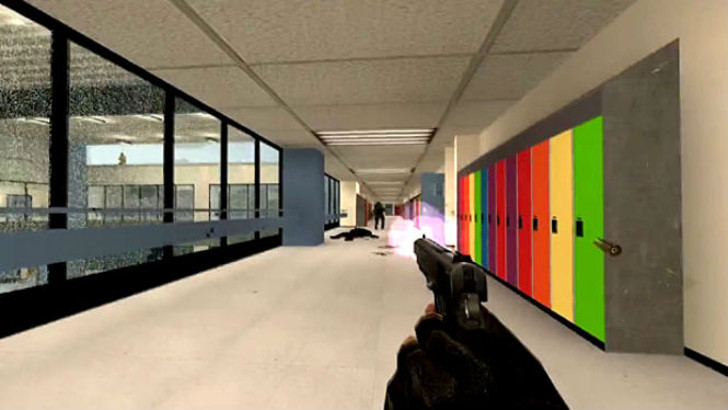
But there’s a little cornel of information imbedded within investigation’s summary that is beginning to catch the general media a blaze. Among Adam Lanza’s possessions which included material pertaining to school shooting content and even pedophilia advocacy, was a PC game which the summary claims is titled “School Shooting”. I myself have not found a game by that title, but instead a Source mod called “School Shooter” which emulates school shootings and encourages the player to commit suicide before getting arrested.
Game advocate or not, this is deeply disturbing. Much of Lanza’s gaming interests fit within the realm of normalcy from war shooters to kid friendly platformers. However most of us can agree that the gaming community at large doesn’t associate with games that explicitly depict violence against defenseless targets. Many players expressed their discomfort in Modern Warfare 2’s “No Russian”, where there was no requirement to kill innocents, and was merely a small section of the campaign.
Such content can only be conceived by modifiers and small – likely one man/woman team – developers, and is not representable to the gaming industry’s artistic nature. This material existed outside of our medium’s norms and skewed more towards the suggestive content that peaked Adam Lanza’s attention. I can sit here all day and convince others that “this isn’t what gamers are into” and “games like this hardly exists”, but the existence of games of this nature is upsetting to say the least.
There are books that justify hate, music that preach genocide, and armature films that that depict fanatical racism. In this new developing medium that has more independent and creative minds get involved, it’s inevitable that imaginative – and quite frankly – sick fantasies find their way to fruition. Troubled fellows like Adam Lanza gravitate to such content, but – as we already know – it is the interest of causing violence that causes violence, not video games.

CALL OF DUTY: GHOSTS REVIEW: PHANTOM FOOTPRINT

No comments

Sunday, November 24, 2013

Reviewed by: Jamaal Ryan
What looks to further resemble Battlefield's single/multiplayer divisiveness from Battlefield 3 to Battlefield 4, Call of Duty: Ghosts delivers more of an uneven experience. Ghosts' campaign is feeble. It's easily the most forgettable of the franchise with a painfully weak story, abandoned assets, and blatant redundancies among interesting yet overshadowed sequences. But while the franchise's tried and true multiplayer is Ghosts’ strong suit which offers the reasons why millions of players compete every year, it leaves a much less impressionable footprint than past entries.
Rinse, wash, repeat
Call of Duty Ghosts’ campaign is a refresher from Infinity Ward’s handlebar mustache toting Modern Warfare series. In place of chest thumping and occasionally suave British accented military comradery comes more chest thumping military comradery, but this time the relationship is blood deep. You play as the ineffectively mute protagonist Logan Walker, who along with his brother “Hesh” Walker, has joined what’s left of the American armed forces under command of their father in efforts to resist a devastating South American military threat.
It’s a story about two brothers fighting on American soil (and for some reason, across the globe of course) in an embroiled conflict to reclaim an already ravaged country, one that’s written by the Oscar award winning writer behind the highly regarded films Syriana and Traffic.
However the Hollywood talent behind Ghosts’ story is never apparent, ever. The posturing "We're Ghosts!" showboating, and graveled “’I’m proud of you son” one-liners is hardly good writing at all. Ghosts’ story, once again, moves forward in loading screens, but this time with dark, smokey, crystalized visual metaphors. It spends so much time utilizing loose rationale for location and sequence hopping across the globe and hardly ever enough time focusing on the brothers' story, that when it’s time for its predictable emotional climax, even more so than Call of Duty titles before it, there’s little reason to care.
Sooo... who are you guys again?
The campaign creates a number of new ideas bathed in numerous pace changing sequences that tries to keep things fresh. One minute I’m sneaking through a heavily patrolled forest Far Cry 3 style, the next I’m dipping under chest high water for cover as I move up on blasting enemy forces undetected.
One moment, I’m controlling a canine via remote sensors mauling unsuspecting enemies (which only lasts one chapter in the game), the next I’m barreling through a desert in a high speed tank blowing up enemy bases in a bright vastly open plane.
Some sections have me floating through space station debris engaging in muffled space shootouts; others will have me taking cover behind sunken ship remains from concussive sonar blasts deep underwater or– if I so choose – fend off sharks before they violently devour me.
You get the idea.
But with every fresh idea comes recycled ones as nearly all of Ghosts' levels conclude with an expected payoff which are different variations of "holy s**t" mad-dashes from angry pursuers as the world falls apart around you. It’s a bullet point adherence that fulfills criticisms of the franchise’s single player campaigns being little more than a series of explosions. This insidious volley of every fresh idea countered by recycled sequences creates a cantankerous experience, especially as it's layered under a deceptively shallow story.
New Motivation
Jumping into Ghosts’ multiplayer may expose players to a bit of a culture shock. But the biggest revelation is this: for over half a decade, Team Deathmatch was more than enough to keep Call of Duty players exclusively invested; however Ghosts seems to find most of its strength more on tactical gameplay.
This primarly has to do with the multiplayer map design which favors noticeably bigger, more obtuse levels – where somehow spawn kills have become more infuriatingly frequent – with many of them lacking obvious points of contact. While more explicit vocal locators are mildly effective inclusions, not much of Ghosts’ design makes finding enemy players easy, which is exacerbated by the unnecessarily complicated new SAT-COM killstreak which, in place of a straight forward single use radar, is now a two SAT-COM minimum placement requirement just to begin spotting enemies via radar sweeps.
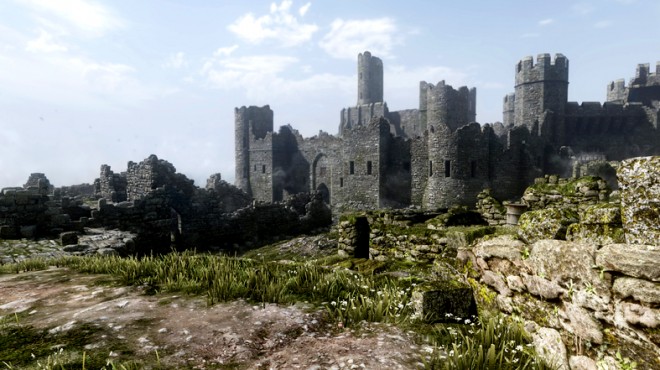
On one end, Freight – a tighter industrial train depot – is the most classic style Call of Duty map in Ghosts with a centralized area where competing teams meet; but it doesn’t mean it’s as great as Call of Duty’s true classics. On the other you have Stonehaven, a massive Scottish themed location littered with stone built remnants where snipers and long ranged riflemen reign supreme. Some oddities fit in between such as Sovereign, which feels like a disorganized set of rooms and walkways on two floors, and Flooded: a slightly better designed three story dam split in half that draws attention to locations on either side. Whereas many of these maps excel in one particular play style – Octane is a s**tty TDM map, but a spectacular Cranked map – they are not properly optimized for others.
Keep your head way the f**k down.
These newly designed maps do however do a decent job in supporting the new maneuverability mechanics. Slightly raised obstructions invite you to vault over them and keep your momentum going, and vertical accesses are less of a hassle to get to. Ghosts’ overall level design is also peppered with plenty of corners to peek around, which is where the knee slide and contextual lean find their purpose. And though you may not find yourself using these mechanics as much in Team Deathmatch (outside of the vault of course), they have better placement in more objective based match types.
Being that game types with a greater purpose than kill-kill-kill make better use of Ghosts’ new maps, your time will often be better spent in some of multiplayer’s new modes. Chief among the new objective based additions are Blitz: a one way Capture-the-Flag style game, and Search and Rescue: a fusion of Search and Destroy and Kill Confirmed.
Blitz alleviates the headache of being a flag carrier by only requiring players to run into an enemy's defended zone to score points. This simple omission of escorting flags drastically changes the behavior in this new variation. Skilled and even coordinated players will grief the opposing team by holding them off from defending their own zone before entering it one by one during 10 second countdown timers between each score. It's a straight forward if not streamlined way to play, and you won't ever miss playing another round of capture the flag in Call of Duty.
Search and Rescue is one of the most methodically encouraging game modes in Call of Duty’s history. The objective of destroying the enemy’s high value targets while risking being killed out of the round permanently remains the same. However Search and Rescue borrows Kill Confirmed’s dog tags where if an enemy picks up your dog tag, you’re out for the round; if an ally recovers your tag, you’ll get a second wind. Search and Rescue strongly encourages teamwork not only to defend bomb sites, but to keep your buddies alive.
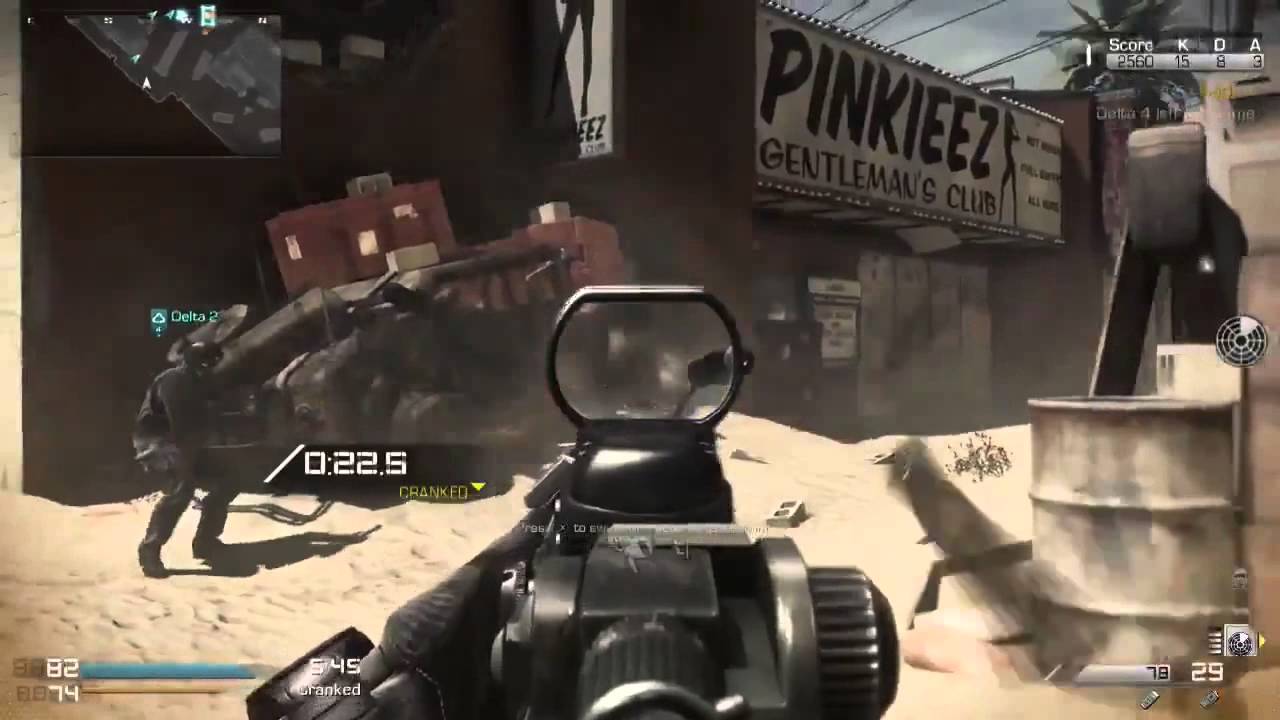
But in efforts to not only keep the kill stacking driven attitude of Call of Duty, instead to enhance it, Call of Duty Ghosts brings us Cranked, a highly skill based match type much like what SWAT is to Halo.
In this very aggressive new game mode, initial or after death kills rewards players with a dramatic speed boost. Perks like Stalker, Lightweight, Marathon, and Slight of Hand are all activated and super charged. The catch is that you have to earn a kill within 30 seconds to reset your time or else you'll explode.
Though Cranked is a TDM variant, Cranked pressures players to take risks that wouldn't be justified in any other mode, forcing everyone out in the open frantically hunting down other players to reset their clock. It feels like playing on Nuketown on every map it takes place in, except with an added layer of gratification earning a kill just milliseconds away from detonation, and the hilarity of watching those not as fortunate.
No performance enhancement drugs necessary.
However if Cranked’s intensity is too overbearing, Kill Confirmed is still a great alternative, eliciting much of the same risky behavior that alleviates much of the downtime and diminished focus these new maps bring.
Blitz, Search and Rescue, and Cranked are all welcomed additions to the Call of Duty franchise. But there’s a lack of experimental game types that have given options for Call of Duty players to toy around with. Party Games are noticeably missing, and some of the other additions such as Hardpoint and Multi-Team Deathmatch – both in which would have been perfect for Ghosts’ new expanded level design – are also out of the picture. This continues the franchises strange back and forth between the two developers, injecting new ideas while taking others away.
Ghost in the Machine
I gave considerable credit to Combat Training’s learning curve for newcomers in Black Ops 2. Squads Mode carries the same intention as did Combat Training, however it’s much less academic than Treyarch’s offering.
Squads feels more appropriate for those that graduated from Black Ops 2's Combat Training than for those who are new to the franchise in general. The AI controlled players are properly cheap, knowing where to aim at the precise time -- even if your loadout is strictly optimized for stealth -- and are more challenging in general. They're either far too challenging for new players (outside of Recruit difficulty on Wargame) or far too simple on one end and behaviorally unfair on the other for players who are looking for a more organic experience.
All the modes are different variations of bot challenges. Wargame is the most new-player friendly where you’re simply facing off against randomized bots on selected difficulties, whereas Squad Assault has you challenging bots that are hand selected by other players asynchronously. Squad v Squad is the most interesting iteration of the bunch where it has two players and their chosen squad members battle each other.
Outside of being an overzealous training grounds, playing Squads does contribute earned EXP to your standard multiplayer progress, and the sheer number of squad member loadout slots open opportunities for players to experiment with Call of Duty: Ghosts’ massive number of customization options.
The odd man out in Squads is Safeguard, which was assumed to be the return of Survival from Modern Warfare 3; however it's considerably less interesting than its predecessor albeit it being mindless fun. Safeguard strips much of Survival's core assets which you'll only find in Extinction: earning cash for new weapons, equipment, and support, and granted down time to properly prepare for the next wave.
What's left is a barebones, straight forward standoff against waves of enemies with frequent supply drops that gift perks, weapons and auto supports. Progression only lies in nebulous leveling weapon proficiencies, however weapons aren't customizable. And the longer you last gives you more opportunity to stack perks which makes guilty fun when running circles around the AI controlled competition. All in all however, Safeguard isn't nearly as compelling as MW3's Survival Mode, and it can't be helped but to think that it was intentionally designed this way just to siphon attention to Extinction.
Your move Zombies.
Extinction is what Dead Ops Arcade was to the original Black Ops. It's a surprising addition to Ghosts in the same vain as Treyarch's Zombies and offers a different co-op experience to Survival Mode. Unlike Zombies, Extinction's objectives are more direct and simple enough for even a team that isn't communicating can understand. Four players must carry and escort a drill around a ruined city and defend it against agile aliens as it destroys each hive -- marked on the HUD -- until you reach the crater. Gunning down aliens gives a vastly different flavor than what's expected in Call of Duty games. The leaping predators demand you to keep your attention above as well as on the ground, making the game much more akin to Left 4 Dead than anything else.
There's only one chapter available for Extinction currently, and though more chapters are bound to arrive via DLC, Point of Contact can hold its own replayability for the time being. The unlocks are separate from Ghosts' multiplayer proper, much like how Survival was in MW3, and Extinction doesn't completely abandon Zombies' idea of discovery with hidden secrets tucked away throughout the city. Extinction is a more than welcomed addition to Call of Duty, and is easily one of the very best co-op experiences in the franchise.
A Flavorless Investment
What players might grow to learn is that Ghosts' competitive multiplayer also feels as if it's artificially engineered to produce longevity. With 35 perks, 12 different pieces of equipment, 24 killstreaks, and 30 firearms each with their own number of attachments – some of which have their own manufactured attachments integrated, there is a significant amount of unlocks to choose, purchase, and assort in Ghosts’ version of the Pick 10 system. But this is where the ingeniousness comes in, the market place.
The original Black Ops introduced a currency system in place of just earning rewards via leveling up. Black Ops 2 streamlined this system by having fewer perks, making it easier for players to make decisions. However Ghosts carries ever Treyarch's monetary system paired with a daunting level of unlocks that gives the impression that you're in for the long haul, especially when perks like Marathon, Overkill, and Stalker are made available in the much higher levels at a cost.
But what's most offensive is the squads themselves. Though it makes sense to charge per new squad member (up to 5 extra members only cost 3 SP a pop, the last 4 charge 200 and up), it makes for an even longer investment when you have to repurchase all the weapons, perks and killstreaks for each new member. It doesn’t feel honest, and makes playing Ghosts a hassle just to access everything that's available, especially given that Ghosts doesn’t have the robust feature suite the Black Ops series has built to keep players properly distracted.
Hire a new squad member, and you gotta buy ALL this s**t again.
This is Call of Duty Ghosts’ biggest flaw. Say what you will about the Call of Duty franchise, but each new installment has brought something of significance to the brand. Modern Warfare reinvented the franchise and shooters this generation, World at War made World War 2 relevant and introduced Zombies, Modern Warfare 2 evolved and expanded the killstreak system, Black Ops began taking the franchise in an all new direction, Modern Warfare 3 brought us Strike Packages, and Black Ops 2 began the Pick 10 system.
Call of Duty Ghosts doesn’t have its own feature to live by, let alone an extensive feature set as we’ve seen in past entries. Extinction could have been that new addiction if it simply wasn’t for the already established Zombies Mode. Squads is nothing more than an elaborate training ground for less experience players, and the new modes don’t make up for what’s gone missing. Ghosts presents a significant amount of unlocks to earn and choose from, however the journey getting there will likely get tedious far too quickly.
The Bottom Line
Call of Duty: Ghosts is the weakest jump in the series, which makes you wonder if this is a product of being a three studio project. The campaign is almost a miserable waste of time, often a frustrating tease of inventive ideas at best. This may not mean much to immediate multiplayer divers, however those who have enjoyed Call of Duty’s past stories in all their flawed glory will find little to appreciate here.
Multiplayer, both competitively and cooperatively, is a divisive surprise as a whole. Despite new instant classic modes, Ghosts’ competitive space doesn’t have a whole lot to say so much so as giving players a lot to work for. Extinction however is this entries strongest contribution, delivering the franchise’s most entertaining cooperative experience to date while still retaining incentivized replayability.
But in light of Ghosts’ let downs, it’s a profound example showing that the COD formula still works, making a still good shooter seven annual installments in.
+ New classic multiplyer modes
+ Plenty of opportunities for custom loadouts
+ Extinction Mode
- Cannot recommend the campaign
- Unnecessarily complex map design
- Loss of quantitative variety in game modes hurts
SCORE: C+
Being that I posted pre-release impressions of the Xbox One earlier last week, this week's A Week in Gaming is a bit abbreviated.

Now, let's take a look at a week in gaming from 11/18/13 to 11/22/13. Below is a feature discussing impressions of the Xbox One's line up based on launch day reviews.

Tropes vs. Women in Video Games: Ms. Male Character (11/18)

Anita Sarkeesian’s Trope vs Women in Video Games continues with the moniker, "Ms. Male Characters" which signify games’ history of identifying female counterparts of male characters with specific visual and characteristic tropes.
The earliest example of the Ms. Male character in video games is Ms. Pac-man, originating from Crazy Otto (Pac-Man with legs) to the most successful American arcade cabinet game of all time. Ms. Pac-man was easily distinguishable by the bow on her head, coupled with lipstick, long eyelashes, eye makeup, and a beauty mark. While the argument can be stated that in the 8 bit era, there was no other way to differentiate male from female, the proper follow up question would be, do all women wear a bow, have long eyelashes, wear makeup, and have beauty marks?
An easy example of gender neutrality is Metroid on the NES. Though there’s the issue of Samus’ increased physical sexuality as seeing her wear pink underwear, her Chozo armor gave no indication to her gender.
Ms. Male Characters have been identified by bows and other trope aesthetics for decades from Minnie Mouse, to Bubble Bobble, to Super Monkey Ball.
Anita drives the point that bows themselves are arbitrary in functionality as there’s no definitive exclusivity for them to be defined as female. In fact, stating that only women can wear such attire offends men that wish to express their sexuality in preferred and abstract ways. This expectation does send a message from certain male characters, such as Mario’s Birdo, which IGN alum Zack DeVries mentions in his Fake or Gay piece back in 2011. Here it shows a description of the assumed sexually confused character, “He thinks he’s a girl, and spits eggs from his mouth. He’s rather be called ‘birdetta’”.
The opposite can be said for the Angry Birds series, in which the white bird – who was revealed by Rovio – is actually a female named Matilda, underwent a character redesign with the obligatory “feminine” additions so that there would be no mistaking her gender.
But much like the colors pink and blue, there’s a socialized attachment to such aesthetics. And when coupled with other gender tropes, they create very clear stereotypes. Much like Princess Peach in Super Princes Peach for the DS, the koopaling Wendy expresses signifying characteristics in both her mannerisms and dialogue as being spoiled and bratty, all part of what Anita likes to call “Personality Female Syndrome”.
Another term Anita refers to is the “Smurfette Principle”, which describes a single female character in a roster of male counter parts. There’s the aforementioned Wendy koopaling, Scribblenauts’ Lilly of 42 children, Megaman’s Splash Woman of 78 bosses total, and Wonderful 101’s Wonder Pink.
The originator of the Smurfette Principle succinctly states:
“The message is clear. Boys are the norm, girls are the variation; boys are central; girls are peripheral; boys are individuals; girls are types. Boys define the group, the story and its code if values. Girls only exist in relation to boys.”
Anita follows up with this realization with an even more profound historical concept. As authored in the Bible, Eve was iterated from Adam’s rib who was created in God’s image. This just goes to show just how peripheral females have been viewed in societies for centuries.
To my ignorance, Anita also discussed the viral marketing of Mass Effect. Though the game itself sits comfortably in both gender and sexual orientation accommodation, ads have primarily featured the male version of Shepard instead of “Fem Shep”, the moniker given to the female version to differentiate her from Shepard, not “Male Shep”.
Anita closes with some examples of more appropriately female depictions in titles such as the blue cube Claire in Thomas Was Alone, and half of TowerFall’s roster as being female.
The Ms. Male Character trope, much like societies abided stereotypes, runs through an undercurrent in our subconscious. It seems to come natural to developers to “put a bow” on it, and dazzle them up with make-up and pink attire whereas what’s seen in other games such as Knytt Underground and Ittle Dew may be efforts of developers and writers to go out of their way in avoiding said tropes.
We’ve come a long way from being completely ignorant to tropes and stereotypes to holding active awareness. Let’s hope for a time where proper diversified depictions become second nature.
Day One with Xbox One (11/22)
The Controller
The Xbox One controller has surpassed the Xbox 360 controller as the most comfortable gamepad I’ve ever held; I specifically said “held”, not “used”.
It feels like my hand size is the target and ideal demographic for controller’s handling. Picking up the controller from a flat surface, I can roll my palms over it, and both of my hands position over it almost perfectly. The analog sticks feel as if they were specifically engineered for first person shooters. The textured edging on the joysticks make up for the smaller diameter; allowing a grip from every angle and helping to keep the sticks under your thumb. The height also helps, giving your thumbs an easier time to tilt the joystick in every which direction, and they make you feel more in control of camera movement.
The height of the sticks however do interfere with my reach to the View and Options buttons, forcing me to arch my thumbs down over the tall sticks. The Guide button now is completely out of the way, sitting at the top of the controller instead of dead center within reach. In retrospect, the Guide, View, and Options buttons are less comfortable to travel to than the Start, Select, and Guide buttons on the 360 controller.
The D Pad on the Xbox One feels more intuitive than that even on the Wii U Gamepad, with satisfying individual clicks instead of a bulky push of the entire pad. However, its diameter is too small for a controller in my opinion, leaving the better D Pad to the Dual Shocks 3&4. Continuing on the bridge of the controller, the face buttons are lower than the 360’s, requiring a little more effort to find than the previous generation.
The triggers and bumpers are a funny thing to describe. As the controller guides your hands closer, they feel more as if they’re going to meet at the top than ever before. For me, this causes me to slightly pull my index fingers outward to hit the triggers comfortably. I am more confident in saying, however, that I’m not a fan of the bumpers. The bumpers angle upward from the outside in, causing me to work on adjusting my indexes to match the angles instead to moving to a more comfortable horizontal position.
All in all, the Xbox One controller is sleek when holding; but in operation, if forces my fingers to do more work than they have on the 360. And if I were given an option to connect the 360 controller to the Xbox One, I would much prefer that.
The Home Screen
There seems to be only one circumstance in using gestures and voice recognition, if I’m already doing something with my hands preventing me from using the controller.
Voice recognition seems to work roughly 75% of the time, with a very annoying 25% of “Xbox, Xbox, Xbox…” Gestures are functional as long as you’re very careful, and are most reliable in my experience if you grab and drag to either left or right. Pushing to select an icon is even more cumbersome. You can’t just flick your hand towards the screen, you will have to carefully move your hand forward as it gradually reads the entire hand cursor. It’s a quick gradation that takes about a second to a second and a half, but it never bests using buttons.
But let me be honest, there’s nothing cooler than walking into a room saying, “Xbox, On.” and having the system respond to you before even picking up the controller.
Much of the UI is coached through tutorials which are now found under the default Featured column. You can learn all about voice commands and many of the system’s promoted apps, many in which you have to download briefly.
Waiting Patiently for Battlefield 4
As one who’s alien to the expectations of PC gaming, having to sit down for an install is a huge adjustment. It took about 15 minutes before I could dive into Battlefield 4’s campaign, and well over a half hour later, the full game download sat at 82%. That being said, this is the reason why I could only comment on Battlefield 4 and not having the chance to get hands on with Dead Rising 3.
Battlefield 4 is as good looking as one can expect it to be on next gen hardware. There’s full geometry and environmental objects that are present unlike – and I’m going to have to get used to saying this – what’s seen on last gen hardware. The lighting is sublime, illuminating specs of dust and bathing open environments exposing all their glory. The detail is also equally impressive, even down to the 3D modeling of leaves on a branch showing off their sprouting veins, casted shadows, and natural folding. It doesn’t look quite as impressive as the PC version; however such hardware only bests the Xbox One by a small margin, much smaller than the difference between the 360 and the Xbox One.
By the time I’ve finished writing this piece, the Battlefield 4 download now sits at 99%. Time to get used to next gen
So…
…what was your first day with the Xbox One like?
A Week in Gaming Special Feature:
Xbox One Launch Title Review Blowout
Originally reported on November 21st 2013
Delivered in piecemeal throughout the week, Xbox One’s launch lineup reviews have finally gone live. The Xbox One might have the console edge with more retail releases, however some are said to be better than others.
Lococycle
Lococycle has been given the benefit of the doubt due to Twisted Pixel’s pedigree. But in spite of this, Lococycle has not been positively well received.
It’s 90’s B-movie parody seems to be the only thing holding Lococycle together. From goofy banter between sentient bikes IRIS and Spike, to grill cheese sandwich worshiping bikers, Lococycle doesn’t seem to take itself too seriously. However the questionable inclusion of Pablo, who’s mercilessly attached to IRIS as she speeds down highways brawling against bad guys, doesn’t hold much contextual justification, and might offend those who were skeptical of Lococycle’s content such as myself.
Lococycle is said to control as bad as it looks, which is surprising coming from the studio that has created tight platformers and even managed to create well designed software from the Xbox 360’s Kinect. You can just look at footage to pick up on awkward camera angles, and there hasn’t been a whole lot to say about the gameplay itself.
In a very short campaign, Lococycle is said to slip into spells of repetition of recycled sequences and drawn out sections that seem to bore even within its brief inclusion. We see glimpses of fighting game simulations, scrolling shooter sequences, high speed brawling, and water based surfing; however if critics are complaining that this game is boring even as one that’s between 2-4 hours, that’s not good at all.
Lococycle seems to be worth little more than a few short laughs. But if reported loose mechanics, bad camera and boring gameplay reign true, than Lococycle is far from the launch title you need to pay
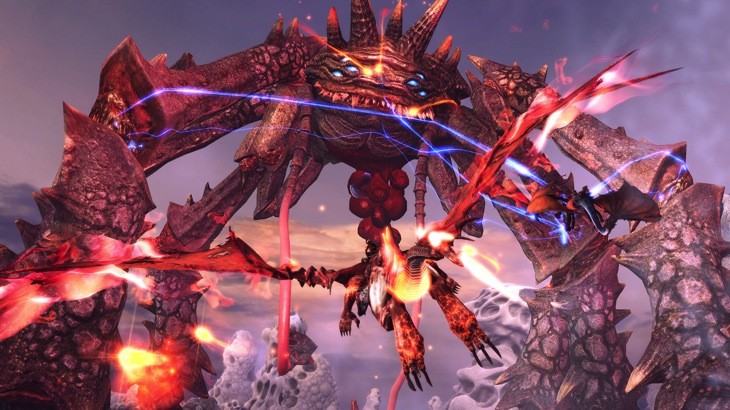
Crimson Dragon
Guided on-rails shooters seem to be a dying genre only minimally revived what is now last generation. Having said that, there are very few who have stated that Crimson Dragon gives any indication that this genre or franchise needs to be revisited.
Crimson Dragon has hardly left any other impression than a soulless grind. RPG elements sounds like a fresh additive to the straight forward play style; however having to revisit levels over and over in an already repetitious game while slowly building up your dragons doesn’t sound fun at all.
Crimson Dragon looks to mix things up in the genre by adding free flying sections, however reported struggling cameras and difficult controls – primarily the lack of a hover functionality – seem to make these sequences a frustrating affair.
Based on critic reception, it’s hard to see any reason for Crimson Dragon’s inclusion in the launch line up other than taking the opportunity to grab some attention before these consoles evolve.
Killer Instinct
Killer Instinct looks to the bonus content in Xbox One’s line-up, a game that is said to be so fundamentally sound that both those enthused and intimidated by fighting games (such as myself) can easily pick up.
The first reason for this is simple, it’s free. Killer Instinct’s free-to-play model allows inexperienced fighting gamers to dip their toes – with the all-round balanced Jago – in the arena without cost before deciding if they wish to make a tangible investment by picking up multiple characters.
Killer Instinct is said to guide those players though well instructed and intricately designed tutorials, teaching players the fundamentals of Killer Instinct’s basics – and most importantly – its attack, counter, and counter-counter system.
Killer Instinct’s combat system is described as being digestible, yet dynamic without the technical memorization of button combinations. The focus here is Combo- Breakers. During a combo, the receiver has to combo-break with the same strength as the combo that's being executed. Attackers should anticipate a combo-breaker to counter with a counter-breaker. This overrides combo-breakers, allowing the attacker to stay on the offense. Combo-breakers don’t cost anything, however if the combo isn’t matched properly, you’ll receive a lockout, making you further vulnerable to a combo. Counter-breakers do come at a cost, half your energy to be exact. Failing these will, like a failed combo-breaker, will make you vulnerable after a lockout as well.
There seems to be little reason not to at least give Killer Instinct a chance. It’s a free fighter with a deep combat system that is also said to go out of its way to accommodate for newcomers as well as satiate experienced players.
Dead Rising 3
Though Dead Rising 3 isn’t the open world game to replace Watch Dogs this year, but nonetheless, numerous critics have reported that Dead Rising 3 is the “zombie squishing” escape that many of us have expectedly hoped for.
There are a number of complaints depending on who you talk to. The city is surprisingly small and cumbersome to wade your way through. The framerate issues haven’t been completely fixed, falling victim to mass vehicular devastation. The parodied stereotypes can be painful to watch and listen to. And, the game doesn’t always quite control well, particularly during boss fights.
But endless onslaught of creative zombie destruction has had an overbearingly positive impression on critics, overshadowing issues that would normally make other games unrecommendable. The incessant spamming of blueprints offering recipes for useful if not hilarious weapon and vehicle combinations has been said to keep investments locked. The incentive seems to compound upon itself with its leveling system which allows lead Nick Ramos to create even deadlier combinations, and ultimately watch more zombies break, peel, and split into bits.
All of the positive reception Dead Rising 3 received paint this sequel to be exactly what players were looking forward to, and ultimately give Xbox One purchasers a 30 hour justification to for their new system.
Ryse: Son of Rome
Ryse: Son of Rome seems to be more or less the Knack of the Xbox One; maybe not quite as disappointing, but reportedly underwhelming nonetheless.
Crytek seems to have this obsession of creating dramatic experiences that garner mixed appreciation. Ryse attempts just that with its narrative, and it might hold your attention well enough depending on your tastes.
Amidst its interesting-on-paper combat system that awards players with different perks based on the elicited execution, there’s an overwhelming consensus of lamenting Ryse’s shallowness in being too quick to show its entire hand. Action games hinge on the discovery or steady exposure to new ways in which to attack. But if Ryse stops showing anything new too soon, there’s little just incentive to keep on through monotonous tedium.
The multiplayer appears to be an expanded version of the co-op mode from God of War: Ascension with Mass Effect 3 style booster packs that hold pleasant surprises or disappointments. I never liked that in ME3; but even if you did, there doesn’t seem to be much to Ryse to keep one invested otherwise.
Ryse: Son of Rome seems to be your quintessential launch title: a technical show piece forced into a video game.
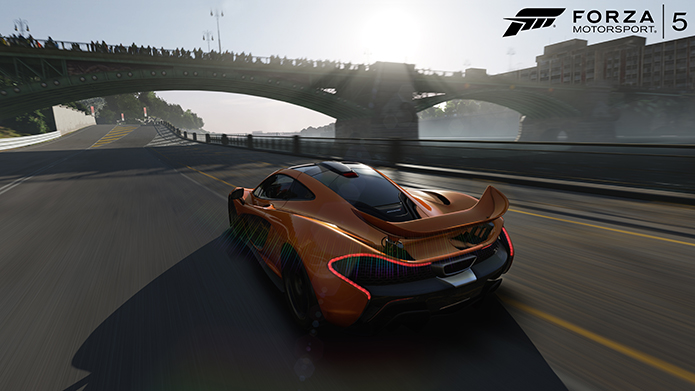
Forza Motorsport 5
Forza Motorsport 5 is probably the most confident game – next to Playtation 4’s Resogun – across both platforms. And it earns that confidence with only two common complaints being that there are less tracks and less cars.
But novice players will hardly notice the shortage with roughly 200 cars, and would more benefit from Forza’s pulsating and organic feedback, a literal meaning of both terms. It’s been said that the rumble feedback on the Xbox One controller teaches players how to drive better, with a very explicit line of communication indicating when players are running over rough terrain, when they’re taking hard turns, and other physical intricacies of the ride.
The other classroom sessions is reported to come from the AI themselves via Forza’s Drivatar system. Mimicking the behavior of cloud saved styles of real life players, competing cars are unpredictable, and will likely properly prepare you for direct competition online.
New comers can benefit from the rewind feature and broadcasted drive lines on the track, and veterans can extend their thumbs to open wheel racing, adjusting to F1 and indie car driving.
With Turn 10’s staggering attention to detail, celebration of car culture, and accommodating game design, critics agree that the drive-curious and drive fans can’t go wrong with Forza Motorsport 5.
Top