So here’s how unoriginal Microsoft is they introduce Conker
to the big screen at E3 without his own damn game. Here’s what they could have
done, inside project Spark team they could have developed a very unique Conkers
game. Instead they want the fans to do the job themselves, which they will
eventually do a better job than Microsoft would at this point. Project Spark
had my interests all the way up until the mention of Micro transactions galore.
On that note it’s a pass for the everyday gamer. If you are a player that tears
open Halo games for Forge, love Minecraft adventures, and don’t give a crap
about your wallet Project spark is right up your alley. I’ll enjoy watching
your videos, and Microsoft stealing your original ideas.
GAMERS HERE IS RARE'S DYING CORPSE AND OUR NEW MICROTRANSACTION GAME
No commentsMonday, June 9, 2014
Here’s why:
The Crew is somewhat experimental, compared to
Horizon 2. I’ll completely agree the visuals of Horizon 2 are vastly superior.
To gamers that are epicenter around graphic (buy a PC), but for the immediate comparison
Forza Horizon 2 earns points in the category. The variety in flavor is in the
Crew hands down. Just the mention of a 2-hour race across the United States
mock up in the crew is an amazing concept. When this is actually live for
gamers to play I just can’t see passing that up for the traditional racing in
Forza Horizon no matter how many cars you throw at me. My bets are on The Crew
for the win between these two petal to the metal racers, and the multiplatform
sales including PC will make good on Ubisoft’s pockets.
By Jamaal Ryan
Well that didn’t take long.
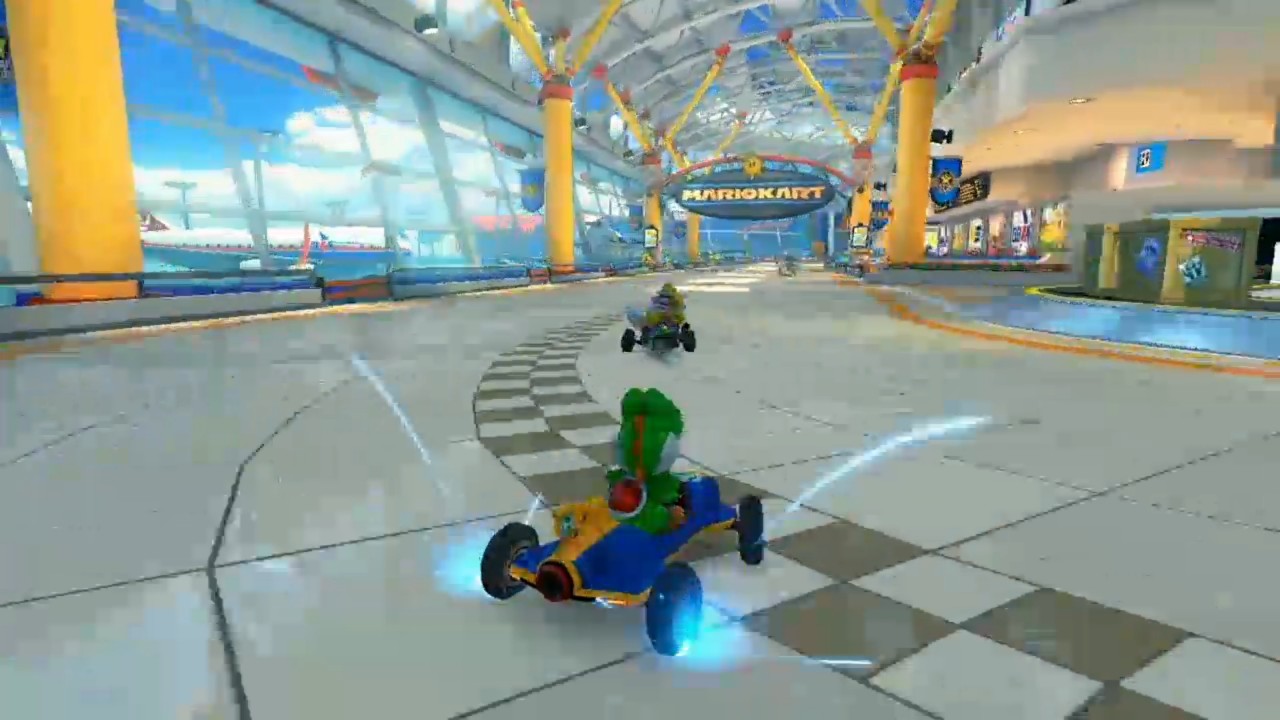
The latest installment in the Mario Kart series, Mario Kart
8, hasn’t even been out a week, and already players seem to be abusing a new
exploit called “Fire Hopping”.
Essentially, Fire
Hopping is used while the player jumps repeatedly after a speed boost, allowing
their boost to last longer. This can be used from drift boosting, as well as
item and strip boosting as well. Here’s a video below:
It’s been deemed as “controversial”
as many players swear by it, while others are against the use of it. I’m of the
later camp, looking at it in the same vein as “Snaking” (though not quite as
bad). While both techniques are skill based, they offer an advantage over the
competition, both AI and players alike, as Fire Hopping doesn’t seem to be
programed into Mario Kart’s design; at least not intentionally.
As Fire Hopping becomes more and more popular, the balance
of online play is likely to become unbalanced, causing a disproportionate gap
between moderately skilled players and Fire Hoppers. Flipping through Mario
Kart 8’s online features, I’ve thought of a way that could make your online
experience safer.
Mario Kart 8’s Tournament Mode is surprisingly robust. As I said
in my review, it offers an unusual
level of specificity, especially with the tournament scheduling, and allowed
skill level based on the players’ point ranking. Taking these two aspects of Tournament
Mode, you can schedule your own tournament “daily”, gate the player level
between 0-1500 pts, and in order to communicate your preference to other
players, label the tournament “No fire Hopping” or something of the sorts.
Scheduling it daily of course allows you and other players
to participate on a daily basis, and the title is important to notify other
participants of your rule sets. Of course, there’s no way to kick or exclude
players for anything, especially based on player behavior – and in this case,
using Fire Hopping – however gating the point cap at 1500 narrows down the
possibility of letting in a Fire Hopper user as a player who has mastered it
will likely have a point value higher than 1500.
This is a very situational solution. It’ll be harder if your
point value is higher than 1500, or if a player has managed to master Fire Hopping
before jumping online at 1000 points; there are a number of variables that can interfere,
provided if you even care in the first place or wish to master the skill yourself.
This isn’t meant to offend or target Fire Hoppers, as it is
a skill, not a cheat. However not everyone is skilled enough or has the time to
practice such a technique that grants such an advantage. Mario Kart is meant to
be played by everyone without feeling that they’re at an unfair advantage.
Using tricks that can be considered exploitative in Mario
Kart isn’t something new, however Nintendo has provided the tools that’ll allow
you as the player to make your Mario Kart experience as safe as you could
reasonably desire.
By Jamaal Ryan
Over this past weekend, two twelve year old girls, Morgan Geyser and Anissa Weier, lured another their 12 year old classmate over for a sleep over, then into the woods and stabbed her 19 times. Their alleged motivation, to become a proxy for Slender Man. You can read the full CNN report here.
Surprisingly – and thankfully – there has yet to be any
forced linkage to the video game adaptation of Slender Man, though the fiction
and the lore that the girls were apparently obsessed with were generated from the
wiki Creepypasta.
But this isn’t just about video games, this is about
fictional creativity and the idea that fantastical products of imagination can
somehow have such dictatorship over crimes like this.
Sloshedtrain, an admin on Creepypasta, wrote this in his blog post yesterday in response to the
crime and demands to shutdown the wiki:
“Will these people succeed on their request? Most likely
not. These are the same people who think that violent video games help create
mass murders, because it’s convenient to blame and point fingers.”
This sediment is also shared
by Dr. Michael Rich, the director of the
Center on Media and Child Health at Boston Children’s Hospital:
“Clearly, there are mental
health issues here. No one can stab someone 19 times in an unfeeling way. …
These girls got to a place in their own heads where the illogical became
logical.”
He continues:
“I don’t think we can lay
this at the doorstep of the Internet, computers or even video games.”
It’s troublesome and even
painful to hear that such young children would commit such a horrific and heinous
crime. However the internet shaming following the attempted murder is short
sighted, neglecting how cults, religion, and other forms of worship have driven
people to carry out these “sacrifices”.
If the two girls stated that they stabbed the girl to "serve God" or to serve Saturn, the story wouldn't be too much different.
By Jamaal Ryan
Last week, I drew attention to Glenn Beck’s rant on video
games and his ludicrously inconclusive claims about Call of Duty and
suicidality along with the comical assumption that the pipe games, button
prompts, and overall premise of Watch Dogs teaches children how to hack docked
iPads. It was a mind numbing rant to say the least, however I couldn’t help but
be troubled by his readings of coroner John Pollard’s determination (based on “not enough evidence” mind you) of Call
of Duty’s influence on investigated teenage suicides.
Suicidality can be caused by many things. A diagnosis of
major depressive, and various instances of other types of depression, often stymie’s
one’s ability to cope in even the most moderately stressful situations. It can
also increase isolation and pessimistic outlook, and sometimes cripple
rationale to the point that in the event of a serious confrontation or a series
of accumulated small ones: whether that may be a death, loss of employment,
discovered illness, or anything that challenges their sense of control, that they may not see any other way to solve
their problem other than ending their life. Not all suicides have been
clinically labeled as a result of some form of depression, however often there
are environmental, trauma based, and behavioral clues that would lead up to
such an event.
Mark Griffiths, Director of the International
Gaming Research Unit and Professor of Gambling Studies at Nottingham Trent
University, wrote a piece on The
Conversation – which was then reposted on Gamasutra – in response to the coroner’s claims of Call of Duty’s
involvement. He begins:
“Teenage suicide is a tragedy for any family and
those affected will naturally want reasons why their loved ones have taken
their own lives. There are hundreds of scientific studies on suicide and many
risk factors have been identified, including psychological, environmental and
genetic or biological factors. Conditions such as mental illness and substance
abuse can also heighten the risk.”
He then looks to studies that have claimed to have found a
link between video games and suicidality:
“A 2011 US study of
30,000 teenagers reported that those who spent more than five or more hours a
day playing video games were slightly more likely to have thought about
suicide. A similar finding was also reported in a large national German study
of more than 15,000 teenagers in 2010.”
Griffiths continues in pointing out that such findings were
mere links, and reiterating that famous statement those of us who have taken
statistics in school have heard, “Correlation does not mean causation.”
So what could have happened to these poor boys? We are all
more than well aware of the hostile environments such as Xbox Live, communities fraught
with racism, sexism, homophobia, and any other form of hate speech. Such environments
can be demoralizing to one with low self-esteem, especially for those who may have
even given suicide some serious thought. However if that may be the case, then
that is an internet problem, not a video game one. Many of the claims of video
game’s influence on young minds aren’t exclusive to video games and video games
alone; sports and any other platform of skill based activity fosters issues
with self-esteem and aggression as well. In fact, the University of Oxford in
the UK’s study on video game’s
influence on aggression highlights with perfectly.
Griffiths calls these research and reportings as mere
attempts of “scapegoating”. But while agenda driven logic may be able to
fabricate a plausible narrative as to how video games causes violent behavior,
its influences on suicide and educating hacking is just about the dumbest fucking
thing I’ve ever heard.
Reviewed by: Jamaal Ryan
It wasn’t until I realized that it’s been six years since a
console Mario Kart game has been released when I then grew to appreciate Mario
Kart 8 more. Sitting in front of a large display while playing a slick looking
new kart racer has a generational novelty like many of Nintendo’s franchises;
and though getting three friends together in a room is still the ideal way to
experience Mario Kart, online play yields a special kind of appreciation, similar
to how I felt after playing Halo 3 multiplayer for the first time. But Mario
Kart 8 isn’t just about drop-dead sexy new graphics and returning as only the
second console installment in the series to feature online functionality. Mario
Kart 8 has, in equal measure, the strongest and most robust design in the long
running franchise. Read more.
WATCH DOGS TEACHES KIDS HOW TO HACK, CALL OF DUTY CAUSES SUICIDE, AND E-BOOKS F**K WITH YOUR BRAIN
No commentsFriday, May 30, 2014
By Jamaal Ryan
Take a seat, remove any nearby fragile objects, and watch
this video:
- So let me get this straight, a high octane shooter somehow induces depressive symptoms and suicidality? And how did a coroner draw these conclusions after investigating social and psychological influences along with potential instances of trauma? Oh right, he “doesn’t have enough evidence”.
- Oh, and let’s not forget that Behring Breivik “trained” himself to kill while playing Call of Duty. Because you know, the paranoid schizophrenic can learn how to aim a 5-10 lbs firearm, track moving targets and pull the trigger on a gamepad.
- And why are we having the gun talk in America when video games are directly responsible for every single gun mass… oh, wait.
- “Why can’t we have a Superman?”
- “Pr pr pr pr pr protagonist”
- “While his obscured viseg viseg viseg” *VISAGE GOD DAMN IT!
- Watch Dogs is a “cool game” the other guy says. Well, I don’t know about cool. I mean, if we thought we had a hacker problem with nearly 40% of Americans who have been exposed to some form of hacking, boy do we have a serious fucking problem with those button prompts and pipe mini games in Watch Dogs that train kids how to hack the iPad in your room.
In hindsight, the lesson learned here is that we should
throw away all of our electronics before we become helpless addicts like those
who shoot, snort, and smoke crack cocaine.
By Jamaal Ryan
Though news about the Kinect-less Xbox One rattled console
owners, developers, and the industry overall, my favorite bit of news was
Microsoft’s revamped Games & Deals with Gold program. It mimic’s Sony’s Playstation
Plus program in not only offering free games each month, but also discounts on
games and a Gold subscription requirement (outside of 360) as well; but most
importantly, it’s bringing the promotion to Xbox One (though nothing regarding
early access to betas and the sort have come to my attention).
Today, Sony has tweaked their Plus program a bit by “doubling”
the amount of games in their “Instant Games Collection” – or free games – which
will start in June. As reported today for North America, PS3 will get Sly Cooper: Thieves in Time and NBA 2K14, PS4 owners will get Pixeljunk Shooter Ultimate and Trine 2, and Vita owners will get Terraria and Mutant Mudds Deluxe.
Fans would like to think that this is in response to Xbox’s
restructured promotion, but I’m not so confident that the change was so
reactionary. Though specifics on how the agreements are made between Sony and
devs/publishers are scant, we at least have information that while some devs agree to allow their content to be
placed on PSN for free with no monetary compensation, others receive a straight
up “buyout”. Not sure if the updated Playstation Plus would have been
conceptualized in house, and agreed upon by other companies in the matter of
weeks.
The shortened length of available free games – in which free
titles will only be available between the first Wednesdays of each month starting
in July – leads me to believe that either some companies wish for their games
to be free for a limited period of time, or Sony’s buyout offer will be
slightly less. Companies see a benefit to the Plus program as a way to build a
legacy fan base such as Just Cause 2’s developer Avalanche Studios (it at least
worked for me; I’m certainly looking forward to picking up Mad Max and the inevitable Just Cause 3 after playing Just Cause 2), and others such as Grip
Games and indie dev Tyler Glaiel who see the earnings as a nice boost and
advise other devs to put their games up for free long after its launch.
It satiates my guilt knowing that devs appear to be happy
with Plus (and hopefully with Games & Deals with Gold). I mean, clearly
they have to be otherwise the Plus program wouldn’t have been so successful for
so long. I’m part of the “I’ll wait till it’s free on Plus” camp, a mentality
that The Castle Doctrine designer
Jason Rohrer has issues with.
However Microsoft and Sony don’t treat sales and give-aways
as cannibalistic as how it occurs on Steam. Freemium values seem to be the hot
trend of this generation, even though Sony’s been playing around with it for
years. Sure it allows broke players like me the opportunity to enjoy games free
of charge, but it also sparks interest in a developer and/or a franchise, and
it gives indie titles the extra attention that they deserve.
More games for everyone, and that can never be a bad thing.
By Jamaal Ryan
Let’s take a look at Far Cry 4’s box art:
Here we see a fair skin gentleman who sits on a statue while
putting his hand on the head of a seemingly ethnic or native individual from
the Himalayan region. Looking in further, the box cover is carefully arranged
to illustrate a significant gap of power between the two individuals. The fair
skinned man is wearing a lavish pink suit that likely represents a symbol of
wealth. The way in which he sits, foot placed on the decapitated head of the
statue of Buddha, conveys his complete disregard for the culture and religion
of the region, as weapons and ammunition are also draped over it. As he smirks
confidently at the viewer, his placed hand on the head of the discouraged native
man also tauntingly dangles a grenade pin on his index finger. The subjugated
individual is reduced to his knees with a look of shame and defeat on his face
while holding the pin-less explosive. Read more.
By Jamaal Ryan
As IGN reported, on the goRGNtv Twitch podcast, Counter
Strike creator Minh Le discussed what he might have seen at Valve that looked
like Half-Life 3:
“I
guess I could say that I did see something that looked kinda like in the
Half-Life universe. And I mean it wouldn't surprise anyone if I said they're
doing it, they're working on it, yeah. So to go on a limb I'd say I did see
some concept art for Half-Life 3."
I
know Half-Life 3 is a sensitive topic for gamers, and any hint, rumor or
speculation on the fabled sequel sets fans ablaze and generating “Could this be
it?” states of mind. But reviewing the quote, there’s a level of ambiguity and
uncertainty that just isn’t satisfying or concrete enough to begin looking
forward to seeing Gordon and Alyx again. “Something that looked kinda like in the Hale-Life universe… So
to go off on a limb…,” I wouldn’t go
as far as to say that I don’t buy it, but coming from a former Valve employee, and
discussing a company in which Steam and DOTA 2 generate massive chunks of their
revenue, I can’t count on Half Life 3 officially appearing in the near future; my
gut tells me that it’s being kicked around Valve as nothing more than a passion
project.
But
what happens if Half-Life 3 is released? Will it live up to expectations? The
shooter genre has matured and diversified itself significantly since Episode 2.
Even in the over-saturated genre, there are interesting experimental titles
such as Far Cry 3, Bioshock: Infinite,
Metro, Deus Ex HR (depending on your playstyle), Hard Reset, Crysis 2, RAGE,
The Darkness 2, and Singularity. It’ll
unlikely stand out as well as it did way back in 2007. Not to mention the 6+
year wait and undulating anticipation sets nigh unreasonable expectations for
Half-Life 3. But to be fair, Episode 2 reviewed better than almost all of the
above listed games, and few have managed to replicate its narrative style,
world building, and that final showdown before the cliff hanger ending.
Nonetheless,
I cannot count on Half-Life 3. Valve has adopted other priorities that have
proven the company wide success. The simple fact that up to 6 ½ years later, we
still haven’t seen a follow up to the events that closed Episode 2 is one of
the best examples that Valve, as well as every other game company, is in the
business of making money as a priority. Everything and everyone else, including
us Half-Life fans, are secondary.
By Jamaal Ryan
When I came across a little Kickstarted game today called Sumoboy, a game inspired by
anti-bullying advocacy, it quickly reminded me of a meet that had with one of
my clients today.
“These big guys used to take me to the corner and beat the
living shit out of me, just because they could.”
Norris, I’ll call him, has major depressive disorder that
has been supplemented by family conflict, sexual abuse, financial struggles,
and bullying; some in which may or may not have contributed to his suicide
attempt more than half a year ago.
Today, we discussed bullying and his stance on it today,
though he was less than willing to delve into “how does that make you feel” territory.
He spoke about observing grade school children in their playground and
witnessing the dynamics that contribute to bullying:
“There were several pockets of kids where the biggest one
was always picking on the little one.”
He’s 50, a man who grew up in a completely different generation.
A generation where pedophiles weren’t marked as registered sex offenders on the
internet. A generation where schools didn’t address bullying as an “epidemic”. A
generation where video games comprised as moving blocks, and were comparative light
years away from discussing any kind of emotion.
I haven’t mentioned that even video games publically address
bullying, but I can imagine the surprise and sense of validation if I were to
tell him. Sumoboy follows the story of Oji, a round little orphan
who manages to escape his unimaginative world’s troubles of bullying to embark
on a Japanese inspired mythological journey to save the world of Seishin.
Though I appreciate the narrative jump-off of Sumoboy, from what I’ve reviewed on the Kickstarter page, it looks like it’ll
be shifting towards standard video game affair in the same vein of Diablo and Bastion.
For games that fully discuss the subject of bullying in a
less fantastical context, look no further than High School Story. Though its website
pegs it as being a simple superficial adolescent version of The Sims, their partnership with Cybersmile and the collaborated chapter
on bullying actually helped students seek help after contemplating suicide.
Games like Sumoboy and
High School Story embraces a theme
that has affected all of us, certainly myself. And though he’s unlikely to play
it, I’m sure that Norris will deeply appreciate that a medium many in his
generation sees as “violently shallow” is addressing bullying directly.
By Jamaal Ryan
Nintendo's received a lot of heat after their PR fuck up responding to fans asking for the inclusion of gay marriage in Tomodachi Life. Reports on the kerfuffle wasn't only isolated to the gaming press, but mainstream publications such as ABC News also reported on the story. It seems that John Oliver caught whiff of this as well while celebrating the 10 year anniversary of Massachusetts becoming the first state to legalize gay marriage:
By Jamaal Ryan
When it comes to role playing in video games, there are
gamers who are jaded, gamers who looking for themselves, and gamers who have a narrow vision of others.
In a study
reported by Slate, 23% of men who
play World of Warcraft were more likely to switch gender roles as compared to
7% of female players who did the same.
Let’s stop there.
Why is that? Why is it that males are more likely to switch
genders than women? Is it for sex appeal and having a “nice ass” to look at? That’s
part of the phenomenon unfortunately, but it helps to look at it from a female perspective.
Though females make up nearly 50% of the gaming audience, the number of game
protagonists don’t match that percentage. Among the remaining 93% of female WOW
players, many of them must have thought, “Ah, a rare opportunity to play a
character closer to my identity.” I can empathize with that feeling as a Black
gamer who can count on one hand how many games I’ve played where the default
character shared my race. Every opportunity I can get to create a Black lead,
from Dragon Age to Fallout to Call of Duty: Ghosts, I take it.
But what of the 23% of men who aren’t desperately looking to
find sexual solace in a video game? At some point or another, we’ve chatted
with someone who donned the role of Shepard. No, not the guy with the big
forehead, the one played by Jennifer Hale. While I myself didn’t play as
Jenn-Shep, my easiest conclusion to this is the concept of jaded gamers. Gamers
who are have seen their fair share of ‘bros’, and figured they’d mix it up a
bit. Flipping through my custom loadouts in Titanfall,
you’ll see all female builds. Not only because I find their armor and character
design more interesting, but the idea of women wall jumping from tree to tree
in Swampland and landing in a Titan is novel and exciting. Nick Yee of Slate has
an additional theory as to why this happens, “But
because male avatars aren’t created by female designers for a female audience,
women may not have the same incentive to gender-switch.”
However, there is an unfortunate trend in this gender role
playing.
In that same study, they found that among the men who
gender-switched in-game, they preferred more “feminine” features: long hair as
opposed to mohawks, and emotive dialogue instead of stoic and firm. These men
relied on their stereotypes and narrow idealization of women.
But this doesn’t only occur in gender, this also is seen in
racial role playing as well.
Ohio State University
conducted an experiment measuring the behavior and subliminal beliefs of
players. Taking a sample of 126 white students, the experiment had each of the
students play Saints Row 2, some as a
white character, some as black. The players who controlled the black characters
were more likely to act out more violently than those who controlled white
characters.
But the violent association didn’t end there.
The students were issued the Implicit Association Test (IAT)
which measures subliminal bias. Those that played as the black characters were
more likely to associate black faces with bad words like “terrible, horrible,
evil” as opposed to good words such as “joy, love, peace”. They were given
another version of the IAT after playing WWE Smackdown vs. RAW 2010 and Fight Night Round 4. This time,
the association was between weapons and non-weapons. Unsurprisingly, those that
played the role of black characters in these games associated black faces with
weapons rather than the non-weaponized objects.
Perhaps what’s
seen of non-blacks and male gamers play as blacks and women is a result of
jaded behavior. However it seems as if it’s jaded behavior that precipitates
into a narrow field of understanding, a narrow perception of who women are and
how black men behave.
It’s easy to point to the larger societal influence for the
broken perspective that these players view blacks and women. But it’s an
influence that increases in weight in video game. Damsels all too frequently
need saving and are all too sexualized; black men prefer guns as a weapon of
choice and only increase in numbers in gang populated urban environments.
If this comes as a surprise to you, then I’d like to know
what games you’re playing.
By Jamaal Ryan
So Kinect-less Xbox One is official, and Xbox’s Games with
Gold is more aligned with Playstation Plus.
With Kinect touted as such an integral piece of hardware to
the Xbox One experience, and a hell of a lot of room for improvement, to me, it’s
genuinely surprising to see Microsoft make a retail effort to separate Kinect
from the Xbox One system so soon. From the NSA and Snowden days to the 7
million confirmed PS4s in households compared to a hard-to-nail-down 5 million,
Microsoft had every reason to cut Kinect out of the box, selling a new SKU for
$399.
It was a strange timing for the announcement however. For
Microsoft to reveal news about major competitive shifts in aligning itself with
the Playstation 4, it seemed as if such announcements would be more appropriate
for E3. And the mere fact that the new SKU will be available on June 9th,
the day of their press conference, it’s hard to imagine that they won’t remind consumers anyway. If I hadn’t
known that the $399 model would be available day & date with the Microsoft
press conference, my first assumption would be that they intended to avoid bursting
the bubble of any Kinect focused software.
I was a proud supporter of Microsoft shipping every Xbox One
with a Kinect because that meant the developers had free range to support its
functionality without worrying how high the device’s attach rate is with the
system. D4, while smartly and
strangely also supporting a traditional control scheme, is fronted as a Kinect
game. Harmonix’s Fantasia: Music Evolved
will soon be walled behind whatever price Microsoft decides that a standalone
Kinect would cost, and they’re not too happy about that.
But regardless the unfortunate sacrifices, consumers
ultimately won yesterday. Microsoft’s decision in launching the new model on
June 9th might indicate that they’re hoping for a spike in sales
reacting to whatever games they showcase at E3. Sony greatly benefitted to
their price and policy announcements at last year’s E3 with a 2:1 ration in
preorders compared to the Xbox One, these factors probably influenced the
decision to release it on press conference day.
In addition to “giving consumers more choices”, Microsoft has
taken the idea of Games with Gold, combined them with the new Deals with Gold,
and is now bringing the service to Xbox One in addition to 360. While the
notion of the service closely aligning itself with Playstation Plus, I’m more
excited at the idea that Xbox One games will become available for free as well.
As I mentioned in my Dust: An Elysian Tale review, the
service on the 360 brought too many old games, many in which weren’t
necessarily relevant. Bringing it to Xbox One gives the opportunity for fresher
games to be available for free, or at least a significant discount we hope.
Microsoft is making dramatic changes, changes in which are
swift and brave enough to keep them in the competitive console space. If these
are the announcements we’re treated to now, who knows what they’ll announce at
E3?
Reviewed by: Jamaal Ryan
Writer's note: Yes, I know Microsoft dropped a bombshell today. I will put together an opinion piece tomorrow. In the meantime, here's a little something to hold you over.
“Wow. I can’t believe they just did that.”
Those very words ran through my mind numerous times while
playing South Park: The Stick of Truth; it’s no wonder this game was heavily
censored in a number of countries. I’m not one of those laugh-out-loud fellas
when it comes to video games, but this one broke me. And saying “Well duh, it’s
a South Park game” doesn’t cut it, especially when the previous licensed
products weren’t all that great. Though not quite as cataclysmic in tone as
South Park: Bigger, Longer & Uncut was, The Stick of Truth holds value as
an extended, no-holds-barred episode of the television show. And yet, it also
happens to be a well-executed “my first” RPG as well. South Park 64 and South
Park: Chef’s Luv Shack this is not; South Park: The Stick of Truth is one of
the most faithful licensed video games of all time. Read more.
Reviewed by: Jamaal Ryan
While Sony platform owners have been spoiled by free and
timely-relevant games on a monthly basis through Playstation Plus, Xbox’s Games
with Gold on 360 has hardly lived up to their competitor’s service. The titles
available have generally been old, and likely already owned by long time 360
owners, serving only a selective few. Halo
3 and Gears of War are great
games, but I’ve already played them, as is the same for millions of others. The
exception comes every once in a while, like last month’s Deadlight and November’s
Iron Brigade.
For May, 360 owners will have access to two more free games;
one of which is Saints Row: The Third
(available on May 16th), the wildly popular open world title that put the
franchise on the map. But again, I’ve already played that game. However Games with
Gold also gifted players with another little gem that many surely have managed
to overlook, Dust: An Elysian Tail.
Dust: An Elysian Tale is a hand written love letter to the
side scroller action game; it’s a passion project that has been impressively
crafted by the one man developer Dean Dodrill.
Elysian Tale’s Castlevanian influence was immediately
striking (or at least Castlevania is the strongest reference I can think of
while writing this review), as much of its presentation and gameplay is firmly
rooted in the Koonami classic. The soundtrack pumps with harrowing organs, dancing pianos
and violins that, while not necessarily inspiring the image of cobble stones
and stained glass, create an equally fantastical feel. Its committed 2D
artstyle never falters either, ensuring that colors glow and the visual design
is always expressive. I absolutely love how Dust always makes time for beauty.
Lush meadows are no more majestic than dark caverns and menacing graveyards where
you might miss that red rose resting on a tombstone.
Even
outside of the context that this was a one man script (technically a two man script
as the story was co-written by Alex Kain), Dust’s storytelling is surprisingly
dense. Though I can never say the actual plot itself sets any standards, it
does a commendable job in balancing its leading three: Dust himself, his
companion Fidget, and Ahrah the talking sword. It also goes as far as to
wasting very little of any other characters you encounter, including the
merchant, most in which have a role in your adventure; main quest and side
missions alike. This treatment is further elevated by the fact that every
single NPC you encounter is fully voice acted. Dust does its damnest to realize
its world, and it shows.
As you make your way through this 12’ish hour adventure, it
becomes obvious that Dodrill fitted in some of his favorite video game trends
in Elysian Tale, but not without adding his own twist. Much of the game’s
secrets are gated behind areas in which would need revisiting with new
abilities, you’ll be constantly swapping and crafting equipment for Dust
through the game’s satisfying and approachable item-trade based economy, and
platformer puzzles take unique shape here like when the game asks me to use Dust’s
vortex generating ability, the Dust Storm, to pull floating illuminated objects
to guide him through some of the game’s trickiest environments. But Elysian
Tale’s biggest draw is its combat system.
The combo multiplier becomes the focus in battle, and I
found that learning how to preserve it is the key to not just succeeding in
combat, but accelerating level progression as well. Controlling Dust is a snap;
side stepping and landing strikes with Ahrah is as responsive as any
respectable action game should be, ensuring that any damage taken doesn’t feel
cheap. While I stayed out of harm’s way to keep my multiplier from resetting, I
used the Dust Storm to amplify
Fidget’s spell casting to inflict rapidly successive damage to my enemies.
Using this one-two-punch in sequence will easily shoot your multiplier in the
hundreds, even the triple digits. What’s neat is that the higher your immediate
multiplier, the more bonus experience you gain; and the more experience you
gain, the faster you level up. As I made my way through Elysian Tale’s final
stage, I leveled up five times before I reached the end boss. That’s awesome.
While Elysian Tale plays it safe and is rather conservative
by design, there are some moments that sag throughout the adventure.
The amount of abilities that Dust acquires in this 12-13
hour game feel anemic. So much so that I often had forgotten that there were
abilities to acquire right in the gut of my playthrough. It wasn’t until the
end of the game when I ventured back that I had actually appreciated some of
the new skills Dust adopted.
And though leveling up as frequently as every five minutes
triggers an endorphin rush akin to leveling up in Call of Duty multiplayer,
Dust became overpowered, making short work of boss fights that hardly live up
to their theatrical entrances. Dust is at its best when juggling 5 enemies at
once while half a dozen more take collateral damage; with the exception of the final boss fight, a single chatty opponent
is reduced to little more than a foe with a larger health bar.
You
can almost tell that Dust is a culmination of ideas from one individual, one
that's incredibly fond of this genre. Both its story and gameplay have the
focus of a single vision, but none feel sacrificed and limited as Dodrill
accomplished what many dev teams with more man power haven’t. Dust: An Elysian
Tale will be available for free on Xbox 360’s Games with Gold up until May 16th.
But even if you don’t make it by that deadline, you shouldn’t pass up on one of
the indie scene’s most impressive success stories.
+ Beautiful 2D Art direction
+ High quality character treatment
+ Addictive combat system
- Weak boss fights
- Uneven ability acquisition
SCORE: B+
By Ryan Michael Williams
Once again e3 is approaching and as a gaming Culture about
games we are getting more and more excited about what’s to be unveiled. Then we
have the growing groups of gamers that are also sitting and waiting to be disappointed.
My group that I am concerned about is the advocates for diversity in lead
characters. Yes the video game industry is making baby steps towards opening
their color spectrum. Even with that said, for all the investment from gamers
over the decades we still are not getting our worth as a whole. This isn't who
vs who or us vs them opportunity that I am trying to incite, however it is a
point to which our culture can truly gauge some changes made from the
generation crossover. With those measures we can see if the video game industry
is becoming more in line with its diverse community of cultures.
When viewing a great showcase of P.R. attention to details
in the community over at Roberts Industry. I for one was impressed with how a
video company handled a situation that usually turns ugly overnight. (OP View Point).
This intricate situation brewed up on Star Citizen’s forums, and was resolved
very eloquently and within hours. Long story short Star Citizen’s Roberts Industry
protected the reputation of their moderator and ensured the community that this
mod was righteous in their decision, meanwhile they still reverse the mods decision
and reinstated the questionable forum topic. While still following the rules
and guidelines of their forum and issuing a punishment to the thread’s OP. The
thread was simply about an all-women’s group in the game Star citizen. However
it quickly turned into troll bait, with some questionable motives from known
goons. In the end the PR team apologized reinstated the thread, and welcomed
the all women gaming group.
For them it worked out very well, but sexism is the hot
topic with the video game industry heavily due to some recent soul searching
from the media heads. However racism in my personal experiences in video games
was never handled that quickly and justly. That issue has been pretty much swept
under the huge rug of the video game industry lobby and lobby systems. With a
big fiasco of racism dominating the news cycle hopefully more media heads start
arming up on the never ending war that is racism so we can get some gains on
that battlefront for video games. For E3 2014 to come out hitting hard with
some new IPs that showcase the diversity in the world we live and game within
would be a sweet way to stride into the future of gaming. We are seeing pseudo-documentaries,
pretend to know what they are talking about, influential Hollywood figures
speaking more and more about the gaming industry, and a multibillion plan from Facebook
all less than one lapse of E3. So video gaming as whole is about as mainstream
as ever so let’s get some reflections of the world that controls this industry.
By Jamaal Ryan
Nintendo woes are in abundance. The Wii U continues to sell
horribly, reporting lifetimes sales at 6.17 million after roughly 17 months up until
their fiscal year ending on March 31st – the Playstation 4 surpassed
that at 7 million in just half a year, and Nintendo will enter its second year
of bowing out of a E3 press conference and will repeat their strategy from last
year (not necessarily woes, however it gives the impression of lacking
confidence if not trying to do E3 smarter instead of “harder”). But now,
Nintendo has finally addressed the plea for same sex marriages for their upcoming
heavily relationship driven 3DS title, Tomodachi Life.
Last week, Tye Marini, a 23 year-old gay male, started a
petition called “Miiquality” to champion efforts to convince Nintendo to include
gay marriages in Tomodachi Life. I highly encourage you to watch Tye’s “Miiquality”
campaign here.
After refuting rumors that they erased the code in the
original Japanese release that allowed same sex-marriages, Nintendo released
this statement:
“Nintendo never intended to
make any form of social commentary with the launch of 'Tomodachi Life…The
relationship options in the game represent a playful alternate world rather
than a real-life simulation. We hope that all of our fans will see that
'Tomodachi Life' was intended to be a whimsical and quirky game, and that we
were absolutely not trying to provide social commentary."
This is a mess of a statement, indicating that the inclusion
of same-sex marriages would be a form of “social commentary”. It further
insinuates that in order to be inclusive to the LBGT community, it has to be a
form of social commentary rather than an act of normalcy like franchises such as Mass Effect, The Sims, The Elder Scrolls,
Dragon Age, and many others that have. Nintendo minimizes the systems in
Tomodachi Life, describing them as “whimsical” and “quirky”, despite the fact
that romantic relationships appear to be a heavy part of the game. To be fair,
in Japan, this inclusion could have represented a form of social commentary as
same-sex marriages are illegal (though developing)
in the country.
Maybe that’s fair, but what about efforts to change the code
to include same-sex marriages in localization?
“The ability for
same-sex relationships to occur in the game was not part of the original game
that launched in Japan, and that game is made up of the same code that was used
to localize it for other regions outside of Japan.”
Well
that’s a bummer… or is it?
"We have heard and
thoughtfully considered all the responses…We will continue to listen and think
about the feedback. We're using this as an opportunity to better understand our
consumers and their expectations of us at all levels of the organization."
It
seems that Nintendo may not be as “tone-deaf” as the original statement
implies. Either that, or the representative got a swift spell of “What the fuck
was I thinking?!” Either way, Nintendo would be wise to take re-addressing same
sex-marriage inclusion for Tomodachi Life into DEEP consideration. Nintendo
hasn’t looked good in the game’s press lately, and news on this particular
story has already hit mainstream media.
Nintendo,
in many ways, is lagging behind several standards the industry is setting or
has already set. Sexual identity/sexual orientation cannot be one of them.
By Jamaal Ryan
Writer's note: This article was originally written on The Zero Review
Hip hop isn’t a genre of music that you hear in games often – let alone gaming conventions. But game designer Shawn Allen opened his PAX East 2014 panel How Urban Black and Latino Culture Can be the Next Frontier in Games with All I Need is You by Ghostface Killah, a song about the hardships about growing up in a urban community, which set the tone for his discussion.
Though both Shawn Allen and I were raised by single mothers in New York, our childhood stories are nothing alike. As a Black male and raised upon welfare by his white mother on the Lower East Side in NYC, Shawn Allen is no stranger to socioeconomic struggles. Gaming on Tiger handhelds, Gameboys, and working odd jobs to pick up N64 games were his methods of hobbyist preservation. Going to school for visual arts – which his mother advocated for his school to accept him as a minority student – Shawn spoke about being one of the few Black students in his entire program. Being the exception followed him into his first gig at Rockstar.
Call me naive, but I’ve always valued Rockstar as one of the few developers to cast minority leads, and illustrate minority representation in their games. Allen has a different take, showing this trailer for Red Dead Redemption and criticizing it for its theme in having a white male lead be the “savior” for this “savage” culture of Spanish Americans. I asked Allen that based on his argument, why is it that Rockstar tries so hard to write diverse cultures into their games? Shawn only commented on the possible British disconnect from American culture.
Allen talks about the industry’s issue in portrayal of non-whites by white developers – a point that he’s stressed before – and how it can lead developers into a slippery slope of basing characters and themes off of stereotypes without having someone on the team from that minority group, or at least without extensive research. He uses Bolt Riley for example, an adventure game based on the fictional titular Reggie singer’s raise to fame in Jamaica. The designers behind Bolt Riley are Oden Sharon, and Corey & Lori Cole, none of which are Black or from Jamaica.
Sociology teaches that these issues are systemic, a product of generational disadvantages. While hip-hop was created out of the lack of urban access to traditional instruments and the increased accessed to electronic tools, game development tools have only recently become cheaper for inspired designers to get their hands on. As for many urban minority groups that do make it into the industry, there tends to be a shift into sound design. Sound design. Music. See the parallel?
As a Black gamer, though I may not hold the individual experiences that Allen has, I hold a similar level of expectation regarding diversity in the games industry. Speaking with Shawn, I expressed how games with minority representation can not only call out to other underrepresented game designers, but members of the game’s press as well. Writers like Evan Narcisse, Patricia Hernandez, and Mattie Brice do well to advocate for more diversity and speak to diverse audiences, but as GiantBomb’s Patrick Klepek says “It’s important to lobby for a more diverse staff.”
Allen closes his panel with a list of non-white game designers drawing attention to their work. They include: Kyron Ramsey and Carolina Moya behind Valdis Story, Tyriq Plummer AKA FourBitFriday behind Catacomb Kids, Arthur Ward Jr, Lauren E Scott,Shawn Pierre, Catt Small, and Richard Terrell.
Shawn Allen, and his wife Diana Santiago, are currently working on Treachery in Beatdown City.
By Jamaal Ryan
The mainstream news outlets have been obsessed with – soon to
be former Clippers owner – Donald Sterling who was tape recorded making
racially charged remarks regarding his girlfriend associating with Blacks
publically on Instagram. After the NBA commissioner Adam Silver brought down
swift punishment on Sterling, banned from life from all Clippers events and
fined 2.5 million, Turtle Rock’s community manager Josh Olin Tweeted this: “Here's an unpopular opinion: Donald
Sterling has the right as an American to be an old bigot in the security of his
own home. He's a victim.” To get a sense of where he’s coming from, here’s
the full recording with text of the recorded conversation between Sterling and
his girlfriend:
I’m not going to
get into the debate of the scandal in and of itself since it truly is a divisive
topic, but yet again, this is another example of poor PR awareness by a member
of the industry. From Phil Fish to Adam Orth, public figures in the industry –
or at least members of public entities in the industry – must be aware and pick
their words wisely on the internet. In an attempt to clear up collateral
damage, Olin stated this:
“Anyone who follows me knows my tweets
were not in support of Sterling's actions. Rather, they were promoting three
core tenets I believe in: 1) The harm sensational media presents to society. 2)
The importance and sanctity of your privacy within your own home. And 3) The
right to be whatever you want to be as an American, as long as it isn't hurting
anyone else. That last point not to be confused with condoning Sterling's
actions, which I don't.”
Sorry Olin, but
this comes with the territory. In an industry whose fan base is so well in
tuned with the internet and social media, none can afford to express statements
without careful consideration of public perception.
Subscribe to:
Comments (Atom)