Let's take a look at a week in gaming from 12/16/13 to 12/19/13. Below is a feature discussing a worrisome look at the link between gambling and video games.

By: Jamaal Ryan


Outsourcing has such a negative connotation in the national and international public eye. Companies turn to such means to avoid American labor laws as well as the nation’s pay wages to cut costs significantly in both dodging investing in high standard working conditions and taking advantage of substantially less survivable wages in other countries.
In relevance to the video game industry, poor working conditions have been found behind Foxconn’s unpaid interns at the Institute of Technology behind the assembly of the Playstation 4 in China, and similarly poor conditions behind the Wii U as well – also in China.
Game development has been a collaborative international affair for many years now, but with the turn of dramatically increased development costs that have catastrophically affected developers and publishers alike, game companies turn to outsourcing as a means to keeping up with the elevated financial burden.
Game development, even in conditions of the “highest standards”, can be grueling. Google “Q/A Tester stories” and you’ll find a slew of tales of misery, laden with painfully long hours, low pay, minimal to no benefits, and high risk of termination. Even main team developers aren’t immune to the pressure of a harsh working environment. Crunch time typically rolls around when approaching a major milestone in the game’s development, whether that may be for a trailer, conference show casing, and – of course – their release date. Some studios are better than others, but game development certainly isn’t easy.
Now imagine these conditions relocating in other countries where the expectation of standards might not be as high? Michael Thompson wrote a column on The New Yorker covering some of the aspects of development outsourcing. He reported that Streamline, an art-outsourcing company, has contributed to the art design to games like Bioshock Infinite. Irrational Games isn’t the only studio that has outsourced its projects. As of 2008, 86% of game studios has used outsourcing for at least one facet of development.
With the financial gravitation of outsourcing, coupled with the inevitable work demand of game development, who’s to say that these outsourced companies are up to par to expected standards? It’s difficult to imagine that international employees haven’t fallen through the cracks of poor working conditions given the history of outsourcing and the high demand in game development, all for cheaper labor.
Companies like Glass Egg Digital Media, whose work can be seen in NFS: Most Wanted, Forza 4 and Battlefield 2, are doing it right. They stated that it gives back to their employees by offering continuing education programs. Unfortunately not everyone is as empowering as Glass Egg claims, and I fear that outsourcing is off-loading the harsh work of game development to inadvertently be exacerbated in other countries.
Source: The New Yorker


With two of the most anticipated Nintendo titles on the horizon for next year, Nintendo’s December direct was lighter on announcements. Still, there were some new software reveals that both add to the ever-growing library of the 3DS, and the thin but soon-to-be prepped Wii U line up. In the case for the Wii U, one little game caught our attention…
Hyrule Warriors!?
Tecmo Koei and Nintendo’s collaboration on the Zelda IP is nothing at all if not unexpected. The very adventure-format regimented and occasional RPG-esque flavor of the Zelda franchise has been pervasive throughout the series’ entirety with only a forgettable small number of exceptions such as Link’s Crossbow Training.
Hyrule Warriors broadcasts many things about Nintendo. One of many is that Nintendo is increasingly turning to Japanese partnerships allowing other developers to take a handle on their franchises. Nintendo has a long history of doing collaborations off and on, most infamously were the CD-i games from the early 90’s. In recent years, Nintendo has had examples of both successes and failures; the worst being Metroid: Other M by Team Ninja and among the best was coincidentally also with KOEI, Pokemon Conquest for the DS.
Another take away is how Gamecube-esque this move seems. Some would argue that Nintendo’s lunchbox shaped console had a number of experimental titles because of its rough sales and lack of third party support. Such a case is very true for the Wii U, even worse so than the Gamecube. It’s too early to tell if Nintendo is going in this direction because of this, or just happened to have the idea on the back burner for a while.
In retrospect, putting Zelda in a Dynasty Warriors format sounds almost blasphemous. Many would argue that such a radical genre shift strips away the very essence that makes Zelda so alluring, and isolates it into strict combat focus. Dynasty Warriors has a toxic history despite how mechanically satisfying many claim it to be. But many can’t deny heavy interest in this bizarre mash-up.
The triple quality in Triple Deluxe
I must admit, Kirby is perhaps my favorite Nintendo character. As you’ll find me religiously relying on him in a game of Smash Bros., the essence of accumulating others’ powers and making them his own fascinates me in both a character and game design sense alike.
Kirby Triple Deluxe’s base campaign is very much your expected Kirby game outside of the hyper vacuum ability integrated into puzzle solving. And that’s fine. Kirby titles don’t come around too often, and it’s a concept that Nintendo should explore more frequently.
Kirby’s multi-ability design makes for a great base in multiplayer. The very Smash Bros. flavor in Kirby Fighters – which pits four versions of Kirby against one another in a multiplayer brawler – looks to be a significant addition to the package, hopefully for both local and online multiplayer.
Lastly, with this being a Nintendo title, the obligatory light mechanics of the King Dedede’s Drum Dash rhythm game is both excepted and moderately appreciated. It’s a pattern for many Nintendo games, particularly handheld titles, and may work for a healthy distraction.
Chibi Robo Picture Perfect?
Nintendo dives deeper into their vast number of IPs with Chibi-Robo: Photo Finder. Its real world aesthetic works well for the 3DS, as utilizing the camera is not commonly seen on the system. It feels very Japanese in concept, but it’s nice to see such a strange and unique title return.
Sports done the Nintendo way
As a way of continuing to recapture the magic of the Wii’s killer app, along with Wii Sports Club bowling and tennis games, the downloadable software is also adding golf to the mix. Wii Sports Club golf looks to be an exact proof of concept taken from the system’s original debut trailer, neatly having the player place the Gamepad on the floor holding an image of the ball, and using the Wiimote as the golf club. This is very much proper Nintendo, taking the hardware capabilities and designing software around it. This may be the first time in years that I break out a Nintendo sports title, provided I have enough functional Wiimotes laying around for it.
Capitalizing on Nostalgia
Nintendo continues to feed light pick up and play experiences with NES Remixes and Dr. Luigi. NES Remixes represents raw nostalgia, presenting cosmetic and design alterations from old school titles that may already be available on the Virtual Console. This isn’t my cup of tea, but with fan favorites such as Excitebike making a return, there’s sure to be an audience for it. The same can be said for Dr. Luigi which comes to us in a modern remake in the form of L shaped pills and online multiplayer. Near decades after these original games’ releases, Nintendo still sees a market for some of its oldest titles.
On a personal note…
…after Reggie’s tease of an appearance at the VGX wearing a Metroid pin standing next to Retro while presenting Cranky Kong from Donkey Kong Country: Tropical Freeze, a piece of me was looking forward to something Metroid related. However today’s Nintendo Direct has kept me excited for owning a 3DS, and more intrigued for what’s ahead on the Wii U.

WhoLetsPlay, a non-profit group started by co-founder of Level Up Labs (Defender’s Quest, Tourette’s Quest) Lars Doucet, has been formed to address the copyright process in the advent of YouTube’s Content ID crackdown.
The group looks to generate legal information for YouTubers’ relationship with game companies. More importantly, they seek to create “standardized licensing terms” with the help of legal experts that can be applied to avoid both video and audio copyright infringement claims.
After the launch of this YouTube kafuffle, my concern only piqued at a certain level. Though it’s understandable that YouTube has cornered itself in this dance of dodging legal rain drops of potential lawsuits much like the one faced with Viacom, my assumptions was that after the destructive nature of Content ID sweeps and the uproar of users, creators, publishers, and Kevin freakin’ Smith, would have forced YouTube’s hand to generate an alternative solution, even after their cold response to the community.
Though this is outside action, it’s assuring to see that action is being taken regardless. Let’s all root for WhoLetsPlay’s success.
Source: Polygon
A Week in Gaming Special Feature:
Can Video Games Facilitate Gambling Addiction?
Originally reported on December 12th 2013
It’s rather fascinating looking back and seeing just how video game transactions have evolved in just a single console generation. Video games grew from being bought solely at retailers in content complete discs, to offering priced DLC, to presenting free-to-play games and allowing micro transactions. The matter in which how we pay for video games doesn’t just adhere to $40, 50, 60 transactions; game and game content purchasing has adapted to be more in line with the consumer’s discretion.
It’s an empowering business strategy allowing gamers to dictate just how much they’re willing to invest in their experiences; however with such a discretionary system, potential dangers of irresponsibility and even addiction lie ahead.
Anticipating where this might be headed will quickly draw you the conclusion of uninformed in game purchasing. We’ve seen this happen before; a young child gets a hold of an Android/iOS device and begins playing a very alluring free-to-play game, then not before long racks up thousands of dollars in in-app purchases. Little Danny did it, Lily did it, Paula Marner’s twin sons did it.
The notion of youthful ignorance is understandable. Some of these children didn’t know how to read fully quite yet; and even if they did, presenting a young child between the ages of 4 and 8 with the option of purchasing piecemeal content goes way over their understanding of the concept around monetary accumulation.
Japan has been swift to counteract these pitfalls of in-game purchasing as seen with recent action taken against randomized booster pack systems. As reported earlier this month, Tecmo Koei has implemented purchasing caps on Japanese youth. Children and adolescents under the age of 15 can only spend up to 5,000 yen per month ($50), and those between the ages of 16-19 can only spend up to 20,000 yen ($200).
But what of the cognitively developed adults who are outside of proactive countries like Japan? The excuse of being too young to comprehend and conceptualize the potential risks and responsibilities of liberal in-game purchasing ends at a certain age. This then grows from a misunderstanding to a potential addiction.
In light of these in-game transactions, these games are inching dangerously close to becoming a new bedrock of gambling addiction. As one of the purist forms of addiction, gambling addiction is drawn to the element of chance instead of skill, and it doesn’t rely on substances such as alcohol or narcotics. Simple lottery broadcasts or Pick 10 signs outside of a convenience store, or even sporting events can be visual triggers just as powerful as going to a bar or passing by a liquor store. With video games, these visual triggers sit in the software or online markets such as the App Store itself.

Many of these games seemingly avoid disclaimers warning of the monetary element in their titles. In many instances, the game’s economy is specifically engineered towards tricking gamers to spend more and more money building a steady accumulation of investments.
For decades, video games have sat heavily on the element of skill, with only occasional and often peripheral granular elements of chance. In an interview with Giant Bomb, Ryan Black, a lawyer at Mc Millan LLP in Vancouver Canada, he states, “I do worry that there’s a bright line there that I think [game] companies need to be very careful in letting people buy actual things of value.” He adds, “If [people] act as if they can get something valuable that they can turn around and sell to someone else, it’s looking an awful a lot like gambling to me.”
Gambling addiction is largely recognized outside of the video game industry. One of my clients, who’s diagnosed with major depressive disorder, suffers from gambling addiction in the traditional sense. Atlantic City, lottery tickets, and sporting bets were his poison of choice. For someone like him, it wouldn’t take much effort to bring him from behind a black jack table and in front of a computer. Ryan Black highlights that three states in the US have allowed the distribution of licenses for online gambling which involve social game companies getting picked up by casinos. “It just shows that they recognize where the money is. They recognize ‘look at what these video game companies are doing, we want a piece of that as well.’”
Political regulators are very much aware of gambling addiction as seen from state to state in the US. Being that video games is already a hot button topic for those in office, as the venn-diagram closes between video games and gambling, it’s easy to predict that state and federal regulators will quickly react to this phenomenon and impose strict regulations as they see fit.
Ryan Black stressed the point in what could trigger the attention of state and federal regulators, “If gamers start to look at games as something I’m putting money in so that I hope to get more out of it, that’s obviously the sort of thing that a regulators’ attention is going to get drawn to.”
Ryan Black’s twin brother, Dr. Tyler Black, a psychiatrist at BC Children’s Hospital and assistant professor at UBC – also in the Giant Bomb interview – adds to his brother’s points, “I think we’re at a level now with free-to-play gaming with seeing gamers as wallets walking around the world that you’re trying to get money out of; where you’re basically asking for at some point a legislator is going to propose a law to make that illegal or make it regulated or taxed. In both cases are probably not good for game companies or game development.”
Source: Giant Bomb

DEAD RISING 3 REVIEW: BRAINLESS ENTERTAINMENT

No comments

Sunday, December 15, 2013

Reviewed by: Jamaal Ryan
Despite the genuine concerns Nick Ramos might express for his fellow survivors, Dead Rising 3 recognizes how dumb it is. It's a game about killing hordes piled on top of hordes of zombies in over the top and comical ways, and that’s with any assortment and combination of inanimate objects you can get your hands on. While the story and sketchy writing can distract you with its stupidity, there’s a deep and highly entertaining game that lies beneath.
Nick Ramos lends a fresh face for this new console generation. He doesn’t have the journalistic intent Frank West had, nor the plausible care for another as what was seen with Chuck Green. Ramos’ objective is simple: get the f**k out of Los Perdidos.
Dead Rising 3’s narrative is more or less as serviceable as the numerous previous entries to the extent of acting as a strong plot device to give reason as to how and why a zombie outbreak has occurred, and how you’ll get out. This full-on third installment’s darker overture is short lived as Dead Rising still remains the campy polar opposite of more serious stories told around the undead. The game simply can’t keep a straight face on while you wear a Blanka mascot head with a children’s superhero costume on talking to a freakish dominatrix with a frightening penis shaped gun that shoots surprisingly efficient liquid nitrogen.
Many will forgive Dead Rising 3’s ludicrous story, especially those that are very familiar with the franchise; however some will sharply notice Dead Rising 3’s montage of Family Guy's most targeted stereotypes. You've got your monk garb wearing Asian, your Voodoo practicing West Indian, your "Bling-bling" obsessed, dollar sign chain wearing, "bitch-hoe" name calling thug, and your unsubtly promiscuous domineering military vixen. Dead Rising 3’s depictions are all but failed attempts for bringing the humor out of exaggerating what would said individuals do in a zombie outbreak. Fortunately, there’s much, much better ways to occupy your time than rolling your eyes at Picard-facepalm worthy stereotypes.
As a title released on new hardware, Dead Rising 3 looks like an impressive 360 or PS3 game, but boasts the muscle and power only made possible by the Xbox One. The lamented load times of previous entries have vanished. Outside of brief fades to black when transitioning to cutscenes and understandably long chapter to chapter segues, Dead Rising 3 is in constant play. Entering buildings, venturing into sewers, traveling to any of the four quadrants of the city, no matter what you do, Dead Rising 3 will almost never stop.
Barely a stutter.
Framerate has been a huge concern for this new installment leading all the way up to its release. Rendering a large city with no load times and hundreds upon hundreds of shoulder to shoulder, sidewalk to sidewalk occupying zombies is a massive technical feat. However in my experience, with the supposed taxing double flamethrower spewing Roller Hog crashing into a wall of zombies, slight framerate drops were – at worst – an uncommon occurrence. Outside of some fuzzy draw distance materialization, Dead Rising 3 runs like a dream.
Dead Rising 3 advises you to avoid being surrounded by zombies. I am here to recommend the exact opposite. In a game where the near absolute primary purpose is to lay waste to as much of the undead as possible, there couldn't be a more welcoming sight than a curb-to-curb sea of zombies inviting you to do your due diligence.
The epitome of satisfaction comes from eviscerating dozens of walking, rotting flesh at a time using devastating weapon constructions as your kill count multiplier sores well into the triple, even quadruple digits; whether that may be by navigating an RC toy helicopter armed with missiles and a machine gun, or rolling around with a teddy bear strapped with twin LMGs sitting on top of a wheelchair. This is why you've come to Dead Rising 3, and it never, ever gets old.
I'm gonna get off right here.
Dead Rising 3 builds upon the franchises best ideas along with adding new features; and this begins with leveling up and weapon combinations. Leveling up happens rapidly as you continue to improve upon your increasingly capable Nick Ramos dumping earned Attribute Points – awarded after each level progression – into skill lines and purchasing item categories. Building up to earning unlimited sprint and being able to construct a mobile locker where you can access your massive weapons cache from anywhere is more than worth the grind.
However one of Dead Rising 3’s biggest features lie in what you can build. Improving on the Combo Cards from the Dead Rising 2 series and introducing the new Blueprint system, leveling up can now allow you to combine any two items from entire categories to craft a new weapon. For example, if I want to craft the satisfyingly overpowered Z.A.R. which calls for an assault rifle and shotgun, once I’ve purchased the Firearm category – being that both an assault rifle and shotgun fall under that label – I can combine any two guns to make a Z.A.R., whether that may be a hand gun, flare gun, LMG, what have you. If I wanted to craft a Flaming Sword that originally required a broadsword and motor oil, after picking up the blade and chemical categories, I can craft a Flame Sword out of a pair scissors and a bottle shampoo if I wanted to. The specificities only lie in Super Combos which allow you to craft a more powerful item out of an existing combo. Dead Rising 3’s new crafting system is hugely satisfying as the more categories you unlock with Attribute Points, the more likely it is that at any given time there may be multiple items in your inventory that you can use to craft.
Navigating Los Perdidos is made better with combo vehicles. Aligning with the same concept as building weapons, Blueprints also allow you to combine two vehicles to construct a weaponized superior ride. Each combo vehicle has their own ways of cutting a path through blankets of the undead, whether that may be by shooting up-arching missiles, sucking them up and delivering rotten meat packed spheres, or deploying blades on both sides of the vehicle.
Moving from one point to the next on wheels is vastly more entertaining than most open world titles; however the deliberate placement of impenetrable road blocks do make trips a bit tedious, especially when main mission objectives have the tendency to appear on the opposite end of Los Perdidos from your current location. This forces you to access Dead Rising 3’s sluggish map, but with fragile vehicles – all holding an element of fragility even after the “Indestructible” skill is unlocked – having to hop out into the thick of the zombie infestation seeking refuge on top of cars while searching for more functional vehicles, though the city could use a little less combustible road hazards, it’s a consistently excellent change of pace.
Road Warrior.
Quantitatively, Dead Rising 3 doesn’t have the vast number of distractions as you would find in a typical open world game. Survivor side missions are delivered via a faceless anonymous caller who locates desperate survivors that assign fetch quest in exchange for their minion service. But ultimately the only incentive to complete said missions is to earn experience points. Leading additional party members becomes a hassle, especially at times when you’re waiting in your vehicle as they make their way to the passenger seat swimming through a sea of zombies. It becomes more apparent that they’re hardly worth the effort as there are so many other ways to level grind, and you’ll do enough of your own fetching on your own time.
And explore you shall. I’ve had more fun fetching for collectibles in Dead Rising 3 than any other sandbox title in recent memory. It’s less of a passive distraction and more of an autonomous trail of risk and reward. Downtime is nearly nonexistent in Dead Rising 3 as zombies are present everywhere you go. Blueprints sit on top of your list of collectables as each time you discover one, there’s always enough zombies around to test your new construction. Some players may grow easily fatigued from the incessant chopping and whacking and shooting of countless zombies, especially if they’re on their way to a Frank West Statue sitting on top of a building; but others will instantly appreciate the constant danger and plenty of opportunities to kill zombies along the way. In this infested Los Perdidos, there’s never a dull moment.
Dead Rising 3 is far from perfect; but even when it falters, it still occasionally earns your forgiveness. Controls feel a bit hampered; but some issues can be avoided, and what can't be fades in acclimation. There's a consistent albeit serviceable delay in movements such as jumping and climbing, but the consistency works in your favor for knowing when to time jumps. Camera use for projectiles and guns is atrocious, but there aren't many situations where precise aiming is required in a game where hundreds of zombies occupy your field of vision.
The game’s controls are exacerbated during boss fights. These encounters suffer from Deus Ex syndrome where the mechanical design that’s structured around killing hundreds of enemies doesn't necessarily fit for a single opponent. However many of the bosses are well diversified, varying in both aesthetical and combat encounter design. From Twisted Metal style car combat to hallucinogenic obscurity akin to Arkham Asylum's Scarecrow boss fight, most of the appropriately labeled “Psychos” are still entertaining, flaws in tow.
Easily Dead Rising 3’s most forgettable features are products if this new generation. Though this launch title comes with the obligatory integration of Kinect and SmartGlass, they’re largely un-intrusive to the play experience as a whole. Kinect voice commands range from needless menu selection to issuing survivor orders and taunting and/or luring enemies. The SmartGlass app is clumsy, but provides useful traversal tips, item and store locations along with extra mission content. Though each feature serves a purpose, neither Kinect nor SmartGlass has anything to offer that face buttons and a few menu options couldn't or don’t already accomplish better.
No thanks.
Strangely enough, Dead Rising 3 is also a bit misleading. The next gen launch title has been marketed as freeing itself from the noxious time limit that the Dead Rising franchise has partly been defined by. However very early in the game, it becomes clear that Ramos must complete his business in Los Perdidos within a week. Even by Dead Rising 3’s standards, that’s plenty of time; however if you’re not carefully monitoring the clock as you clear the streets of the undead and stock up on collectables, the countdown can bring you to an unfortunate end.
The Bottom Line
By all accounts, Dead Rising 3 deserves to be one of your very first Xbox One launch titles. It may not look the part, but the sheer magnitude of zombies active on screen and the chaotic mess you can make of them alone is an experience worth having. Dead Rising 3’s new combo weapon Blueprint system represents the game’s replay value. With over 100 different weapon combinations available, expect to lose track of time soaking the pavement with rotten flesh in any number of different ways. Dead Rising 3 might be flawed with tedious road blocks, imperfect controls and some embarrassing stereotypes, but none if it gets in the way of enjoying this zombie squishing game.
+ Blueprint offering standalone replay value
+ Challenging exploration
+ Incentivized leveling system
+ True next gen performance
- Offensive stereotypes
- Occasionally fumbling controls
SCORE: B-
Let's take a look at a week in gaming from 12/11/13 to 12/13/13. Below is a feature discussing some of the most anticipated RPGs coming to next gen consoles.


December 11th 2013
A little known game called Democracy 3 released earlier this year and was lauded as “The Ultimate Political Strategy Game.” In this political and economical simulator, you can control and adjust everything from taxes, to research funds, to normalizing the death penalty, and to reinstating the draft. It is both a niche game of interest and an educational tool for those who seek for a more interactive lesson on politics brought to us by Cliff Harris’ studio Positech Games.
Harris sought to advertise their latest game on Gamespot, who’s owned by CBS. However the advertisement was rejected. Here’s the conversation as posted by Harris:
"Message from the publisher: I’m sorry, but your ad banner is inappropriate."
"so… why exactly? Or do I just spend my money elsewhere?"
" apologize, but we can not promote any politics as this is a sensitive topic."
This sediment effectively stifles the maturation of video games. There have been several games that discuss controversial topics including slavery, abortion, prison pregnancy, and Anne Frank’s experience in the Holocaust. It’s difficult to comprehend that a medium which has received incessant criticism over the past two decades for juvenile and violent content, that once it steers away from the stereotypes and the conventions, games like Choice Texas and now Democracy 3 are panned for their content.
Cliff Harris makes a profound point in response to CBS’s and Gamespot’s rejection:
" WTF? I bet ads for games like hitman, or GTA, or games where you get slow-mo closeups of people’s skulls being blasted apart by high-caliber bullets are just fine. But discuss income tax? OH NOES THE WORLD WILL END! I saw a clip of mortal kombat on that charlie brooker doumenatry that made me feel sick, but apparently we as an industry are just FINE with that… It’s stuff like this that sometimes makes me ashamed to be in this industry. Half of the industry wants to be grown up and accepted as art, the other half have the mentality of seven year olds. I’m pretty cynical, but I never expected my ads for a game about government-simulation to be too controversial to be shown (for money no less…).
My next game will be gratuitous homicide battles. I bet everyone will let me promote that one eh?"
Note: I caution folks not to point the finger at Gamespot, but at CBS. We don't know Gamespot's involvement or weight that they have in making decisions in approving advertising as it seems that CBS's influence supersedes the website's, just as the same case might have occurred if IGN was still owned by FOX.
Source: Positech
VIA: Polygon

December 12th 2013
What’s your definition of a real job?
Is it being a social worker like me? Working an office job, or earning some salary income between the hours of 9-5? Is it working in retail, landscaping, or nursing?
Working a job is doing a service, whether that may be for entertainment or making someone else’s life more convenient and/or better for monetary compensation.
And yes, [that] includes YouTubers.
It’s been rather difficult to ignore or avoid the metaphorical s**t storm YouTube has bestowed upon its users. This week YouTube issued its Content ID (their version of a copyright infringement tracker) which track YouTube videos, particularly those with attached advertisements, and if there’s any content – whether that may be video or audio, they will be flagged and the revenue generated from advertisement will be terminated.
Content ID has been catastrophic to the gaming community on YouTube, to internet personalities who earn their keep posting videos on YouTube of Lets Play commentaries, reviews, and any uploads that utilize game footage. Many of these personalities dedicate themselves full time after having had quit their conventional jobs and threw their entire weight behind building video empires, building reputation, and making money for it.
Doing something you love isn’t always a cake walk. Any reputable video game journalist will tell you that their job isn’t easy. I myself loose hours reading material and writing blogs 5-6 days a week. I can’t imagine what these YouTube users sacrifice working nearly double the amount of hours of a traditional work week writing content, setting up equipment, editing footage, maintaining their creative energy day in and day out producing the content we enjoy on YouTube.
YouTube is effectively loosing apart of its identity with Content ID. YouTube once could pride itself as an intuitive platform where creative minds could channel their passion in a form of expression and make money for it. That’s an incredible opportunity to be able to provide. But this week, YouTube has ripped that livelihood out of people’s hands, ripped that opportunity for those who have just gotten started, and ripped the very existence of that community.
Here’s what the very outlandish, and often violent Francis has calmly and profoundly stated in response to this:

Originally reported on December 11th 2013
With the reveal the next Fallout after Kotaku’s investigative work combing through documents obtained from a Kotaku reader, RPG fans have become increasingly excited for what the genre will bring next gen. Here are some massive role playing games set to release on new hardware.
Fallout (untitled)

We can’t call it Fallout 4 just yet, just like we cant call the new Uncharted game Uncharted 4 until official confirmation. The build up to the next installment in the rightfully renowned RPG series has been a blue balling wang tease for quite some time. The Boston setting rumors, the countdown site, the weeks and days leading up to the VGX. The latest documents obtained by Kotaku are all but confirmed by Bethesda, and we can begin to cautiously get excited for another Fallout game.
The information revealed is extensive casting and character descriptions. The mechanics and design of the game itself remains under wraps. But the simple notion of knowing a Fallout game is in development is enough to make us salivate. Fallouts 3 and New Vegas were massive titles in quite the literal sense. These, along with Oblivion and Skyrim, matched the scope of the Fallout games of last gen. Within both franchises, we’ve clearly seen the hardware work to its fullest, never able to perform perfectly. Just the thought alone of a Fallout game taking advantage of next gen technology is exciting to say the least. Just imagine a better looking, better running Fallout game without the many bugs that have plagued the series last gen. But we can be certain that the next Fallout game won’t just be a better looking, better performing one. Whoever is behind this project (ehem… Bethesda) is going to add a lot more than just pretty graphics.
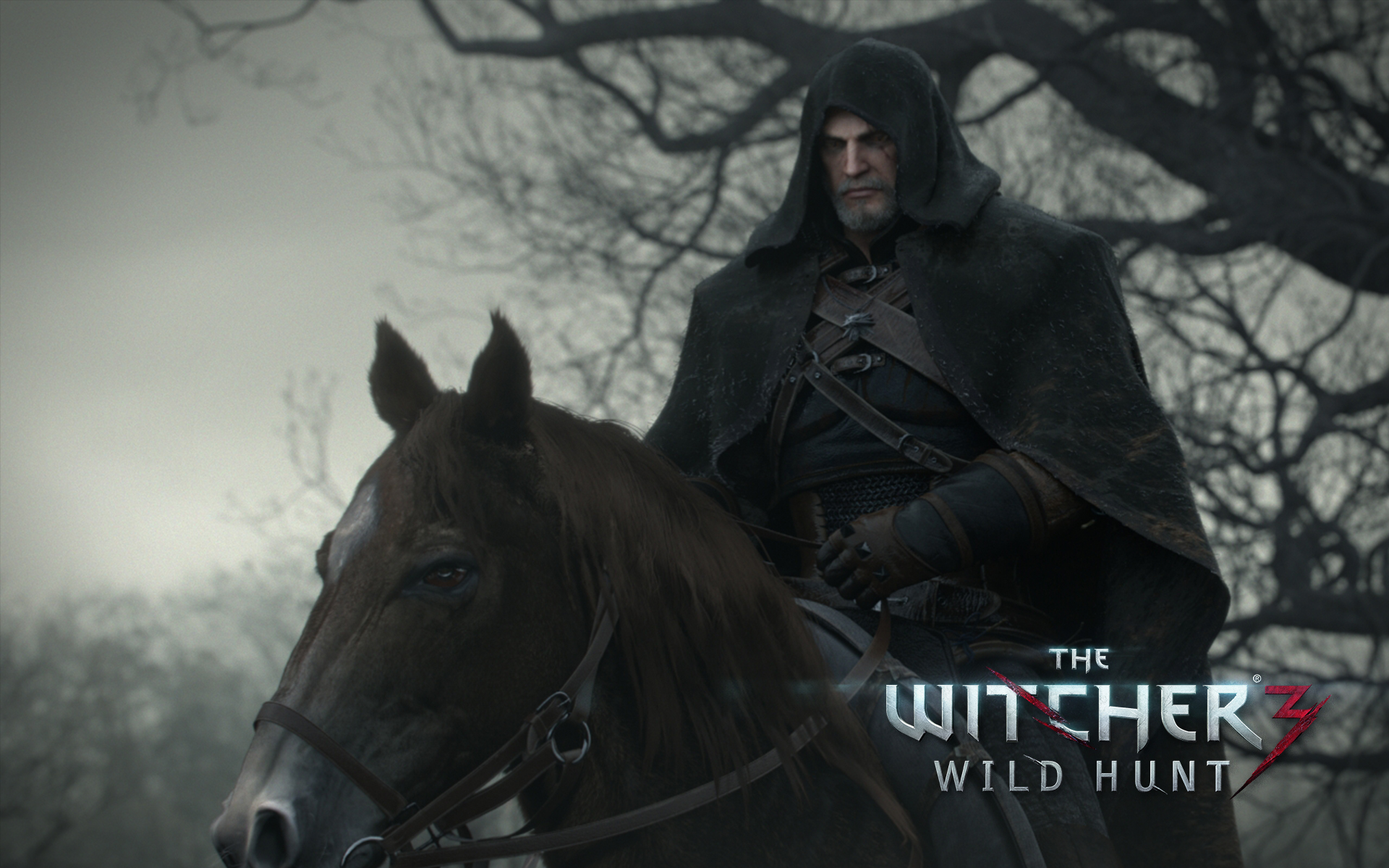
The Witcher 3

The Witcher 2 was one of the most underappreciated RPGs of last generation. It too was in many ways subject to the limitations of the available hardware at the time. Even on PC, The Witcher 2 was narrower in scope. With only a few locations that instilled a sense of scale, this RPG was sectioned off into self contained hub spaces which was likely in compensation to the insanely lush and detailed environments. It played to its strengths as a more linear experience with one of the best lores in RPG history, even outclassing some of the best stories told in the genre.
The Witcher 3 reeks of next gen; not just in the sheer size and eye watering visuals, but in narrative ambition too. The Witcher 3 looks to carry over the series’ level of storytelling and populate it across the vast worlds you explore in it. Mature telling, unapologetically complex combat system, and a massive world to explore, it’s almost as if the bar is being set too high too early with The Witcher 3.
Dragon Age: Inquisition

This isn’t a popular sediment, but Dragon Age 2 is one of my favorite RPGs of all time, flaws and all. Bioware took their exceptional talents in character development and outclassed themselves in this loosely relevant follow up to Dragon Age: Origins. But even for those who hated Dragon Age 2, Inquisition looks to be the perfect marriage between what Dragon Age 2 was trying to do, and what Dragon Age: Origins fans missed about the franchise.
Like many next gen titles we’re looking forward to, Dragon Age: Inquisition is properly large, and from the demo we’ve seen earlier last month, it's properly seamless as well with no visible load times shown. Full character customization is back from Dragon Age: Origins allowing you to equip armor, weapons, and equipment to all of your party members. The dialogue encounters have also said to have evolved, not only factoring decisions made, but which characters are present during the conversation, and allegedly character stats as well. Lastly, we’ve also gotten a brief look at the full issuing command screen, returning for those who missed it in Dragon Age 2. One-to one action combat isn’t going anywhere, and I’m glad for it; but more strategic fans will appreciate the tactical option for combat.
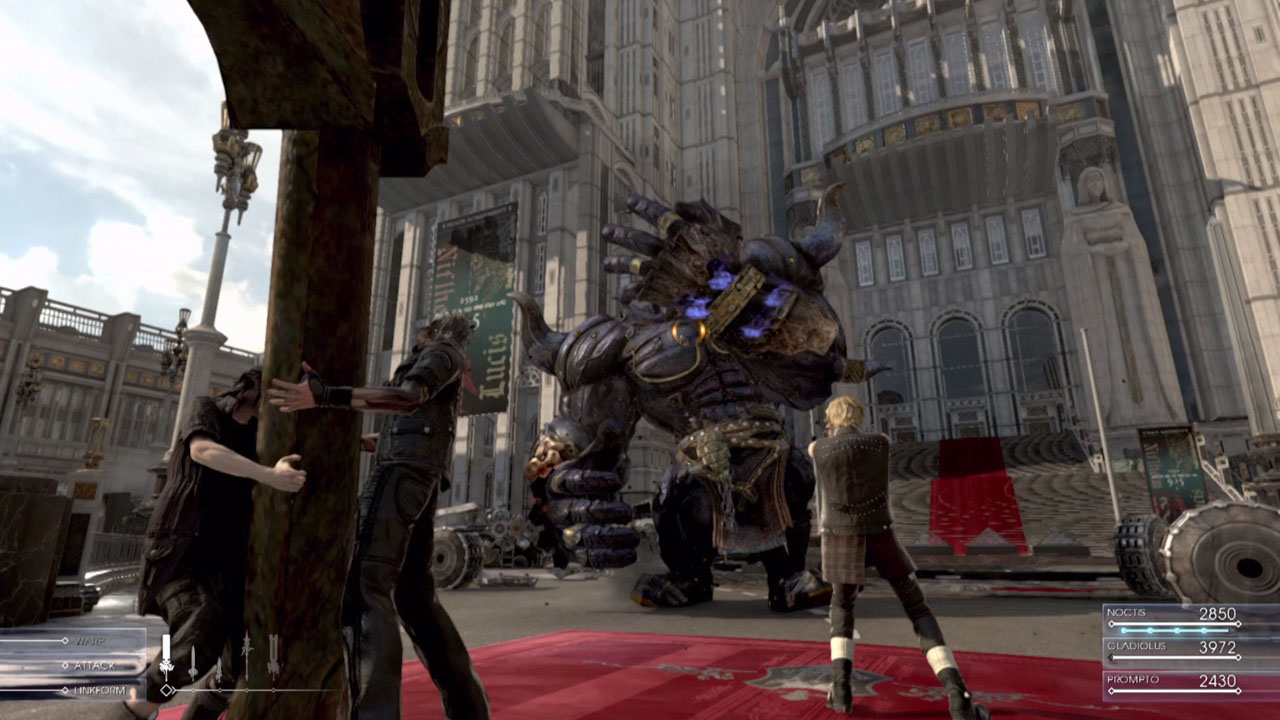
Final Fantasy XV

Before seeing the inevitable fifteenth proper installment of the very popular Final Fantasy series, I was convinced that this next game would have its work cut out for it after the very divisive, and by many accounts, flawed, Final Fantasy XIII. That is, until I saw this extended E3 video:
Final Fantasy XV doesn’t just look to take inspiration from Kingdom Hearts’ combat system, it draws direct inspiration from their cinematic direction, most notably Final Fantasy: Advent Children. This gameplay video doesn’t only make Final Fantasy XV look to be one of the best action RPGs of next gen, but I’ll be the first to say that – again, based on footage – one of the best action games of next gen.
Honorable mentions include…
… The Division, The Elder Scrolls Online, Destiny, Kingdom Hearts 3, and quite possibly the recently revealed No Man’s Sky.
What RPGs are you looking forward to next gen?

WHAT DID YOU THINK OF THE VGX 2013?

No comments

Monday, December 9, 2013

This year’s renamed VGX has revealed some exciting new looks at our most anticipated games of 2014 as well as a few significant announcements. Let’s take a look at some of the biggest debuts of VGX 2013.
Tomb Raider

I enjoyed the hell out of Tomb Raider, and hopefully many players did earlier this year. Tomb Raider coming to next gen was no secret, but was confirmed at this year’s VGX. Some clear next gen differences become apparent: Tress-FX is finally coming to consoles, and Lara’s facial animations look more emotive. However the environment and NPCs from this premier trailer look rather indistinguishable at a glance from last gen’s Tomb Radier. If you’re the type to revisit up-resed versions of past generation games, so be it. But if you haven’t experience Lara Croft’s rebooted adventure, then there might not be a better time to catch it then in this new generation.
Donkey Kong Cranky Returns

The follow up to one of my favorite Wii platformers, Donkey Kong Country Returns, is shaping up to be one of the most roster filled Donkey Kong platformers since Donkey Kong 64 in Donkey Kong Country: Tropical Freeze. Along with Diddy and Dixie Kong, Cranky Kong joins the party with a very Duck Tales-like pogo cane jumping ability. In fact, his special appears to be ripped out of the aforementioned NES classic by being able to gain extra height and bounce on hazardous spikes.
Tropical Freeze’s VGX demo also debuted Kong-Pow moves. If this follow up is anything like its predecessor, Tropical Freeze will be difficult. And Kong-Pow moves will be vital GO-OJ-Free cards when things get too hectic, allowing you to vanquish all the enemies on screen at once. They disappear in an anticlimactic poof, but Kong-Pow looks to add a helpful dynamic to the DK Country formula.
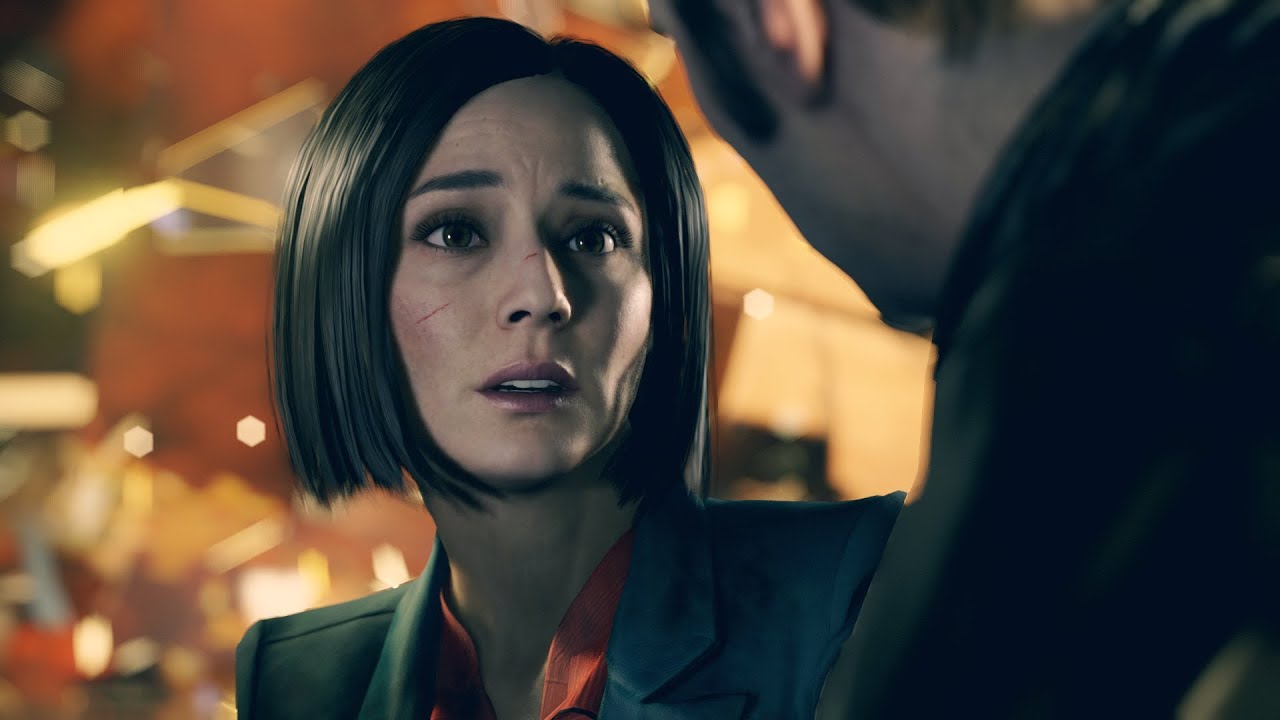
Quantum Wait

Quantum Break’s gameplay premier was, by all accounts, a tease; a mere glimpse into the actual gunplay of Remedy’s next action game. It’s fitting that Remedy would work time mechanics so intricately into their next game as we look at their pedigree from Max Payne’s bullet time and Alan Wake’s action slowdowns.
We get but a quick look at our main character’s time manipulating abilities such as being able to run at super speed through the environment. One of the concepts that excite me the most is being able to play through levels that fall apart around you in slow motion. This could open up opportunities for continuously changing level design for cover and vantage points. Just imagine running through a collapsing bridge shooting enemies as bits and pieces if it slowly falls to the waters below?
Perfecting Titanfall

Battlefield 4 and Grand Theft Auto Online will be remembered in 2013 as two of the most disastrous online experiences this year. From DICE’s assumed pressured release and EA’s faulty servers to Rockstar’s lack of beta testing prior to the release of GTA Online, gamers’ patience is wearing thin for stumbling launches of online multiplayer games.
When Respawn’s Vince Zampella was asked if there would be a beta for next year’s most anticipated shooter Titanfall, he simply stated, “We’re thinking about it.”
This worries me.
There’s no doubt that the folks over at Respawn know how to develop an online multiplayer shooter as the studio is comprised of many of the most talented members from Infinity Ward. However, there has never been a game quite like Titanfall, fusing agile mechs and jetpack boosting pilots battling on the same map all supported on Microsoft’s cloud powered servers. It’s an ambitious feat that has raised it to be, for many including myself, the most anticipated game of 2014.
Ambitious titles that are heavily or solely relying on online functionality can rarely afford not to be beta tested. Yes, Sim City and Battlefield 4 ended up being catastrophes even with beta testing, however stress testing a games server performance, weapons and map balancing is better than nothing at all.
With just roughly 3 months to go, Titanfall has shown no signs for beta testing. My fingers are tightly crossed for Respawn’s ability to deliver.
Telltale takes the VGX by storm

Telltale has created such a monolithic reputation with The Walking Dead Season 1, and the recent beginning of The Wolf Among Us. The studio has earned itself as being referred to as pioneers in video game dramatic story telling, so how is that going to translate a story through Borderlands, a game where you shoot many guns at enemies who scream “I’m the one who knocks?”
It’s difficult to separate Telltale from drama, but it’s easy to imagine many forgetting that this studio has done comedy before. Remember Sam and Max and Strong Bad? Sam and Max brought us the witty banter between the two anthropomorphic animals, its zany sense of humor, and overall intelligent writing making the series one of the most classic comedy adventure games. Strong Bad’s Cool Game for Attractive People was a little more outrageous in its comedy, delivering a game that Homestar Ruiner fans deserved. Delving deep into Telltale’s history, comedy was a huge part of a number of the studio’s projects.
But if comedy doesn’t do it for you, undoubtedly Telltale’s confirmed Game of Thrones will win you over.
Game of Thrones has captivated readers, and later, audiences with its brutal politics and unapologetic morality of many high profile characters. No one could have said it better than Geoff Keighley, Telltale is the exact developer that’s primed to make Game of Thrones interactive.
As seen with The Walking Dead and the first episode of The Wolf Among Us, Telltale has proven to bring quality drama, unseen twists, and mortal consequence to gamers. Game of Thrones embodies the very essence of all three, so the marriage between the developer and the lore will only surprise us if it DIDN’T work.
But the big question is, can Telltale deliver something more gut wrenching than the Red Wedding?
Game of the Year Honorable Mentions

There’s no doubt that the VGX’s GOTY nominees deserved recognition as being among the best titles in 2013. However with the growing presence of the indie scene, separating “Best Indie Game” and “Best Game” is becoming less and less relevant. Even outside of indie development, there were some fantastic games that received much less attention than they deserved. Here are some honorable mentions for GOTY:
Brothers: A Tale of Two Sons was a shockingly dark themed game where its mechanics pull the emotional rug right from under us nearing the game’s conclusion. Talking about the game along wont do it justice, and it’s a game that’s absolutely worth playing.
Gone Home was well deserving of winning “Indie Game of the Year”, however for many, its evocative narrative won people’s hearts and is considered THE game of the year to many. Gone Home evoked emotion right from the start, from the haunting chill of an empty house to the developing romance story of a young woman. Gone Home touched so many gamers, recreating what it was like to fall in love as an adolescent.
Ni No Kuni: Wrath of the White Witch is an enchanting JRPG with one of the most engaging battle systems in the genre. Studio Ghibli’s aesthetic captivates us who may have grown tired of the samey traditional anime art style; and the story, while still subject to JRPG tropes, is a heartwarming tale of a young boy trying to revive his dead mother. The battle system fuses monster collecting with Tales-like real time gameplay, creating intense fights laden with reflexes and strategy.
The Stanley Parable can be a haunting realization of what little control you have as a player of video games. This sense of weird comical unease partly comes from this former Half-Life 2 mod’s clinical Portal sheen as the witty and hilarious narrator mocks your every move. And the narrator is always ready, delivering a surprising amount of dialogue to ostensibly no matter what choice you make, how many times you make it, and however long you decide to make one. Choose to go through the same door he told you NOT to go through, you’ll then face a boarded up door way MAKING you walk through the other door he dictated. Its brief campaign is superseded by its multitude of endings which carry the essence of The Stanley Parable, what could they possibly throw at me next?
The Legend of Zelda: A Link Between Worlds has recaptured even the most critical of Zelda fans such as Polygon’s reviews editor Arthur Gies whose publically been unrelenting towards the franchise for years before claiming that A Link Between Worlds is “The best Zelda game of the last twenty years”.
Rupees mean something. Dungeon order means nothing. It’s these very fundamental differences in which has earned A Link Between Worlds so much praise. As an unsubtle ode to what many consider the best game of all time, A Link to the Past’s references serves as a reimagining, not a reskin. Being able to complete dungeons in almost any order, being able to rent all items very shortly after the start of the game, and not having to deal with the hand holding bulls**t the franchise has so painfully relied upon shakes up the formula for Zelda titles, and from here on out, no one wants to ever look back.
What other games would you say deserve to be honorable mentions?
Game of Show: No Man’s Sky

My first impressions of No Man’s Sky was that it’s Destiny with The Witness inspired visuals without the emphasis of first person shooter gun play. But No Man’s Sky looks to be so much more.
Indie developer Hello Games gives us one of the most impressive looking upcoming next gen titles to date. Its procedural generation of aquatic life, sprawling planets, and space clutter is awe inspiring, and few games capture the wonder of moving from sea – to land – and seamlessly taking off into space. However even more so than procedural generation, No Man’s Sky looks to be the game that owns the term, “If you can see it, you can go there.” In this massively multiplayer online game, mountains, stars, and planets are all real locations in No Man’s Sky, and it’s almost unheard of that this game is a product of a team four people strong.
This past week has been a heavy week in gaming. Separate from this post will be a reaction to the VGX 2013 announcements.

Now, let's take a look at a week in gaming from 12/2/13 to 12/5/13.


During last Sunday’s Bonus Round on Game Trailers, while discussing predictions of what is now the seventh generation of consoles, Naughty Dog co-founder Jason Rubin stated that Nintendo is “irrelevant as a hardware manufacturer” at this present time.
Back in July, I wrote a piece making similar statements, but strictly in the context of third party support, not as a hardware manufacturer. So does Nintendo have something to offer in the home console hardware business?
Historically Nintendo has, revolutionizing controllers with the N64, and initiating a dramatic shift towards motion control with the Wii across all platforms, even inspiring PC development to experiment with this control scheme even further. There’s no doubting that Nintendo has stood as a major influence in video game hardware in the past.
But what of the present?
Wii U’s online infrastructure is archaic and vastly underwhelming even in comparison to even last gen’s, let alone current. And, without beating a dead horse, the system’s raw power has turned away certain developers who’s interested in pushing technology and capitalizing on more system resources that Nintendo’s platform is incapable of offering.
Though neither has ever been Nintendo’s strong suit within the past seven years simply because they were never their primary focus. Nintendo’s focus has always – throughout the company’s history – been zeroed in on innovation. And that innovation this generation has come in the form of the Wii U Gamepad. The Gamepad is a modern technology concept, adapting their ideas from the DS line, integrated in a first ever fashion on a home console. And though the lack of multi-touch functionality is jarring, especially to the casual audience that has acclimated to iOS and Android interfaces, it has vast potential; it just hasn’t fully reached it yet.
There have been glimmers of genius in Wii U’s software. The system’s pack in launch title Nintendo Land has a garden variety of concepts in which the Gamepad can be used. ZombiU’s inventory management pulled gamer’s attention away from the screen, leaving them exposed to the dangers that lurk about, and side scrolling platformers such as Rayman Legends and New Super Mario Bros. U have built a truly unique co-op experience where the Gamepad holder plays as the invisible guide, opening pathways for the avatar controlling player or griefing them for their own pleasure. This concept – while likely not influenced by Nintendo – will be seen on upcoming titles such as Watch Dogs and The Division, and can already be experienced in current titles such as Battlefield 4 via its Commander Mode.
As the only system with second screen natively built in, Wii U has a chance to be the pioneer in second screen functionality. Xbox SmartGlass is just getting its feet wet, and Sony is finally diving in fully with Vita integration, currently primarily with Remote Play. As both the hardware and software developer a year ahead of these systems, Nintendo has the opportunity to lead this concept in ways that may not match their influence on motion control, but can still show competing platforms how it’s done. Nintendo’s hardware presence very much has the potential of hardware relevance.
It was a common joke prior to the release of the Playstation 4. “Careful out there folks. Don’t get trampled, or shot, or something…”
These jokes weren’t baseless. For those who remember, there were multiple outbreaks of violence around the Playstation 3’s launch, including a shooting in one case where two armed men shot a man waiting in line for a Playstation 3 (to be fair, they were demanding his money, not the system).
Last week, reports stated that a suspect has been arrested in connections with the killing of 22 year old Ikenna Uwakah, who after was trying to sell his Playstation 4 online, met up with the assumed buyer before being fatally shot multiple times by the gunman who then snatched his Playstation 4 and ran.
Who would have thought that one of the most infrequent and highly anticipated occurrences in the gaming industry can be so dangerous?
It’s an upsetting and infuriating tragedy that has played out like a drug deal gone bad. There is a fundamental problem in a situation where someone feels a sense of entitlement to take another’s life over a piece of entertaining hardware. I love video games; you love video games; but let’s be frank, it’s just f**king video games!
Even if the motivation wasn’t over “I WANT the hottest new system” and more driven by looking for a resell value himself, it’s a business that has no business putting people’s lives at stake. I had a therapy session with a client today prioritizing the value of money and materialistic items who stated that the root of his problems nestled in a lack of confidence.
Money doesn’t earn you respect. Having the latest game console doesn’t earn you respect. And if you’re willing to kill another human being over either, then f**k you.
Less like movie goers on Netflix, and more so like fans of literature, many gamers in this very young medium have a very innate and often emotional connection with games as physical software. EA’s CFO Blake Jorgensen’s statements highlighting the low sales of digital downloads in comparison to physical discs are very indicative of this sediment.
He attributes this phenomenon to the internet capabilities of the gaming consumers at large who all aren’t quite capable of handling the download speeds required to facilitate digital purchases. But even as a gamer who’s history dates back to the cartridge blowing early 90’s with a – more or less – reliable internet connection, I feel that the strong demand for physical software delves deeper than that.
The gaming populous was furious with Microsoft after their abysmally communicated (in its most basic form) DRM after announcing the Xbox One, and gamers resisted for equally strong reasons in addition to considering limited internet access. Trading games, whether that may be to Gamestop, or to each other, has been a mainstay in the video game exchange for two decades. Without the internet keeping gamers stationed behind headsets, players came together in physical proximity, and with it brought the practice of packing games to show off at a friend’s house. It was this that brought me to my favorite multiplayer game of all time, Super Smash Bros., and it was also how I was introduced to The Ocarina of Time.
Children and teenagers rarely if ever have disposable income; and the system of game trade-ins stood as a viable option for those who couldn’t shell a full $50-$60 for the newest game that they’ve been so eagerly waiting for. I’m too old to be ashamed to admit that this was a routine for me on a monthly basis when I was in high school, and every now and again now as an adult, I’ll pocket some cash for a game that I have no desire for sitting in my library.
But even that’s not enough to explain the gravitation towards physical software. I have two totes filled with games from last generation and appreciate moments picking them up and getting lost in the box art, reminiscing on the long nights I’ve spent in Fallout 3, or regretting not getting the chance to play as the female version of Commander Shepard looking at the alternate cover.
This install mandated console generation brings us closer to the transition of digital downloading with no justifiable reason to wait till 10 am to drive to my local Gamestop for a copy of the next game. It's a mentality that many of us console players will have to adapt to for those who haven't already. But it’s this 20 year history with video games that can very well force the habit of preordering a title, or – god forbid – waiting in line for a midnight release.
EA has not had a good reputation with their servers as of late. Sim City will be remembered as the bastard child example of DRM, and EA’s latest titles including Madden 25, Need for Speed Rivals, and famously, Battlefield 4 has had their host of problems after launch.
Battlefield 4 has been a special case of bad, plaguing players across all platforms with an enormous list of severe issues including the recent China Rising Expansion Pack, the infamous one-hit-kill bug, and locked out Conquest matches. In my case on the Xbox One, Battlefield 4 has been, in all accounts, virtually unplayable with consistent failed connections to matches, multiple deleted campaign progress, and full game crashes that won’t allow me to even get to the main menu.
EA ensures that things will get better, halting all Battlefield 4 development until the game is fixed. But when? Reports stated that the Xbox One version of Battlefield 4 would get a patch this week – some stated that it should have been today – however there are still issues plaguing the game. Should I hang on to my copy of Battlefield 4 with a flawlessly functioning copy of Call of Duty: Ghosts and Titanfall just a few months away?
For those who celebrate this recent holiday, I hope everyone had a healthy and pleasant Thanksgiving. And as to everyone, I hope you all will forgive a thinner update this week after the holiday.

Now, let's take a look at a week in gaming from 11/25/13 to 11/27/13. Below is a feature discussing last weeks release of the investigation around the Sandy Hook shooter, Adam Lanza and what role video games might have played in his life.

Making eyesight better with Oculus Rift (11/26)


Adding to the recent news that video games don’t harm children, we can look at ways that they improve eyesight; particularly with amblyopia (lazy eye) and strabismus (crossed eye).
Enter Diplopia, an Oculus Rift title promoted on Indiegogo by James Blaha who suffers from strabismus. Though games like Tetris and first person shooters can help improve vision and has also seen in mitigating the burden of lazy eye, Diplopia is specifically designed to treat both amblyopia and strabismus as an alternative treatment to patching which has been described as unpleasant.
Whereas those with strabismus cannot see in three dimensions, the game projects some of the images to both eyes in order to force the user’s eyes to make up from missing parts of the image and help them perceive the game in 3D. It trains the user to move naturally to see the image from different angles using the Rift’s head tracking technology.
Diplopia’s raised funds on Indiegogo at the time of this writing is nearing $6,000 of only $2,000. Stretch goals include nVidia 3D vision support as well as 4 new minigames up to $30,000.
Source: Indiegogo
VIA Polygon
How children can benefit from games this holiday season (11/27)
Holiday Game Jam, organized by developers Teddy Diefenbach and Archie Prakash (developers for Hyper Light Drifter, and Asteroid Soccer 2014), will begin on Black Friday November 29th and go on through the 22nd of December.
The game jam will have developers create games throughout the holiday “mid season”, and all games sold will help raise money for Childs Play, a charity dedicated towards supplying toys and games for children in over 70 hospitals nationwide in the states. Childs Play recently celebrated their 10th year anniversary after raising over $20 million in the past decade.
Just at the top of this month, Extra Life kicked off and managed to raise just shy of $4 million dollars. Extra Life is an organization dedicated through Children’s Miracle Network Hospitals to raise money for children’s cancer.
I felt the need to report on this after MY IGN user harshgupta posted on my Sandy Hook story earlier this week about a group of 400 gamers in Portland Oregon raising 37,500 lbs of food for the homeless in 48 hours.
Way to go gamers.
Source: Polygon
A Week in Gaming Special Feature:
Sandy Hook's shooter was just a normal gamer,
or was he?
Originally reported on November 25th 2013
Video games is a violent medium, no one can deny that. Without the basis of statistics, I’m confident that over 90% of console/PC dedicated gamers owns a fair amount of games with violent content in them.
Adam Lanza, the deceased shooter from Sandy Hook Elementary School, seemed to be one of those gamers. Sure, he played Left 4 Dead, Metal Gear Solid, Dead Rising, Half-Life, Battlefield, Call of Duty, Grand Theft Auto, Shin Megami Tensei, Dynasty Warriors, Team Fortress and Doom; but he also played Dance Dance Revolution, Kingdom Hearts, Kingdom Hearts 2, Phantasy Star Online, Paper Mario, Luigi’s Mansion, Pikmin, and Super Mario Bros.
The gaming industry was under siege. Plenty of political officials from both ends of the isle, as well as the National Rifle Association (NRA), has taken Lanza’s interests in video games and stigmatized the medium as a corruptive hobby responsible for incepting violent minds and spawning mass shooters.
However a report last Monday documents that the Sandy Hook shooter’s relationship to video games drew no conclusions to the massacre. It’s important to note that the summary of the investigation doesn’t specifically state that there is no connection between video games and the shooting, but intentions and influences are largely inconclusive.
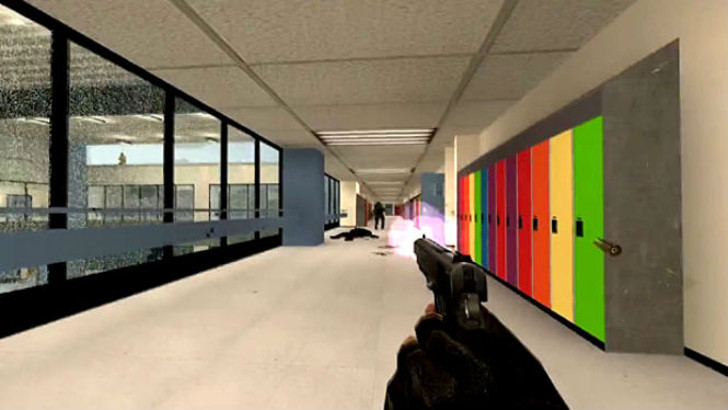
But there’s a little cornel of information imbedded within investigation’s summary that is beginning to catch the general media a blaze. Among Adam Lanza’s possessions which included material pertaining to school shooting content and even pedophilia advocacy, was a PC game which the summary claims is titled “School Shooting”. I myself have not found a game by that title, but instead a Source mod called “School Shooter” which emulates school shootings and encourages the player to commit suicide before getting arrested.
Game advocate or not, this is deeply disturbing. Much of Lanza’s gaming interests fit within the realm of normalcy from war shooters to kid friendly platformers. However most of us can agree that the gaming community at large doesn’t associate with games that explicitly depict violence against defenseless targets. Many players expressed their discomfort in Modern Warfare 2’s “No Russian”, where there was no requirement to kill innocents, and was merely a small section of the campaign.
Such content can only be conceived by modifiers and small – likely one man/woman team – developers, and is not representable to the gaming industry’s artistic nature. This material existed outside of our medium’s norms and skewed more towards the suggestive content that peaked Adam Lanza’s attention. I can sit here all day and convince others that “this isn’t what gamers are into” and “games like this hardly exists”, but the existence of games of this nature is upsetting to say the least.
There are books that justify hate, music that preach genocide, and armature films that that depict fanatical racism. In this new developing medium that has more independent and creative minds get involved, it’s inevitable that imaginative – and quite frankly – sick fantasies find their way to fruition. Troubled fellows like Adam Lanza gravitate to such content, but – as we already know – it is the interest of causing violence that causes violence, not video games.
Top