Being that I posted pre-release impressions of the Xbox One earlier last week, this week's A Week in Gaming is a bit abbreviated.

Now, let's take a look at a week in gaming from 11/18/13 to 11/22/13. Below is a feature discussing impressions of the Xbox One's line up based on launch day reviews.

Tropes vs. Women in Video Games: Ms. Male Character (11/18)

Anita Sarkeesian’s Trope vs Women in Video Games continues with the moniker, "Ms. Male Characters" which signify games’ history of identifying female counterparts of male characters with specific visual and characteristic tropes.
The earliest example of the Ms. Male character in video games is Ms. Pac-man, originating from Crazy Otto (Pac-Man with legs) to the most successful American arcade cabinet game of all time. Ms. Pac-man was easily distinguishable by the bow on her head, coupled with lipstick, long eyelashes, eye makeup, and a beauty mark. While the argument can be stated that in the 8 bit era, there was no other way to differentiate male from female, the proper follow up question would be, do all women wear a bow, have long eyelashes, wear makeup, and have beauty marks?
An easy example of gender neutrality is Metroid on the NES. Though there’s the issue of Samus’ increased physical sexuality as seeing her wear pink underwear, her Chozo armor gave no indication to her gender.
Ms. Male Characters have been identified by bows and other trope aesthetics for decades from Minnie Mouse, to Bubble Bobble, to Super Monkey Ball.
Anita drives the point that bows themselves are arbitrary in functionality as there’s no definitive exclusivity for them to be defined as female. In fact, stating that only women can wear such attire offends men that wish to express their sexuality in preferred and abstract ways. This expectation does send a message from certain male characters, such as Mario’s Birdo, which IGN alum Zack DeVries mentions in his Fake or Gay piece back in 2011. Here it shows a description of the assumed sexually confused character, “He thinks he’s a girl, and spits eggs from his mouth. He’s rather be called ‘birdetta’”.
The opposite can be said for the Angry Birds series, in which the white bird – who was revealed by Rovio – is actually a female named Matilda, underwent a character redesign with the obligatory “feminine” additions so that there would be no mistaking her gender.
But much like the colors pink and blue, there’s a socialized attachment to such aesthetics. And when coupled with other gender tropes, they create very clear stereotypes. Much like Princess Peach in Super Princes Peach for the DS, the koopaling Wendy expresses signifying characteristics in both her mannerisms and dialogue as being spoiled and bratty, all part of what Anita likes to call “Personality Female Syndrome”.
Another term Anita refers to is the “Smurfette Principle”, which describes a single female character in a roster of male counter parts. There’s the aforementioned Wendy koopaling, Scribblenauts’ Lilly of 42 children, Megaman’s Splash Woman of 78 bosses total, and Wonderful 101’s Wonder Pink.
The originator of the Smurfette Principle succinctly states:
“The message is clear. Boys are the norm, girls are the variation; boys are central; girls are peripheral; boys are individuals; girls are types. Boys define the group, the story and its code if values. Girls only exist in relation to boys.”
Anita follows up with this realization with an even more profound historical concept. As authored in the Bible, Eve was iterated from Adam’s rib who was created in God’s image. This just goes to show just how peripheral females have been viewed in societies for centuries.
To my ignorance, Anita also discussed the viral marketing of Mass Effect. Though the game itself sits comfortably in both gender and sexual orientation accommodation, ads have primarily featured the male version of Shepard instead of “Fem Shep”, the moniker given to the female version to differentiate her from Shepard, not “Male Shep”.
Anita closes with some examples of more appropriately female depictions in titles such as the blue cube Claire in Thomas Was Alone, and half of TowerFall’s roster as being female.
The Ms. Male Character trope, much like societies abided stereotypes, runs through an undercurrent in our subconscious. It seems to come natural to developers to “put a bow” on it, and dazzle them up with make-up and pink attire whereas what’s seen in other games such as Knytt Underground and Ittle Dew may be efforts of developers and writers to go out of their way in avoiding said tropes.
We’ve come a long way from being completely ignorant to tropes and stereotypes to holding active awareness. Let’s hope for a time where proper diversified depictions become second nature.
Day One with Xbox One (11/22)
The Controller
The Xbox One controller has surpassed the Xbox 360 controller as the most comfortable gamepad I’ve ever held; I specifically said “held”, not “used”.
It feels like my hand size is the target and ideal demographic for controller’s handling. Picking up the controller from a flat surface, I can roll my palms over it, and both of my hands position over it almost perfectly. The analog sticks feel as if they were specifically engineered for first person shooters. The textured edging on the joysticks make up for the smaller diameter; allowing a grip from every angle and helping to keep the sticks under your thumb. The height also helps, giving your thumbs an easier time to tilt the joystick in every which direction, and they make you feel more in control of camera movement.
The height of the sticks however do interfere with my reach to the View and Options buttons, forcing me to arch my thumbs down over the tall sticks. The Guide button now is completely out of the way, sitting at the top of the controller instead of dead center within reach. In retrospect, the Guide, View, and Options buttons are less comfortable to travel to than the Start, Select, and Guide buttons on the 360 controller.
The D Pad on the Xbox One feels more intuitive than that even on the Wii U Gamepad, with satisfying individual clicks instead of a bulky push of the entire pad. However, its diameter is too small for a controller in my opinion, leaving the better D Pad to the Dual Shocks 3&4. Continuing on the bridge of the controller, the face buttons are lower than the 360’s, requiring a little more effort to find than the previous generation.
The triggers and bumpers are a funny thing to describe. As the controller guides your hands closer, they feel more as if they’re going to meet at the top than ever before. For me, this causes me to slightly pull my index fingers outward to hit the triggers comfortably. I am more confident in saying, however, that I’m not a fan of the bumpers. The bumpers angle upward from the outside in, causing me to work on adjusting my indexes to match the angles instead to moving to a more comfortable horizontal position.
All in all, the Xbox One controller is sleek when holding; but in operation, if forces my fingers to do more work than they have on the 360. And if I were given an option to connect the 360 controller to the Xbox One, I would much prefer that.
The Home Screen
There seems to be only one circumstance in using gestures and voice recognition, if I’m already doing something with my hands preventing me from using the controller.
Voice recognition seems to work roughly 75% of the time, with a very annoying 25% of “Xbox, Xbox, Xbox…” Gestures are functional as long as you’re very careful, and are most reliable in my experience if you grab and drag to either left or right. Pushing to select an icon is even more cumbersome. You can’t just flick your hand towards the screen, you will have to carefully move your hand forward as it gradually reads the entire hand cursor. It’s a quick gradation that takes about a second to a second and a half, but it never bests using buttons.
But let me be honest, there’s nothing cooler than walking into a room saying, “Xbox, On.” and having the system respond to you before even picking up the controller.
Much of the UI is coached through tutorials which are now found under the default Featured column. You can learn all about voice commands and many of the system’s promoted apps, many in which you have to download briefly.
Waiting Patiently for Battlefield 4
As one who’s alien to the expectations of PC gaming, having to sit down for an install is a huge adjustment. It took about 15 minutes before I could dive into Battlefield 4’s campaign, and well over a half hour later, the full game download sat at 82%. That being said, this is the reason why I could only comment on Battlefield 4 and not having the chance to get hands on with Dead Rising 3.
Battlefield 4 is as good looking as one can expect it to be on next gen hardware. There’s full geometry and environmental objects that are present unlike – and I’m going to have to get used to saying this – what’s seen on last gen hardware. The lighting is sublime, illuminating specs of dust and bathing open environments exposing all their glory. The detail is also equally impressive, even down to the 3D modeling of leaves on a branch showing off their sprouting veins, casted shadows, and natural folding. It doesn’t look quite as impressive as the PC version; however such hardware only bests the Xbox One by a small margin, much smaller than the difference between the 360 and the Xbox One.
By the time I’ve finished writing this piece, the Battlefield 4 download now sits at 99%. Time to get used to next gen
So…
…what was your first day with the Xbox One like?
A Week in Gaming Special Feature:
Xbox One Launch Title Review Blowout
Originally reported on November 21st 2013
Delivered in piecemeal throughout the week, Xbox One’s launch lineup reviews have finally gone live. The Xbox One might have the console edge with more retail releases, however some are said to be better than others.
Lococycle
Lococycle has been given the benefit of the doubt due to Twisted Pixel’s pedigree. But in spite of this, Lococycle has not been positively well received.
It’s 90’s B-movie parody seems to be the only thing holding Lococycle together. From goofy banter between sentient bikes IRIS and Spike, to grill cheese sandwich worshiping bikers, Lococycle doesn’t seem to take itself too seriously. However the questionable inclusion of Pablo, who’s mercilessly attached to IRIS as she speeds down highways brawling against bad guys, doesn’t hold much contextual justification, and might offend those who were skeptical of Lococycle’s content such as myself.
Lococycle is said to control as bad as it looks, which is surprising coming from the studio that has created tight platformers and even managed to create well designed software from the Xbox 360’s Kinect. You can just look at footage to pick up on awkward camera angles, and there hasn’t been a whole lot to say about the gameplay itself.
In a very short campaign, Lococycle is said to slip into spells of repetition of recycled sequences and drawn out sections that seem to bore even within its brief inclusion. We see glimpses of fighting game simulations, scrolling shooter sequences, high speed brawling, and water based surfing; however if critics are complaining that this game is boring even as one that’s between 2-4 hours, that’s not good at all.
Lococycle seems to be worth little more than a few short laughs. But if reported loose mechanics, bad camera and boring gameplay reign true, than Lococycle is far from the launch title you need to pay
Crimson Dragon
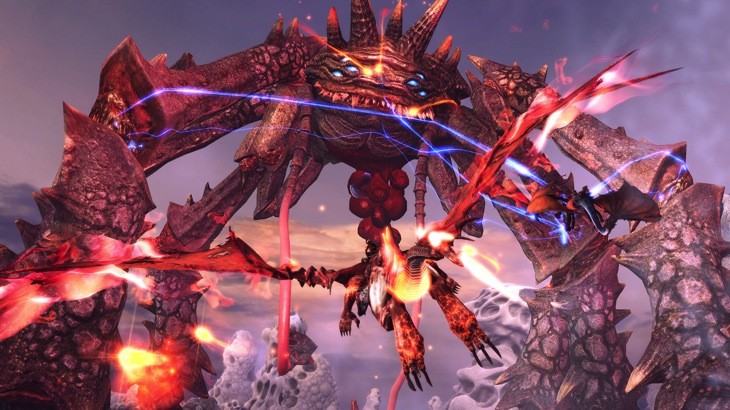
Guided on-rails shooters seem to be a dying genre only minimally revived what is now last generation. Having said that, there are very few who have stated that Crimson Dragon gives any indication that this genre or franchise needs to be revisited.
Crimson Dragon has hardly left any other impression than a soulless grind. RPG elements sounds like a fresh additive to the straight forward play style; however having to revisit levels over and over in an already repetitious game while slowly building up your dragons doesn’t sound fun at all.
Crimson Dragon looks to mix things up in the genre by adding free flying sections, however reported struggling cameras and difficult controls – primarily the lack of a hover functionality – seem to make these sequences a frustrating affair.
Based on critic reception, it’s hard to see any reason for Crimson Dragon’s inclusion in the launch line up other than taking the opportunity to grab some attention before these consoles evolve.
Killer Instinct
Killer Instinct looks to the bonus content in Xbox One’s line-up, a game that is said to be so fundamentally sound that both those enthused and intimidated by fighting games (such as myself) can easily pick up.
The first reason for this is simple, it’s free. Killer Instinct’s free-to-play model allows inexperienced fighting gamers to dip their toes – with the all-round balanced Jago – in the arena without cost before deciding if they wish to make a tangible investment by picking up multiple characters.
Killer Instinct is said to guide those players though well instructed and intricately designed tutorials, teaching players the fundamentals of Killer Instinct’s basics – and most importantly – its attack, counter, and counter-counter system.
Killer Instinct’s combat system is described as being digestible, yet dynamic without the technical memorization of button combinations. The focus here is Combo- Breakers. During a combo, the receiver has to combo-break with the same strength as the combo that's being executed. Attackers should anticipate a combo-breaker to counter with a counter-breaker. This overrides combo-breakers, allowing the attacker to stay on the offense. Combo-breakers don’t cost anything, however if the combo isn’t matched properly, you’ll receive a lockout, making you further vulnerable to a combo. Counter-breakers do come at a cost, half your energy to be exact. Failing these will, like a failed combo-breaker, will make you vulnerable after a lockout as well.
There seems to be little reason not to at least give Killer Instinct a chance. It’s a free fighter with a deep combat system that is also said to go out of its way to accommodate for newcomers as well as satiate experienced players.
Dead Rising 3
Though Dead Rising 3 isn’t the open world game to replace Watch Dogs this year, but nonetheless, numerous critics have reported that Dead Rising 3 is the “zombie squishing” escape that many of us have expectedly hoped for.
There are a number of complaints depending on who you talk to. The city is surprisingly small and cumbersome to wade your way through. The framerate issues haven’t been completely fixed, falling victim to mass vehicular devastation. The parodied stereotypes can be painful to watch and listen to. And, the game doesn’t always quite control well, particularly during boss fights.
But endless onslaught of creative zombie destruction has had an overbearingly positive impression on critics, overshadowing issues that would normally make other games unrecommendable. The incessant spamming of blueprints offering recipes for useful if not hilarious weapon and vehicle combinations has been said to keep investments locked. The incentive seems to compound upon itself with its leveling system which allows lead Nick Ramos to create even deadlier combinations, and ultimately watch more zombies break, peel, and split into bits.
All of the positive reception Dead Rising 3 received paint this sequel to be exactly what players were looking forward to, and ultimately give Xbox One purchasers a 30 hour justification to for their new system.
Ryse: Son of Rome
Ryse: Son of Rome seems to be more or less the Knack of the Xbox One; maybe not quite as disappointing, but reportedly underwhelming nonetheless.
Crytek seems to have this obsession of creating dramatic experiences that garner mixed appreciation. Ryse attempts just that with its narrative, and it might hold your attention well enough depending on your tastes.
Amidst its interesting-on-paper combat system that awards players with different perks based on the elicited execution, there’s an overwhelming consensus of lamenting Ryse’s shallowness in being too quick to show its entire hand. Action games hinge on the discovery or steady exposure to new ways in which to attack. But if Ryse stops showing anything new too soon, there’s little just incentive to keep on through monotonous tedium.
The multiplayer appears to be an expanded version of the co-op mode from God of War: Ascension with Mass Effect 3 style booster packs that hold pleasant surprises or disappointments. I never liked that in ME3; but even if you did, there doesn’t seem to be much to Ryse to keep one invested otherwise.
Ryse: Son of Rome seems to be your quintessential launch title: a technical show piece forced into a video game.
Forza Motorsport 5
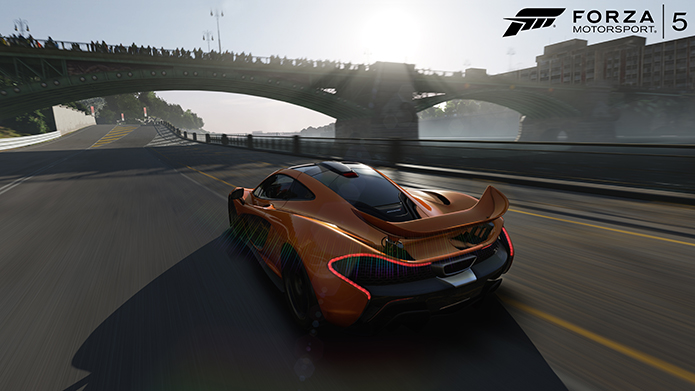
Forza Motorsport 5 is probably the most confident game – next to Playtation 4’s Resogun – across both platforms. And it earns that confidence with only two common complaints being that there are less tracks and less cars.
But novice players will hardly notice the shortage with roughly 200 cars, and would more benefit from Forza’s pulsating and organic feedback, a literal meaning of both terms. It’s been said that the rumble feedback on the Xbox One controller teaches players how to drive better, with a very explicit line of communication indicating when players are running over rough terrain, when they’re taking hard turns, and other physical intricacies of the ride.
The other classroom sessions is reported to come from the AI themselves via Forza’s Drivatar system. Mimicking the behavior of cloud saved styles of real life players, competing cars are unpredictable, and will likely properly prepare you for direct competition online.
New comers can benefit from the rewind feature and broadcasted drive lines on the track, and veterans can extend their thumbs to open wheel racing, adjusting to F1 and indie car driving.
With Turn 10’s staggering attention to detail, celebration of car culture, and accommodating game design, critics agree that the drive-curious and drive fans can’t go wrong with Forza Motorsport 5.

LOOKING FORWARD TO THE XBOX ONE EXPERIENCE

No comments

Wednesday, November 20, 2013


Impressions are predictions based on video demonstrations. Expect full hands on impressions, including titles Battlefield 4 and Dead Rising 3, the weekend after Xbox One launch day.

“I don’t look forward to the graphics, features, or anything else first. For me, it’s the controller.”

The Xbox 360 controller is arguably the most ergonomically designed controller in the history if console hardware. Without getting hands on the Xbox One controller yet (no, I haven’t had the time to pick one up at Gamestop), I’m curious as to how significant these changes are, particularly the rumbling buttons and the taller smaller sticks, and the D pad. But just when they’ve got me hooked on the nuances, they throw in AA batteries. It’s a minor gripe, but one that has been the single advantage that the Dual Shock 3 has had over the 360. Sure there are play and charge kits, but I cant imagine I’ve been the only one who has had bad luck with those accessories. Here’s hoping for longer battery life.

Getting Started

We have been for warned numerous times, Xbox One requires an initial internet connection to activate all of the system’s functionalities. This is the future, and it is inconvenient. The juvenile “I want it now” kid in me has not gone away, and I fully anticipate my impatience in calibrating the Kinect’s audio, as well as everything else for the Xbox One.

It does seem to have an odd pay off for your patience. Remember when console boxes had a set of screen shots for relevant games at the time of its manufacturing plastered on the side? Xbox One seems to assault you with a sizzle reel of footage from the launch line up. Curious to see how that changes if you pick up an Xbox One in March if you know what I’m getting at.

Xbox, Record That

As one who’s always been intimidated by purchasing video recording hardware and software, the next gen systems’ DVR features is a blessing for folks like me, especially ones who recreationally writes about and reviews games. Looking at the run through for recording and uploading footage on Xbox One seemed simple enough, however I’m curious – along with all of Kinect’s other features – to see if the system offers tutorials on how to take advantage of the Kinect’s properties. Trimming, editing in intros, and inserting voice over are all basic and vital features for video editing, and I cant wait to mess around with it after launch.

QR Codes

Every single 360 user has run into the issue of navigating the virtual keyboard typing in codes – whether that might be for Xbox Live, Points, or games – only to run into the message rejecting your input just so that you have to look at that one mistake that you’re convinced you never made.

It may be a small convenience, but the Kinect’s QR Code reading functionality is a god send, allowing you to hold up a QR sticker to Kinect and it automatically redeems it. It’s a neat little feeling of just how “futuristic” this hardware – particularly the Kinect sensor – really is. I can see myself going out of my way to pick up QR codes just to play around with this feature.

Xbox, Listen to Me

As one who’s never used the 360’s Kinect, I wouldn’t be able to speak to the vast improvements the new sensor has made over the original. Seeing how the camera tracks players in front of the screen and how you can use “Select” to reveal all of the dashboard vocabulary is very neat. However hearing testers having to repeat Xbox phases twice, numerous times, is very discouraging. Communicating with the Xbox One vocally to help edit videos seems really slick without having to scroll through windows; but if I have to repeat myself, I will quickly strictly rely on using my controller.

Home

One way I’ve conceptualized the drag of current gen systems is this: If your computer at home was as slow as the Xbox 360, you’d have a fit. Of course, who’s kept an 8 year old computer lying around without upgrading it at least? All in all, that’s a testament to how comparatively archaic this hardware is.

Seeing demoers jump from game to TV, to recording, and back to home in and of itself is a sight to behold. Just as I’ve struggled with patience in looking at the spinning orbs of the Playstation 2, it would be increasingly more difficult for me to tolerate watching the cycling rings before a 360 fully boots up.

As it was with the 360, Kinect’s integration in the Xbox experience has always said to be best used in conjunction with the controller. You will never catch me holding up my hand pulling across and pushing it forward to navigate and select options from the dashboard. It looks like a hassle, and many seem to agree.

One big issue off of IGN’s livestream that was mentioned was the inability to manage the hard drive at this time. Currently, in order to delete games – which we’ll be doing a lot of in this download mandatory console generation – you will need to go to the games individually instead of going to System => Memory and go from there. That’s a huge burden that thankfully Microsoft is aware of, and hopefully they address the issue no more than a few months after launch.

The Xbox One experience…

… looks fresh, it looks slick, it looks next gen. Kinect seems to be both the bane and the beacon of your interaction with the console, making certain tasks easier, and struggling – in certain settings – to keep up with others.

Look forward to my impressions with the system the weekend after launch day.
Let's take a look at a week in gaming from 11/11/13 to 11/15/13. Below is a feature discussing impressions of the Playstation 4's line up based on launch day reviews.

Good-bye Discs. Hello Digital Age (11/11)


Silly me. I was foolish to think that my frugal sensibilities in saving hard drive space this generation would work next gen. For 6 years, I’ve budgeted every KB of space within my 20GB Xbox 360 and my 40GB Playstation 3. I’ve deleted pictures, demos and old downloadable games to make room for Halo 4’s mandatory install, and happily erased God of War Ascension and Final Fantasy XIII, keeping favorites Journey and The Last of Us to give my PS3 more breathing room.

It was a practice that I stood by, avoiding irrational game downloads when I could have played the content off of the disc. But with next gen’s mandatory installs, I don’t have a choice.

Playstation 4’s architect Mark Cerny describes the inability to stream content off of the disc as a “physics issue”, confirming that indeed, disc based games will also need to installed as well. Kotaku reports:
“The machine may have a Blu-Ray drive that's about three times faster than the PS3 with about six times as much memory, but it's still more expedient for it to read data from its own hard drive.”

Like what we’ve heard about downloadable titles, disc games will allow play mid download, doing the rest of the heavy lifting in the background while we enjoy the game. Cerny notes that playing disc based games will allow gamers to access the data sooner than if they were downloaded off of the Playstation Network, and that games such as Knack will be playable 10 seconds after inserted into the Blu-Ray drive.

Early Xbox One users, particularly André Weingarten AKA Moonlight Swami, revealed some of the system’s mandatory installation details. Much like the Playstation 4, disc or digital, games on Xbox One will require installs.
According to Swami, looking at the list of Xbox One launch titles, if some crazy person picks up all of these games, they’re looking at roughly 342GB of mandatory occupied space on a 500GB (minus the OS and preloaded software) hard drive.

Supported external and swappable hard drives couldn’t come soon enough for these consoles, as space budgeting can become an issue for many gamers as early as this time next year. For competitive gamers such as myself, multiplayer titles will be hard to let go of; and the rest of us all have those games that are so cherished that we refuse to part ourselves from them.

This might be a life lesson, learning how to grow up and release ourselves from our irrational attachment to games while PC gamers bluntly state, “Welcome to our world”. Or it will be a test, challenging us to go out of the way to continue to hang on to the things we love.

You got some Skyrim in my Dragon Age (11/12)

There couldn’t have been a better response to Dragon Age 2’s criticisms for restrictive gameplay.

Dragon Age: Inquisition has been painfully private since its announcement compared to attention greedy next gen titles since E3 this year. But Inquisition is stealthily shaping up to be one of the most significant RPGs of 2014.

An uphill climb reveals the accessible vistas of the land, a painter’s fusion of snowcapped mountains, a canyon orange temple in the distance, the sun-lit glaze of the grassy plains, and the emitting green aura rising from the sea. Dragon Age Inquisition is massive. And from the sprawling fields of Crestwood Hills to the uninviting jaws of the dark caves, as we’ve see thus far, much of the world explored in Inquisition can be entered without load times. It’s a feature that we’ll have to get used to seeing with so many of next gen’s titles broadening to open world, much like the transition between the last console leap.

Contextual animations further indicate the open world intention of Inquisition. Your Inquisitor takes knee-high steps when walking in muddy docks, and presses their weight forward when climbing a steep ridge, then balancing it backwards when carefully making their way down. Everything from character animations to seamless transitions to other locations, all appear to be engineered to create this feeling of vast exploration.

I was happiest to see Varric, easily the most charming and most interesting character to have in your party returning with his sardonic delivery to one of the other party members. It was a tiny reminder Dragon Age’s exceptional characterization, and with a new dynamic dialogue system incorporating different variables such as characters present and even character stats – even amongst the unsurprising yet appreciated choice based content inclusion and exclusion – I can’t wait to see the results in major decisions made.

You can’t blame the presenter for making a point to mention that all of the armor and weapons of each of your party members can be customized. In Dragon Age 2, Bioware deliberately relinquished armor customization for party members in efforts to enhance their story. White armor and more inviting apperances reflected the decisions they’ve made and their likeness to your character. More sinister looks were more telling of their miserable attitude.

This new RPG carries over many of the mechanical elements from previous games. One to one action gameplay is here to stay as Dragon Age continues to play as a third person action game. But then the camera tilts overhead to reveal the return of full tactical control. This is a return to form from 2’s simple and serviceable order command view. Here we see the player issue explicit commands such as ordering positions in the battle field to casing spells in precise locations.

Lastly, dragons seem have an intimidating presence, even more so than Skyrim. Wandering the dusk desert, the player comes to a sunken wasteland shrouded in poisonous gases. A dragon cries, landing on an arched rock formation with a formidable crash before taking off again, pulling some of the lingering gases with sweeping flight. The demo closes right before an encounter of a dragon touching down with its hot breath steaming from its gaping maw readying for a fight.

There won’t be a whole lot of room late 2014 with Dragon Age: Inquisition landing in Fall.

Don’t leave your PS3 behind before Left Behind (11/15)


WARNING: The Last of Us spoilers ahead.

One of the biggest mysteries of The Last of Us was what predated Ellie as a character. Why is she immune to the Infected? How did Ellie meet Marlene? And under what circumstances did Marlene promise her mother , Anna, to watch over her?

The Last of Us’ first DLC, Left Behind, may answer these questions for some, and provide exposition or a different perspective for those who’ve already gotten a glimpse of Ellie’s history.

The Last of Us: American Dream, was a four issue comic series that ran through before and after The Last of Us’ release date on June 14th. It was a condensed look at a 13 year old Ellie, and the life she lived before she met Joel. Ellie attends a military school where she’s bullied as the spunky, yet still isolated trouble making outsider. She meets her new friend Riley, a fifteen year old student who she goes through a similar relationship transition with as we saw between her and Joel. Riley’s juvenile dreams to join the Fire Flies leads them to escaping from the military school and venturing out into the infected concrete jungle. We also see where Marlene came into the picture, revealing her role in Ellie’s life after making a promise to Anna.

Just enough background was given in American Dream that even after the unnerving confrontation at the end of The Last of Us, there’s still much to be known.

Left Behind brings Riley back into the picture, and as seen in the brief trailer, they’re up to typical teenage venturing shenanigans. One can predict that Left Behind takes place after the events of American Dream being that there was only one Infected encounter in the comics, and we can assume that there would be several in this upcoming DLC.

This gives room for further exposition to further flesh out Ellie’s history. Deep in the game, we hear Ellie refer to a friend and an incident where they were both bitten. Could this be Riley? One of the most emotionally impactful moments in the game occurred in an argument between Ellie and Joel when Ellie stated, “Everyone I have cared for has either died, or left me.” Could she have been referring to Riley’s death?

It comes to no surprise that The Last of Us’ DLC has you partnered up with another character. The game’s story telling hinges upon a leading duo. We can also expect its intense stealth gameplay and desperate item management. Playing as Ellie, we may very well see the return of her indestructible blade, which made her even more effective against enemies in some situations than Joel, particularly when you chuck a projectile at a Clicker’s fungal dome, and stabbed them in their crusty face until they’ve fallen.

This leads into what I’m eagerly hoping for, which are sequences that replicate Ellie’s finest moments from The Last of Us. In a game that was deeply rooted in stealth mechanics, Ellie and David’s stand offs against waves of infected was a drastic change of pace for the game, and featured The Last of Us arguably at its gameplay best.

Next to Bioshock’s Burial at Sea, The Last of Us’ DLC has been my most anticipated add on content this year. Too bad we have to wait longer until early 2014.

A week in gaming special feature:
Playstation 4 Launch Title Review Blowout
Originally reported on November 13th 2013


This pas week, Playstation 4 game reviews have gone live helping us to determine what console exclusive will earn our wallets in justifying our purchasing of this next gen system.

KILLZONE: SHADOW FALL

Killzone: Shadow Fall has received mixed but relatively positive acclaim for its less than linear campaign and experimental multiplayer. In a post Far Cry 3 world, first person shooters with chosen objectives have become more appealing, and in a holiday matched up against two painfully linear, and quite frankly, not very good campaign modes between Call of Duty: Ghosts (look forward to my review between the next two weeks) and Battlefield 4, Killzone Shadow Fall has an opportunity to scratch that shooter itch in a noncompetitive fashion.


Competitively speaking however, Killzone Shadow Fall presents an unusual proposition in a post Call of Duty era. It is a multiplayer shooter not contingent on accumulating EXP, allowing players to rummage through a toy box full of customization options. Few games can get away with such a lateral approach. The Halo franchise has been able to hold on for so long without fully committing to a reward as you play system because of the richness of its idiosyncratic core mechanics and expert level design. Shadow Fall doesn’t look to be much different in terms of differentiating itself mechanically, and some reviewers have lamented over its map design.

What does look appealing is its unrestrictive approach not only to custom classes, but modes as well. Few shooters allow players to tinker with their rule sets, but in Shadow Fall, it appears to be one of its leading attractions.

Killzone Shadow Fall looks to be just the obligatory shooter that a new system needs, but will it be the shooter of choice outside of Call of Duty: Ghosts and Battlefield 4?

RESOGUN


Resogun appears to be the Geometry Wars of this generation, which comes to no surprise coming from the same developers that brought us Super Stardust HD, which was lauded to be Playstation 3’s comparable title to the Xbox 360’s smash hit.

It takes Stardust’s concept of battling on a singular spherical plane and confining the dimensions to left and right, adopting the style of side scrolling sh’m-ups and creating a cylindrical arena.

High score chasing, multiplier racking, bomb managing and weapons upgrading all seem to be here from Housemarque’s past, but the single restriction of now only moving and shooting side-to-side look to make Resogun novel enough to be one of this gen’s definitive pick-up-and-play titles.

KNACK


What might be Knack’s biggest problem is how it might betray players into thinking that it’s a shape shifting brawler platformer, where it said to be really a straight forward and surprisingly tough brawler.

The word is that Knack is a lot of things that you might not expect it to be. It’s long for a game that’s expectedly shallow, it’s challenging for a game that looks like a Saturday morning cartoon, and according to IGN's Steve Butts, you don’t dictate the size of Knack so much as the levels do.

It seems that Knack is very much the throw away title everyone expected it to be, a game that Mark Cerny just threw together as a pet project after leading the design of the Playstation 4 itself; all in all an expectation that was easily honored.

CONTRAST


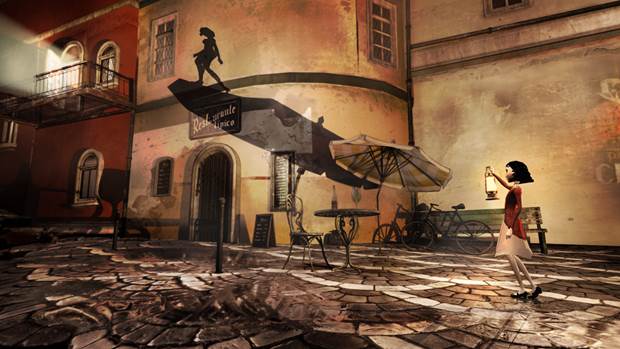
Among the mainline launch titles, Contrast seems to be the black sheep of the bunch. Contrast is heavily aesthetic. The 1920’s musical and visual sheen, the touchy subject of a child caught between a parental feud, and the incredibly unusual story telling devices “contrasting” the physical Didi and the silhouetted individuals she interacts with make Contrast one of the most unique launch titles across both systems.

Contrast bridges two gameplay styles together, neigh Limbo style 2D platforming, and 3D exploration. With both coexisting within the same space, allowing you to transition seamlessly between the two, it raises a concern that the mesh of the two styles may be interesting together, but present a weaker experience in isolation.

While the gameplay might be divisive between odd platform sections, annoying glitches, and repetitive puzzles, the game’s story is universally praised, taking dark turns such as murder, divorce, and residential eviction.

Contrast seems to be the experience worth having despite the execution of the gameplay itself.

So…
…which will be your console exclusive game of choice within this breadth of both AAA and intimate small scale titles?
Apologize for the late post again this week folks.

Let's take a look at a week in gaming from 11/4/13 to 11/8/13. Below is a feature about the strangely under the radar controversy about Twisted Pixel's LocoCycle content.

Steam Box and Controller Update: Do we still want one? (11/4)

A ton of details emerged last week on Valve’s couch gaming initiative across their Steam controller, Steam Box hardware as well as software. While we still don’t know much more about the Steam machines themselves, we’ve been given a little background about the controller’s development, and an interesting take on how Valve will approach software on their platforms.
Initially it was unclear if the Steam controller was to take on the genre landscape as a whole, or just bring PC gaming to the living room. Valve’s Greg Coomer’s statements of approaching the “whole catalog” suggests the former, but the history of the controller’s development hints at the later.
The original trackball idea is undoubtedly PC influenced, taking the archaic input feature and prototyping it on their controller concept. It’s a bizarre pitch that would have arguably flopped, especially given that trackballs have been absent from the popular PC space for years, and can only be imagined for limited types of games.
We were briskly paced through the touch only phase where Valve thrusted itself into accommodating for all 104 keys on the keyboard. This concept eventually evolved into what we see now.
Valve is clearly confident in their controller’s ability to accommodate for all genres, claiming that they’ve played and won games in every competitive genre with the exception of DOTA. But I still have my reservations with both the odd button placement and the lack of a traditional D-pad despite what their engineers and early testers who’ve had the chance to mess around with the thing have stated.
That’s what’s so valuable about their hardware beta. Despite their confidence in believing that they’ve engineered the perfect controller, it would be foolish to release it to the masses without consumer feedback. I fully bear in mind that I’ve yet to touch the controller and won’t get a chance to until the hardware’s official launch, but I would have to see it and hold it to believe it.
It’s exciting to hear that we’re going to begin hearing news about the machines themselves as early as CES next January. And despite the skeptism asking, “Who is this console for?” it makes sense that Valve is only looking for a slow burn over the course of the next several years.
One can easily imagine that one of two minds will be attracted to the idea of a Steam Box: those who would like to enter PC gaming without the headache and the cost (such as myself), and those looking to just simply take their already established PC gaming experience to the living room without running an HDMI cable to their display. But regardless the small interest now, I’m confident that if Valve fulfills on their promises, word of mouth from strong supporters will balloon the number of Steam Boxes in living rooms.
Vale clearly doesn’t need to do this. With Steam being 65 million subscribers strong, this is clearly an elaborate passion investment. But as lucrative as Valve is as a company, I worry about the yet to be named hardware partners’ stake in this living room initiative. If this push fails, certainly Valve will still [weather the flop], but will their partners?
Lastly, we can finally rest easy and not have to worry that the now again hypothesized Half-Life 3 being a Steam Box exclusive. Valve’s Anna Sweet boasts a very admirable philosophy in encouraging developers to land their games on as many platforms as possible (sounds very similar to Ouya’s founder Julie Uhrman’s statements of encouraging developers to test their software on the Android system first before moving onto other platforms).
Ostensibly, this goes against the console game of tug of war that capitalizes on exclusivity. But Valve’s strong suit isn’t in software alone, especially when going up against the likes of Sony, Microsoft and Nintendo. What attracts me as well as many other gamers are Steam deals [early access, and games that release on the Steam platform long before anywhere else]. It’s almost safe to say that it goes without saying that we’ll see the same Steam deals on these machines as we do currently. And once this market place establishes itself, then we could see a much larger shift than those who’ve moved to Sony's platforms for Playstation Plus.
The next console generation might be in full swing weeks away with the launch of the Xbox One after this week's PS4, however there is yet another addition to the console space fast approaching possibly as early as next year. We have a firm idea of the direction Sony and Microsoft are taking their systems. However we cannot anticipate what Valve will add to the console space. But I’m willing to bet that the Steam Boxes’ addition to the living room equation will change the console landscape much more drastically than what traditional consoles have allowed us to imagine.
Image Source: Engadget
My first impressions of Call of Duty: Ghosts (11/5)
The first few hours of a Call of Duty experience can easily evoke of feeling of more of the same. And while my first day (played around the hours of being a responsible social worker) was so much like other Call of Duty titles, there was enough seen in my first time with it that hints at major changes for the franchise.
Even within an hour of playing Call of Duty Ghosts multiplayer, there are subtle design changes that make significant differences in both how you play and experience competitive multiplayer. IGN's Scott Lowe made some profound observations of the new maps. They are indeed significantly larger than previous Call of Duty games. This is turn reinforces, as he points out, better performing and more reliable mid to long range rifles (Marksman, Assault, etc).
With the wider real estate comes valuable verticality. Maps like Siege are unfriendly to those that stay low with no direction. This approach will box you in tunnel vision, negating any awareness of danger approaching from around the corner or from above. It then becomes increasingly important to gain some latitude for a quick look ahead before making your way around the map.
Verticality is also multi-leveled, which is why Ghosts introduces [vertical] identifiers on the mini map, a much needed addition just as it was appreciated in Halo 4. I can’t imagine playing maps like Flooded without this feature. Taking place in a destroyed dam split in half, Flooded’s multi-level set up makes [vertical] locating a necessity.
Flooded is also a great place to practice Ghosts’ new maneuverability mechanics. There are plenty of corners to lean around, a number of obstacles to vault over, and plenty of opportunities to knee slide to safety.
Infinity Ward may have put an almost unnecessary amount of effort around their new dynamic sound engine, but none of these audio tweaks are as effective as the sound of female soldiers shouting during battle. It creates a different audible environment when listening to women barking the locations of enemy combatants and alerting you for confirmed kills. It’s a small addition that makes me very much appreciate the gender diversity.
There isn’t a whole lot to say about the first hour or so of Ghosts’ campaign. Black Ops 2 boasted such a strong emphasis on story unlike any installment before it that Ghosts is going to have to take major narrative leaps in order to rise above its predecessor.
The gunplay is largely unchanged within the first hour outside of oriented space shootouts and the mildly appreciated Riley sequences. Again, this is the first hour. There are allegedly 9 more hours of opportunity to mix things up in a big way.
So that’s my brief time with Call of Duty: Ghosts. Look forward to my full review later this month.
When will Call of Duty fall of the throne? (11/7)
Though Activision’s recent sales figures of $1 billion doesn’t reflect consumer sales, and is very likely a PR cover up of what Call of Duty: Ghosts actual units sales figures are, the Call of Duty franchise is still hugely profitable for Activision, and their latest installment is shaping up to be the best selling title this year only second to GTA V as far as we know.
But with a new console generation comes new opportunities for paradigms to shift, and within the next few years, we may finally see a less COD dominated AAA shooter space.
Respawn’s reclaiming next gen juggernaut Titanfall won’t be able to compete with Call of Duty simply because of their Xbox console exclusive. But beyond March 11th, we may begin to see signs of the potential popularity of the franchise. Titanfall’s revolutionized COD mechanics is hard to ignore which is undeniable knowing Respawn’s Infinity Ward veterans. These aspects are bound to capture the attention of even the slightest jaded Call of Duty player, and the amount of attention it has built since E3 will only continue to grow.
With the studio’s intention to remain independent for the time being, it’s hard to tell if Titanfall will grow into a franchise that churns out installments relatively close to one another. But with it potentially expanding to Sony’s platforms in future titles in the series, it quite possibly could be one of the most popular franchises in the next generation.
“From the creators of Halo and the company that brought you Call of Duty…” Though it would be foolish to think that Destiny was being developed to directly compete with Call of Duty, Activision’s gamble on Bungie’s next shooter could suggest that the publisher is preparing themselves for Call of Duty’s shrinkage.
Activision doesn’t bet on franchises without the expectation of them being a colossal success. We’ve seen it with Tony Hawk, Guitar Hero, Call of Duty, and Skylanders. The mere fact that that they’re investing in a franchise that’s within the same genre as their most profitable product yet speaks volumes for a publisher that funds few yet hugely successful franchises. And with the Bungie’s pedigree along with the speaks-for-itself marketing – hence the above used quote – Activision can very well be positioning themselves with a franchise that could outlast Call of Duty.
As a Call of Duty fan, I’d hate to see the franchise reduce to dust like past Activision lost and forgotten successes. But there are at least two new next gen shooters in the horizon that are catering to the Call of Duty audience with fresh ideas. It would be interesting to see the positioning of Call of Duty next to Titanfall and Destiny within the next three years.
A Week in Gaming Special Feature:
Xbox One's Most Racist Launch Title?
Originally reported on November 8th 2013
LocoCycle.
The name doesn’t verbalize much, but looking at the context of the game itself, it becomes clear what this title – and more importantly – this game is all about.
You play as I.R.I.S., a motorcycle with a female persona who’s dragging a helpless Spanish speaking (who looks to be a…) mechanic named Pablo down sped-through highways in this car combat style arcade game. The hook here is that Pablo is crying out for help in Spanish as I.R.I.S. willfully carries along whipping Pablo around as she kicks the crap out of enemies with no clue or care for Pablo’s pleas.
It’s intended to be a comedic premise, a brand of humor that is far more crude than what developer Twisted Pixel has ever done.
IGN's Jose Otero originally brought up his beef with LocoCycle on Podcast Unlocked, stating that the game offends him. IGN's Ryan McCaffrey got behind Jose’s unsettlement with the game after the LocoCycle’s campy trailer, particularly in a scene where Pablo pleads for help to a hopeful samaritan who dismisses him for speaking “Mexican”.
As a Black male who’s been a victim of racism for two decades and as a social worker who’s predisposed to cultural competency and political correctness, LocoCycle doesn’t sit well with me at all.
LocoCycle’s shtick can’t get away from the nation’s prejudicial propensity to disregard non English speaking legal and illegal immigrants. And it very well could intend not to be. The trailer’s 80’s goof looks to parody all sorts of American and movie stereotypes. But looking at a point made by Anita Sarkeesian, delivering a message through a tongue-in-cheek parody does little to serve a purpose by repeating [the target of satire].
But there’s a deeper level of unsettlement to LocoCycle’s premise, one that’s far more disturbing for those of us old enough to remember it. On June 7th, 1998, a Texan African American man named James Byrd Jr. was brutally murdered in a hate crime. Three men chained him to the back of a pickup truck and dragged his body for three miles. The makeshift lynching became fatal when his body hit the edge of a culvert, severing his head and right arm.

I’m convinced that there is no intended reference to this crime in LocoCycle, but the racial undertones of the game and the tortuous act that so closely replicates this 15 year old hate crime is hard to ignore.
Clearly not everyone aligns with this level of unease of LocoCycle. I showed videos and explained the premise to my girlfriend who’s half Puerto Rican. Who I thought would take the most offense to LocoCycle’s plot was to my surprise indifferent and nonchalant to the Hispanic portrayal, stating that she understood the brand of humor as simply just ‘humor’. Nothing else.
The worse I’ll label Twisted Pixel is being insensitive. But in all fairness, we can point the same finger to Seth MacFarlane and the South Park co-writers (it’s interesting how Ryan McCaffrey didn’t care for LocoCycle’s “Mexican” joke who also happens to be a huge South Park fan). Perhaps it’s that we’re not used to seeing this brand of humor in video games.
But if Twisted Pixel is going to go down this touchy route, it better be damn funny.
Reviewed by: Jamaal Ryan
WRITER'S NOTE: Sorry for the late post. Being without internet for a week is a real bummer. But I've managed to work on this review in the meantime. Enjoy.
Quantic Dream was on to something when developing Heavy Rain. It was a game about choice and consequence, splitting into separate written fibers running through an interwoven storyline that presented very different outcomes within each strand. It was a masterful demonstration of the consequential concept told through a strangely voice acted and often flawed thriller.
Given years to assumingly master their craft, Quantic Dream was hard at work on Beyond: Two Souls, bringing Hollywood talents Ellen Page, Willem Dafoe, and Kadeem Hardison in a supernatural journey through the life of Jodie Holmes. It’s an interesting plot that delivers Jodie’s story through thematic vignettes which are scattered throughout the course of 15 years of her life.
We experience significant events from the perspective of a lost and displaced little girl gripping with her tethered relationship to the unseen supernatural entity: Aiden, to a desperate teenager whose attempts at social acceptance range from awkward to downright dangerous, to a determined adult running from the life created for her to uncover her mysterious past.
But what was expected to be a provocative and engaging experience ultimately turns out to be a disappointing and disastrous product.
Pretty visuals is one of the few things Beyond has going for it.
Beyond: Two Souls manages to get two things right. First, the game looks absolutely stunning. It frighteningly replicates the Hollywood talent it casted allowing me to often forget I was playing a video game. In turn, this compliments some of the very best animations I've ever seen (I spent three whole minutes walking Jodie back and forth watching her dashing red dress whip and furl). It also casts some amazing shots on screen rivaling some of the system’s best looking games – the canyon orange vistas of the Navajo Desert is Beyond at its visual best.
The second is Ellen Page herself. The actress’ demonstrable talent boasts a captivating range as Jodie Holmes. She’s frightening when threatening, she’s understandable when furious, and she shares her burden with the audience when in tears. It’s a performance that effortlessly holds your attention throughout the story’s entirety.
Beyond tries to get a third thing right by writing an actual story. But it only ends up to be a near catastrophic cave-in with bad writing, awful directing, armature dialogue, and questionable acting. The fourth is indeed a successful catastrophe; Beyond: Two Souls is ultimately a bad game.
Beyond presents a firm narrative base. Jodie Holmes’ connectedness to Aiden inadvertently sets her life adrift. She’s feared by her parents, studied and hunted by the CIA, and loved by passing strangers despite her supernatural essence. There’s a thematic overture that touches on how living with an unseen phenomena can impact one’s life, and the message illustrating on how some truly genuine characters can look past one’s abnormalities. It’s clear that Beyond is trying to say something, but it’s how this message is conveyed that creates crippling interference.
Jodie’s life is delivered in a disorganized mess. Ideally, Beyond could have been a collection of interrelated short stories adhering to a pattern of relevance. If Jodie suffered from a traumatic recall resurfaced by current triggers – say the gunshot-mimicking backfire of a muffler – a dive into her earlier years could have revealed the source of that trauma. If Jodie struggles with trusting others, especially authoritative figures, perhaps looking at her first betrayal will give insight into her mistrust. This manner of storytelling could have promoted a sense of agency, allowing the player to make those connections.
Sadly, this is rarely the case. The order in which these painfully self-contained vignettes are presented are completely random for the most part, contributing little to the overall plot outside of further demonstrating Jodie’s complex relationship with Aiden and the effects that has on her from childhood to young adulthood.
One of the few ways Beyond actually does manage to enable a sense of narrative agency through gameplay is with Aiden. Beyond presents uncommon control parity between Jodie and Aiden. The manner in which Jodie can navigate the world around her is expectedly limited. But jumping over to Aiden with just a tap of the Triangle button allows you to roam areas with guided freedom.
Controlling Aiden is sluggish, but adds a unique layer of interaction.
Though messing around with inanimate objects as a haunting poltergeist doesn’t always elicit the reactions you would like, you can listen in on isolated conversations in other rooms Jodie isn’t present in, and you can open up small glimpses of backstory by acting as a conduit and unlocking vividly revealing mementos for Jodie to see through. Being a fly on the wall and uncovering brief glances of history primarily serve the individual vignettes, yet hardly contribute much to the overall plot.
Randomized storytelling could have been a creative decision, and might have succeeded if the quality of the content was up to par. But while Beyond delivers moments that are interesting in concept and relatable in a way that most games aren't, it’s polluted by faults that mimic those of a struggling film writer and a performance and scene director, all in which nearly completely deflates the significance of the message Beyond is trying to sell.
Ellen Page’s talent may serve as an emotional link between the player and the story, however much of the surrounding cast delivers mediocre and unconvincing performances; even the more talented ones are brought down with a jarring script. Willem Dafeo is given a challenging supporting role as Dr. Nathan Dawkins, one of Jodie’s surrogate guardians. And though his acting chops are minimally questioned, it’s his written arch that’s the main culprit to his un-empathized character.
Kadeem Hardison is the real star supporting cast member here. Given a very convincing albeit one dimensional role as Cole Freeman, Hardison’s character as the kinder father figure paired next to Nathan is delivered naturally. However these recognizable three hardly carry the performance value in Beyond next to clichéd and sometimes over exaggerated acting that stand as little improvement over Heavy Rain.
Visuals couldn't do it, neither could the left three talented individuals.
When looking at some of the many wrong doings Beyond has committed, we can easily look at ‘The Party’, our first look into Jodie’s attempt to fit in with her teenage-peers, which presents itself as a thematic recreation of awkward adolescent encounters. The scene is riddled with meaningless choices outside of the final decision, but the cultish behavior – which is so unlike real world adolescent behavior – and terrible lines like, “Let’s like… do something to her” ultimately turn this sequence into a cartoonish affair, watering down nearly any sense of empathy.
Beyond takes you to many places at different levels of Jodie’s life. Fittingly, it just so happens that the lowest point of her life also happens to be Beyond amongst its very best. There’s a reason why ‘Homeless’, the chapter where we find Jodie battling winter as a beggar, was the scene showcased at the Tribeca Film Festival. Many of Beyond’s issues overlap here, but the dark, sometimes agonizing tone and the writers’ cohesive handle on the homeless exposition stands as one of the few instances where Beyond’s message is largely unscathed.
But where ‘Homeless’ rises above Beyond’s issues, ‘The Mission’ effortlessly exemplifies all of them. In Jodie’s assassination mission to Somalia, the character sequences here are sloppy, from Jodie’s unwarranted self-convincing of her questionable orders, to her love interests’ complete dickish blind-siding behavior.
The scenes here also don’t make any sense. You can rattle an oil drum to distract guards, but shattering glass next to them to make your escape causes no alarm; you can take full swings of a machete to the face and stagger through a crowd of hostile civilians shouting for blood, however Jodie will walk away with just a few scratches. Nothing you see here is at all convincing, but even that’s the least of ‘The Mission’s’ problems.
This chapter is also Beyond at its most gamey. But it’s a failed attempt in shoehorning stealth mechanics in a game with limited controls to begin with. Linearity is king here in a bizarre and appalling way with references to stealth action titles, all thanks to its disempowering cover system. The beauty of stealth action games is the element of choice and consequence, a concept that Beyond fails at miserably.
Jodie can blow her cover by simply walking up to an enemy, but the game quickly jumps to a combat sequence that, whether you succeed or not, will submit your opponent into unconsciousness or death. Other areas where Beyond simply can't figure out a way to emulate an encounter literally guides you covertly. I did my damnest to blow my cover just to see where the game will turn, but with the exception of a few instances, Beyond kept thrusting me in the direction it demanded that I go in.
This poorly designed chapter is one big metaphor for Beyond’s biggest flaw, your choices have a minimal impact on the story at large.
Here lies the worst gaming experience in my recent memory.
The element of consequence in Beyond is excruciatingly limited. On one hand, different scenes open and close based on your decisions, and the number of elicited outcomes from presented choices range from two to several. However regardless of the path taken, Beyond’s chapters nearly always meets at a common conclusion.
In my first playthrough of Beyond, I was actively invested in involving myself into the game as much as possible. Within my second playthrough, I was actively withdrawn, deliberately putting down the controller and forcing Jodie in making opposite decisions from what I chose during my first. And while there were nuanced reactions to the decisions, the bulk of the story remained the same which defeated almost any sense of purpose.
This lacking purpose is what leads the diminished enjoyment, ultimately exacerbating the boredom of the game itself. Controlling a sluggish Aiden becomes less meaningful once you notice that the SWAT team who’s supposedly hunting for Jodie is standing still as you possess and pick off the seat-warming gunmen. Fight sequences – which are inherently more intuitive than Heavy Rain’s combat with a prompt-less momentum identification system – are far less enjoyable once you find out that no matter how badly you fail, Aiden will bail Jodie out.
Beyond would easily get away with this lack of deviation if it played as a traditional game. Spec Ops: The Line and even the Mass Effect Trilogy were written to be more or less the same story (although Mass Effect had heavier and far more pronounced consequences than Spec Ops and certainly the game here in question). But in a game where there’s very little interaction with the, well… game itself, it’s worth little more than what is a haphazard 8 hour film.
It isn’t until the final act where Beyond begins becoming the game it should have been. The game’s out of order storytelling finally finds a purpose nearing the game's conclusion, mixing in a clever volley between moments just hours apart, and holds the only meaningful flashback that contributes to Jodie's later-in-life events.
It isn’t a complete accomplishment, as Beyond almost never is. The conclusion is marred by a painfully clichéd madman driven twist -with an inconsequential and jarring 180. But here, we finally see concrete repercussions for our decisions which directly alter the outcome of Beyond’s curtain call. Much like I’ve suggested in the case of Spec Ops, the final chapter is worth multiple playthroughs to view Beyond’s several endings.
The Bottom Line
Beyond Two Souls is in two part a crushing disappointment to fans of David Cage's work, and an absolute dysfunctional relationship between storytelling and game design. Accomplished studios like Telltale have demonstrated how games that are heavily reliant on story can lift their experiences to a master-class despite their mechanical flaws. But terribly unlike Heavy Rain – which is rightfully lauded as a pioneer in the interactive story sub-genre – Beyond: Two Souls shows how bad story telling can ruin a game completely; and that’s excluding the empty sense of player agency mixed with a pointless design philosophy. Even with Hollywood talent and a unique premise, Beyond is an interesting experience at best, and a drawn out catastrophe at its worst.
+ Gorgeous looking game
+ Interesting premise
+ Some Hollywood talent
-  Everything else
SCORE: F
Top